
 E-Paper



Delhi govt to post public challenge seeking innovative device to curb PM emission in ELVs
Sirsa said a standing order was issued to the Delhi Pollution Control Committee (DPCC) on the day to launch the challenge within 30 days


New Delhi
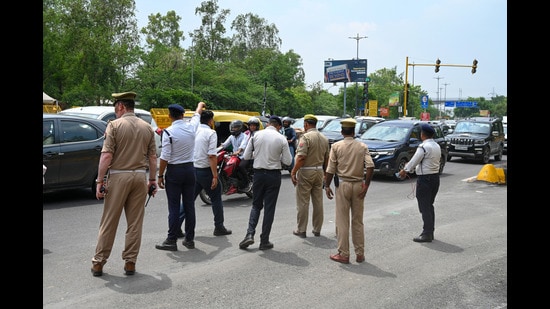
In a bid to curb particulate matter (PM) emissions—a key pollutant that also leads to respiratory illnesses—into the atmosphere at source, the Delhi government is planning an innovation challenge seeking low-cost and easy-to-maintain technology that can absorb at least twice the amount of PM2.5 and PM10 produced by end-of-life vehicles (ELVs) in the city, environment minister Manjinder Singh Sirsa said on Thursday.
Sirsa said a standing order was issued to the Delhi Pollution Control Committee (DPCC) on the day to launch the challenge within 30 days. It will be open to individuals, start-ups, research institutions and technology developers across India, he said. There will be prize money in the challenge, with the government to also financially support scaling up of technologies found viable, the minister added.
“The DPCC is hereby directed to design and launch an Innovation Challenge focused on identifying and promoting low-cost, easy-to-maintain, and effective technological solutions capable of reducing or absorbing PM 2.5 and PM 10 emissions (of at least twice the amount emitted) from End-of-Life Vehicles (ELVs) operating within the territory of Delhi..” said the order issued to the DPCC, a copy of which was accessed by HT.
The order said the innovative devices may be fitted internally or externally on the vehicle, and they must neutralise, capture or offset PM2.5 and PM10 beyond the levels emitted by ELVs. “The challenge shall be launched within 30 days from the issue of this order followed by evaluation and declaration of results within 90 days of launch,” the order said.
Sirsa said the solutions should have affordability for end-users, be easy to install and maintain and also have scaleability and real-world feasibility. “We are looking to provide solutions to ELV owners, in a bid to give them some relief. We are looking at technological solutions which may reduce emissions from these vehicles.”
He called for the constitution of an independent panel of technical experts to evaluate the submissions.
“A premier technical institute such as Indian Institute of Technology (IIT) Delhi shall be formally requested to lead this technical committee and participate in the evaluation and selection process. The panel may also include representatives from environmental engineering institutes, automotive sector experts, and members from DPCC…” the order reads.
Sirsa said a final report outlining the submissions received, the evaluation methodology, and recommended solutions will be shared with the government for final approval. “DPCC has been asked to show a formal outline of the project, including a problem statement within five days from the issuance of this order,” he said.
Experts, while hailing the plan as ambitious, sounded a cautious note on its real-world applicability.
“The proposal to equip ELVs with devices that claim to absorb twice their PM2.5 and PM10 emissions is scientifically ambitious and raises concerns about feasibility, effectiveness, and real-world applicability. While retrofits like diesel particulate filters (DPFs) offer some benefits, they come with issues, such as back pressure, maintenance burdens, and limited impact on older engines,” said Amit Bhatt, managing director (India), International Council on Clean Transportation (ICCT).
Bhatt said a more future-ready approach would be to enable electric vehicle (EV) retrofitting, especially for commercial fleets, alongside accelerating vehicle scrappage and promoting clean mobility solutions. “Innovation is essential, but it must be grounded in science and practical implementation,” he added.
The Commission for Air Quality Management (CAQM) in NCR, in a directive on April 23, asked the Delhi government to deny fuel to ELVs–10-year-old diesel and 15-year-old petrol vehicles—from July 1.
While 98 vehicles were detected using automatic number plate recognition (ANPR) cameras on the first day and 80 were impounded, the numbers dipped on the second day, as only seven of 78 identified ELVs were impounded. Subsequently, there was no action on the next day, as the government sought to put the drive on hold due to technological challenges. Delhi chief minister Rekha Gupta said the government would approach the Supreme Court to seek relief on the ban on ELVs in Delhi.
On July 8, CAQM amended its direction and said the fuel ban would now come into force in Delhi from November 1, alongside five other High Vehicle Density (HVD) districts in NCR: Gurugram, Faridabad, Ghaziabad, Gautam Budh Nagar and Sonipat.

Stay updated with all top Cities including, Bengaluru, Delhi, Mumbai and more across India. Stay informed on the latest happenings in World News along with Delhi Election 2025 and Delhi Election Result 2025 Live, New Delhi Election Result Live, Kalkaji Election Result Live at Hindustan Times.


