E-Paper



Delhi murder: No torture during narco test, court warns police
Aaftab Poonawala was arrested on November 12 for allegedly murdering his live-in partner, Shraddha Walkar, and chopping her body into 35 pieces. The court has allowed a narco test on him

 Prefer HTon Google


A Delhi court has directed the Delhi Police not to use any “third degree” measures on Aaftab Poonawala during the narco analysis test on him.
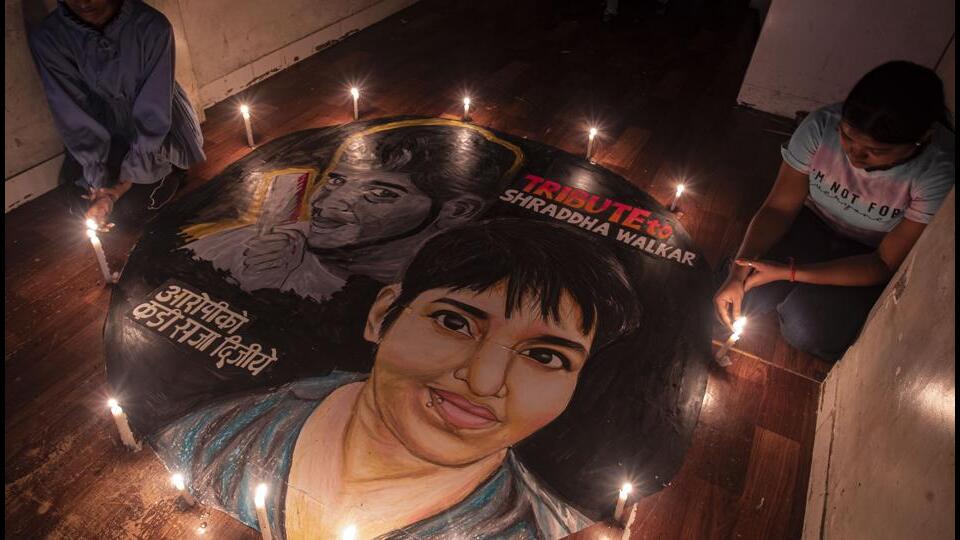
Poonawala was arrested on November 12 for allegedly murdering his live-in partner, Shraddha Walkar, and chopping her body into 35 pieces.
The court’s order came on Thursday, but a detailed copy was made available on Friday.
Interpreting the court’s direction on third degree measures, legal experts said that the police cannot mentally and physically torture the accused during the narco test during which he would not be “unconscious but his imagination is neutralised”.
In her order, metropolitan magistrate Vijayshree Rathore also recorded Poonawala’s consent for the narco test after he was explained all the legalities, procedural formalities and consequences of his approval.
“I give my consent,” Poonawala said, following which the court ordered, “The FSL, Rohini is directed to allow the investigating officer (IO) for conducting the narco analysis Test of the accused within five days from today…The IO is further directed not to use any other 3rd degree measures. MLC be prepared as per rules,” the judge said in her order.
Even though the courts had allowed the application for video conferencing and everyone kept waiting for the virtual hearing on the judge’s regular link, the matter was heard on a private link and media was not allowed access to it.
Experts said that since third degree constitutes both mental and physical torture, any form of force or torture during narco analysis, except for the anaesthetic drug, cannot be allowed.
“Narco analysis test, although inadmissible in evidence, has some relevance during investigation. It is a tool to collect material evidence. The court has rightly cautioned the investigating officer not to use 3rd degree method, which can be inflicted both physically and mentally to elicit affirmative answers from the accused. The admissibility of a narco analysis test even for investigation is assessed on the basis of circumstances under which it is conducted. The process has to be fair and independent,” said senior advocate Vikas Pahwa.
Advocate Tanvir Ahmed Mir said if the court has directed for not using third degree during the narco test, then it means that the police or the doctor, who will administering the medicine, will not use force or slap the accused to keep the person awake, since he would be in a semi-conscious state.
In 2010, the Supreme Court had imposed restrictions on the conduct of narco tests and held them illegal, adding that no lie detector tests should be administered “except on the basis of consent of the accused”.
A bench comprising chief justice K G Balakrishnan, Justice R V Raveendran and Justice J M Panchal had held that no individual should be forcibly subjected to any of the techniques in question, whether in the context of investigation in criminal cases or otherwise. Doing so would amount to an unwarranted intrusion into personal liberty.
Though Narco-analysis tests generally don’t have legal validity, the court may grant limited admissibility after considering the circumstances under which the test was obtained.
In a separate hearing on Thursday, magistrate Aviral Shukla extended Poonawala’s custodial investigation by another five days after he was produced through video conferencing.
While seeking to extend Poonawala’s custody, police informed the court that Poonawala had disclosed that the weapon he allegedly used to dismember Walkar’s body was bought at a shop on Mehrauli-Gurugram Road, and not from a store in Chattarpur, as he had previously claimed. Lawyers who attended the hearing said that the police sought his additional custody on the grounds that they have to identify the shop and take Poonawala there to corroborate his revelations with the shopkeeper.
Police also told the court that Poonawala has been misleading police during their search for Walkar’s remains, adding that they would require his further custody to search the forested areas of Delhi. A third reason given by the police for wanting to extend Poonawala’s custody was that they wanted to take the accused to Parvati Valley in Himachal Pradesh and to Uttarakhand in order to reveal the truth.
Earlier, in his disclosures, Poonawala had told police that he had purchased the weapon used to purportedly dismember Walkar’s body from Home and Kitchen, a kitchenware store in Chattarpur around 500 metres from his rented flat. To authenticate his claim, he even took a police team to the store and claimed that the father of shop owner Sudeep Sachdeva was present on May 19, when he purchased the weapon for ₹150.
However, Sachdeva has consistently maintained that his shop only sells kitchen knives, and has never sold saws or meat cleavers -- heavier weapons that could ostensibly be used to dismember a body.