
 E-Paper



Delhi sees sharp jump in PUC challans this year
Delhi has 966 PUC checking centres, where the tailpipe emission standards of the vehicles can be checked by paying a nominal fee.

 Prefer HTon Google


The transport department has issued nearly 163,000 Pollution Under Control (PUC) challans in 2025 so far — indicating a more than 300%jump in the monthly average from the past year, data showed.
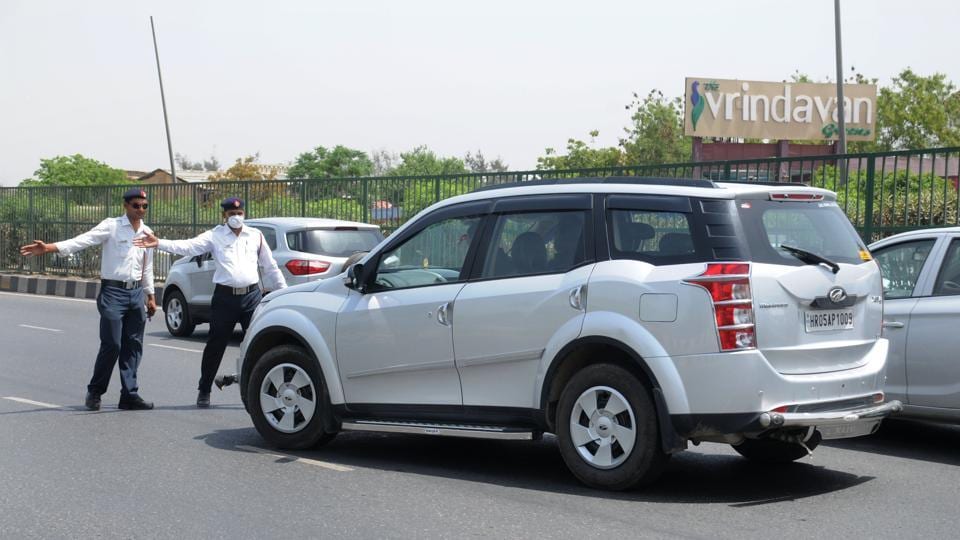
While the data for the corresponding period in 2024 was not available, a total of 68,000 challans were issued in the entire year. Prior to that too, the number of challans issued remained low -- in 2023, 36,000 challans were issued, 43,500 challans in 2022, and 29500 in 2023.
The sharp rise in the number of challans issued so far this year is due to installation of Automatic Number Plate Recognition (ANPR) cameras, renewed enforcement push and the government’s growing reliance on digital tools such as online issuance of PUC challans using API technology linked with the Centre’s Vahan database to track and penalise violators, officials said.
ANPR cameras have been installed at around 300 fuel stations across the city. “High-resolution ANPR cameras capture the licence plate details of vehicles when they come for refilling. These details are cross-referenced in real time with the central vehicle database via the mParivahan API to check for valid PUC certification. If a vehicle is found to have an expired or missing PUC certificate, and it is not renewed within one hour of detection, the system automatically triggers the generation of an e-challan. The entire process is managed through a centralised server infrastructure housed at the transport department headquarters, ensuring seamless and automated enforcement,” said an official of the transport department.
The vehicle owner is intimated about the PUC challan through a text message on the registered mobile number.
Delhi has 966 PUC checking centres, where the tailpipe emission standards of the vehicles can be checked by paying a nominal fee. According to transport department officials, as of January 2025, out of the around 8.2 million active vehicles in the city, nearly 2.6 million do not have a valid PUC certificate, meaning their certificates had either expired or were never issued.
Section 190(2) of the Motor Vehicles Act makes it mandatory for vehicles to have PUC certificates. The owner of a vehicle plying without a valid PUC certificate is liable to be prosecuted and may be imprisoned for up to three months or fined up to ₹10,000, or both.
“Besides digital intervention, around eight to ten enforcement teams of the transport department are also deployed every day at various locations in the city for carrying out random checks for PUC certificate checks,” said a second department official.
A breakdown of online challans and manual challans was not immediately available.
According to a recent report by the Delhi government, under the updated PUC certificate regime, emission readings are automatically captured and assessed, removing human discretion and ensuring objectivity. This system ensures only compliant vehicles remain in operation, regardless of age and based on actual emissions being emitted from the vehicle.
Anumita Roychowdhury, executive director of research and advocacy at the Centre for Science and Environment (CSE), said there is a need for stricter emission monitoring of vehicles. “Strict monitoring of emissions from vehicles on the road is necessary because the vehicles are among the key contributors to Delhi’s poor air quality. The government should also ensure that 100% compliance with basic PUC norms also requires credible and properly conducted PUC tests.”

Stay updated with all top Cities including, Bengaluru, Delhi, Mumbai and more across India. Stay informed on the latest happenings in World News along with Delhi Election 2025 and Delhi Election Result 2025 Live, New Delhi Election Result Live, Kalkaji Election Result Live at Hindustan Times.


