
 E-Paper



Delhi to get 13 new air quality monitoring stations this year
Officials aware of the matter said the locations of the new CAAQMS, along with other details, will be finalised within the next few days.

 Prefer HTon Google


To eliminate geographical gaps in pollution tracking in the Capital, 13 additional Continuous Ambient Air Quality Monitoring Stations (CAAQMS) will be set up across Delhi this year, with 10 expected to be operationalised by November, environment minister Manjinder Singh Sirsa told HT on Thursday.
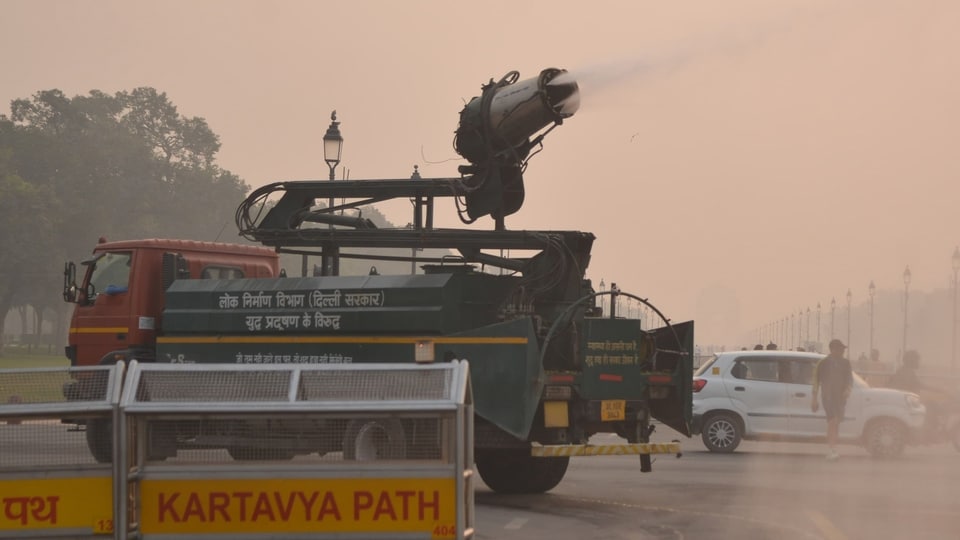
Officials aware of the matter said the locations of the new CAAQMS, along with other details, will be finalised within the next few days.
“Delhi currently has 47 CAAQMS, and 13 more will be added this year. The Delhi Pollution Control Committee (DPCC) will develop 10 of these stations. The location of the new stations is still being finalised, but they will be operational by November. The other three stations will be run by institutions appointed by the Commission for Air Quality Management (CAQM),” Sirsa said.
Also Read | Over 300 families face eviction at Delhi's Yamuna Bazar Ghat, asked to vacate in 15 days
Delhi currently has the highest number of air quality monitoring stations among all cities in the country, and the highest density of CAAQMS. The 13 new planned stations will increase the total to 60.
Earlier in February, the Delhi government had inaugurated six new CAAQMS in the city, and announced plans to install 14 additional stations in the coming financial year.
“We are looking at a 5x5 km grid, so soon there will be a station every 25 sqkm, completing the entire network for Delhi in terms of geographical area by the end of 2026-27,” Sirsa had said, adding that the 25 sqkm goal had been set to eliminate geographical gaps in pollution tracking.
Also Read | Delhi launches beautification drive ahead of India-Africa, Big Cat summits
Meanwhile, environmental experts said that while it was a welcome move, efficient data utilisation is the key.
Anumita Roy Chowdhury, executive director at the Centre for Science and Environment, told HT: “More data availability is expected to improve policymaking. For instance, having 60 stations in the city may allow tracking the nature of pollution almost on a neighborhood scale, allowing for hyperlocal action to be taken. However, the government must also define an objective for this monitoring, and decide how the station grid will be used to take neighborhood-level action.”
Chowdhury added: “A fundamental issue irrespective of the number of stations is what they will do to ensure data quality, as this is a costly investment. An independent third-party assessment is needed to ensure data quality.”
Of Delhi’s 47 stations, 30 are operated by the DPCC, seven by the Indian Meteorological Department, six by the Central Pollution Control Board (CPCB), one by the Union ministry of housing and urban affairs, and three by the Indian Institute of Tropical Meteorology (IITM)


Stay updated with all top Cities including, Bengaluru, Delhi, Mumbai and more across India. Stay informed on the latest happenings in World News along with Delhi Election 2025 and Delhi Election Result 2025 Live, New Delhi Election Result Live, Kalkaji Election Result Live at Hindustan Times.


