
 E-Paper



Delhi government unveils new scheme for app-based premium buses
Chief minister Arvind Kejriwal commuters will be able to book their seats on these buses through mobile apps

 Prefer HTon Google


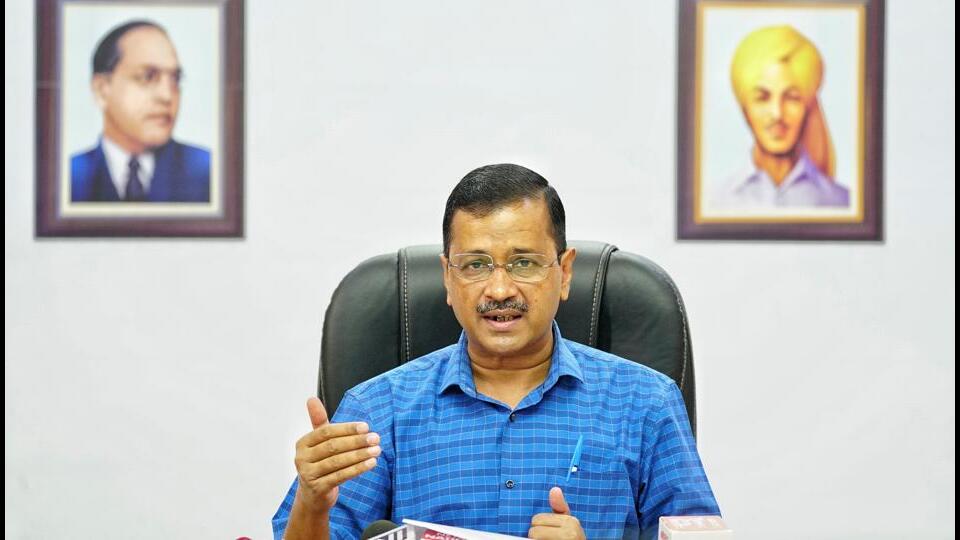
The Delhi government will roll out premium private buses in the national capital, seats on which can be booked through mobile apps, chief minister Arvind Kejriwal said on Monday, as he outlined the contours of a plan that aims to encourage vehicle owners to use public transit.
Also read: 100 new electric buses to be inducted by May-end in Delhi
Kejriwal said the state government must make the Capital’s public transport “comfortable, safe and punctual” if it wants middle-class and upper-middle class residents to minimise the use of private vehicles.
“They have the money to own cars and travel in their own vehicles every day. They pay for their petrol every day. But if given the option of a bus that is comfortable, we believe they will leave their cars behind and opt for the bus,” he said during a press briefing.
The bus service will be launched after all necessary approvals are in place, officials in the know of the matter said, adding there was no fixed deadline yet.
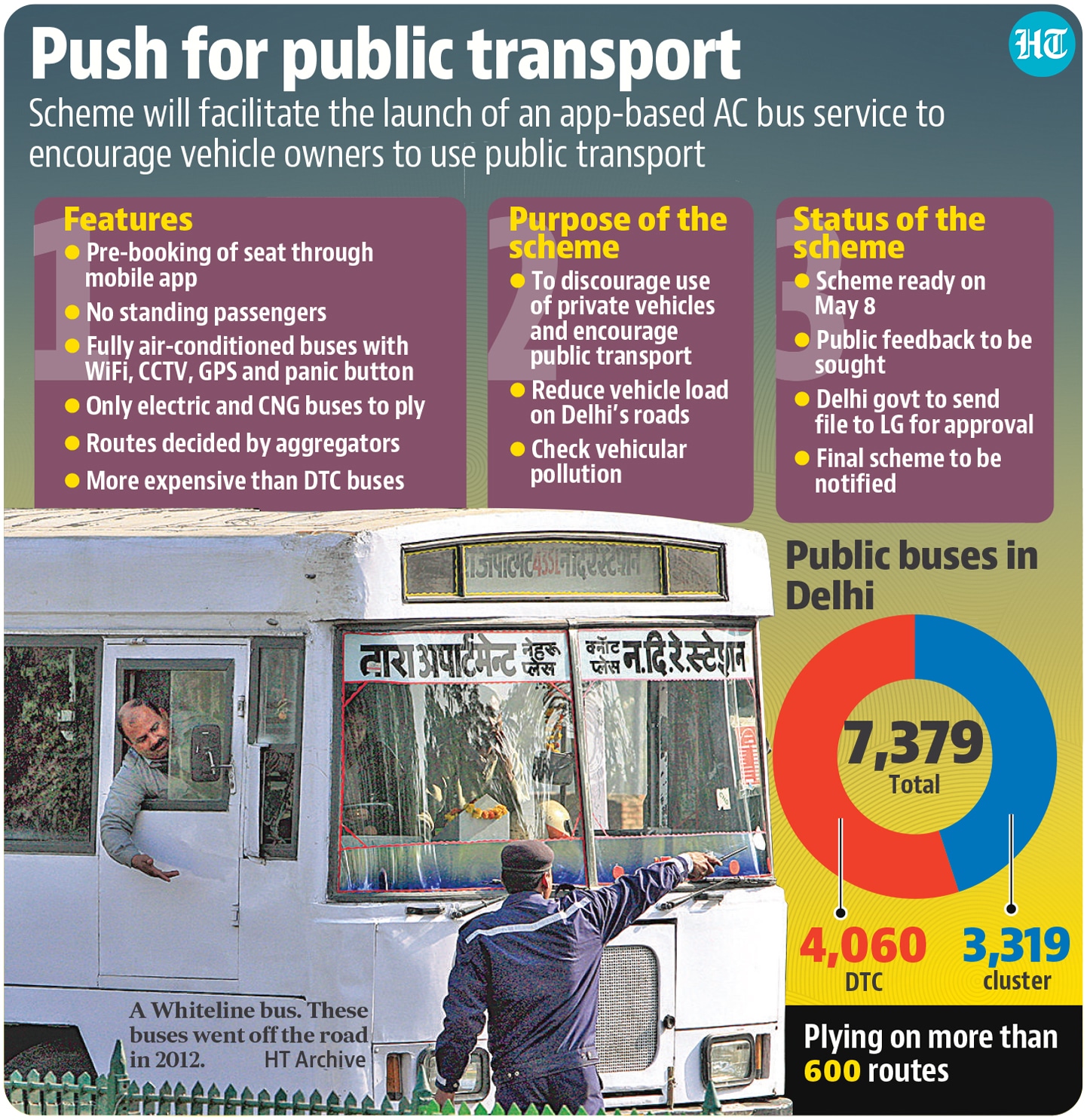
Detailing the move, Kejriwal said the Delhi Motor Vehicles Licensing of Aggregator (Premium Buses) Scheme, 2023 envisions a premium intra-city bus service that will allow app-based bookings, have no standing passengers, and with fares higher than other buses, including those owned or operated by the state government’s Delhi Transport Corporation (DTC).
The buses will either run or CNG or be electric-powered, said Kejriwal, adding that they will be equipped with key safety features like CCTV, GPS, panic button, among others. They will also be WiFi-enabled, Kejriwal said.
He pointed to the rise of the Delhi Metro over two decades ago, as a turning point for the city’s public transit service.
“The biggest revolution in the transport sector in Delhi arose when the Metro started functioning two decades ago. A lot of people who belonged to the middle and upper-middle class began to leave their vehicles behind and travel by the Delhi Metro leading to a decrease in the number of vehicles on the streets,” he said.
Still, despite the expansion of the Metro service, Delhi’s buses are the city’s most popular form of public transport, with around 3.5 million people using the system every day. In comparison, Delhi’s Metro average daily ridership is 4.5 million. Currently, the Capital has around 7,200 buses under DTC and the cluster scheme. The state government aims to increase the strength of the fleet to 11,000, and to ensure that 80% of all public buses in Delhi are electric by 2025.
Crucially, the premium buses will not offer women free rides, said officials aware of the plan.
“The fares of the premium buses will be market-driven, so there will not be any free rides for women,” said another official.
The chief minister added that the scheme will be placed in the public domain for comments. “We are sending the file of the premium bus service scheme to the LG for consideration,” Kejriwal said. The CM said that the Delhi government will incorporate good suggestions into the scheme.
This is not the first time that the Delhi government has proposed such a scheme. It had first approved a proposal for a premium bus service in May 2016, which was rejected by the then lieutenant governor Najeeb Jung.
Between 2000 and 2012, Delhi used to have Whiteline buses that provided connectivity between fixed points in the city, as well as between Delhi and Noida. They were private buses that ran under the government mandate. They had a fixed route and were hugely popular among office commuters and those travelling between Delhi and Noida.
“Whiteline buses were stage carriage buses, which means they stopped at every stop on the identified routes. Initially, there were around 700 Whiteline buses and they were better in comfort and quality than regular buses. However, later the number of buses decreased and they went off-road due to various reasons, including low profit due to low demand during non-peak hours and the introduction of the Metro,” said a Delhi transport department official.
On Monday, Kejriwal flagged that vehicular traffic has increased and added that even Metros are packed to the rafters during rush hours, prompting people to use private vehicles.
“The rush in the Metro increased over time, and now the people do not get a seat and often have to stand for a long time in jam-packed trains. Therefore the people have shifted back to their private cars and scooters,” Kejriwal said.
Experts have also said fears of infection aboard public transport also pushed people to use, or buy, their own vehicles.
To be sure, some private operators in the Capital already run inter-city buses and provide commuters with premium bus services across Delhi-NCR. These buses usually cater to office-goers and are booked through mobile applications. They charge a premium fare and operate on several routes, as compared to DTC buses which operate on eight NCR routes.
Currently, Delhi has 7,379 public buses (3,319 cluster buses and 4,060 DTC buses) including 300 electric buses which ply on more than 600 bus routes.
All the buses will be required to have a uniform, colour-coded logo, Kejriwal said, adding that the bus aggregator will be allowed to advertise inside the bus and collect revenue on that basis.
“Moreover, the Delhi government will only allow aggregators to ply electric buses after January 1, 2024,” said an official in the know of the matter. Each aggregator needs to operate and maintain at least 50 buses within 90 days of receiving the licence.
“The aggregator can decide the route on which they want to run. They only need to inform the state government about the route that they want to operate on. Obviously, they will want to operate on a route where there is more traffic, and, therefore with this service, the number of private vehicles on that route is likely to reduce,” the CM said.
Under the scheme, aggregators will be allowed to chart bus routes on their own, but must provide complete information to the government. “The buses will be run by private aggregators who will have to obtain a licence from the Delhi government by paying a license fee. CNG and electric buses, which are not older than three years, only can be used in the premium bus service. The licence fee of the electric buses used in the service will be waived off,” said Kejriwal.
Meanwhile, experts have commended the plan.
Amit Bhatt, managing director, India of the International Council on Clean Transportation, said, “App-based buses are a new form of public transport that allow passengers to request a ride through a mobile app and be picked up from a designated location. They are more flexible and personalised than traditional fixed-route buses, as they can dynamically adjust their routes based on passenger demand. These buses offer a convenient and affordable option for people who do not have access to a private vehicle or prefer not to use it for environmental or economic reasons. App-based buses could be a game-changer for public transport, as they can potentially reduce congestion, improve efficiency, and offer quality and convenience to both captive and choice riders.”
Also read: Experts suggest short trips, many halts for Delhi’s Mohalla bus scheme
Anumita Roychowdhury, executive director (research and advocacy) at Centre for Science and Environment, said: “We certainly need more buses with reliable and high-quality bus service to increase use of public transport. People will shift if service conditions and connectivity improve with more bus priority lanes. Reduced use of personal vehicles can help to reduce congestion and pollution.”


