
 E-Paper



Delhi zoo set to receive hornbills from Assam
The Capital will receive the hornbills in exchange for four black bucks — a trade-off approved by the Union ministry of environment, forest and climate change (MoEFCC), the officials said

 Prefer HTon Google


The National Zoological Park, informally known as the Delhi zoo, is set to receive a pair of oriental pied hornbill (Anthracoceros albirostris) from the Assam Zoo in Guwahati, taking the total number of species at the city zoo to 97, officials aware of the matter have said.
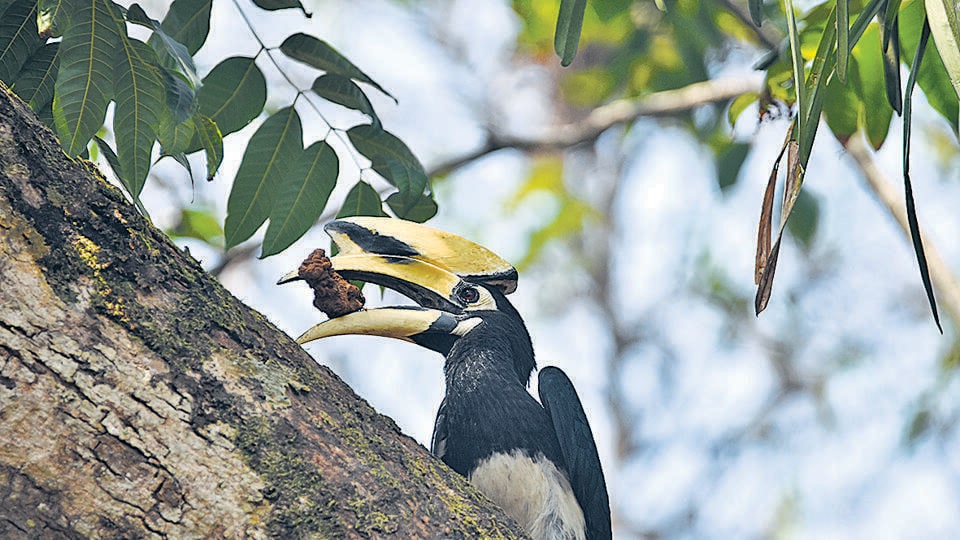
The Capital will receive the hornbills in exchange for four black bucks — a trade-off approved by the Union ministry of environment, forest and climate change (MoEFCC), the officials said. The Assam zoo will also receive a pair of blue-and-yellow macaws (Ara ararauna), they said.
The animal exchange was finalised and approved by MoEFCC on March 25, and is likely to be completed over the next fortnight, the zoo said.
HT has seen a copy of the approval letter sent by the Union ministry.
“We had surplus black bucks, so two males and two females will be sent there (to Assam), with a pair of oriental pied hornbills coming to us. These used to be part of the zoo a long while ago, and we can now add them again to the aviary here,” Delhi zoo director Sanjeet Kumar said.
The oriental pied hornbill is a medium-sized, black-and-white bird with a whitish-yellow bill and a prominent “helmet” of sorts on the top of its beak. In India, it is generally found in the Himalayan foothills or in northeast and east India.
Additionally, the Delhi zoo will also send a female Indian rhinoceros and a female Royal Bengal tiger to Assam, and in return will receive a male animal of each species — the city currently has a pair of female rhinoceros, thus requiring a male to continue breeding.
The Delhi zoo had approached the Assam zoo last year in search of a male rhino. The zoo in Assam in turn expressed interest in Royal Bengal tigers — the Capital has three males and four females — since it required a female for breeding purposes.
“We needed a male rhinoceros to continue breeding and so a female will be sent there. They also requested for a female tigress, with us receiving a male in return. This will improve the gene pool among tigers, reducing inbreeding,” Kumar said.
Unless new individuals are introduced, animals at zoos often breed among themselves, with each new generation having a higher chance of deformities or diseases. This, thus, increases their mortality rate in captivity.



