E-Paper



No let-up as searing heat continues in Delhi, sports complex hottest at 46.4°C
According to IMD data, the high of 43.5°C at Safdarjung, recorded on both Thursday and Friday, make these the hottest April days since April 18, 2010, when it was 43.7°C.

 Prefer HTon Google


There was no let-up from the searing heat for the second consecutive day on Friday, as “heatwave” to ”severe heatwave” conditions prevailed across the capital city.
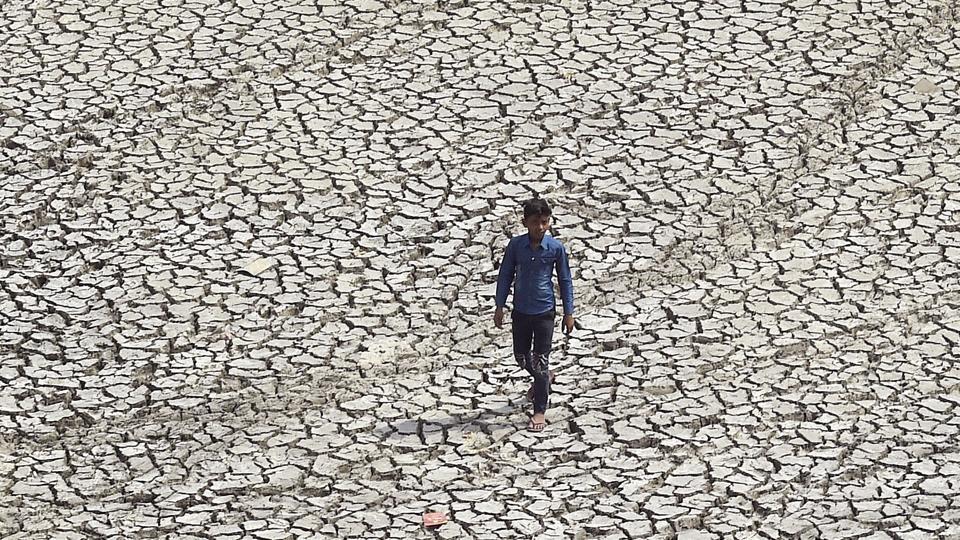
While Safdarjung, considered the base for Delhi’s weather, recorded a high of 43.5°C – five degrees above normal and the same as that on Thursday -- it was the Sports Complex in east Delhi (Akshardham) station which was yet again Delhi’s hottest spot, touching a high of 46.4°C, beating its own record high of 46°C on Thursday.
Also Read | Heat, electricity usage shatter April records
According to the IMD data, the high of 43.5°C at Safdarjung, recorded on both Thursday and Friday, make these the hottest April days since April 18, 2010, when it was 43.7°C. The all-time record for Safdarjung is 45.6°C, recorded on April 29, 1941.
The IMD declares a ”heatwave” if the maximum is 40 degrees or higher and also 4.5 degrees or more above normal. It is a ”severe heatwave” if it is 6.5 degrees or more above normal.
The India Meteorological Department (IMD) said this is the second hottest April that the capital is going through in the last 72 years. The average maximum temperature for the month was 40.2°C, and the only time it was hotter than this was in 2010, when the average maximum for the month of April was 40.4°C, the met officials said.
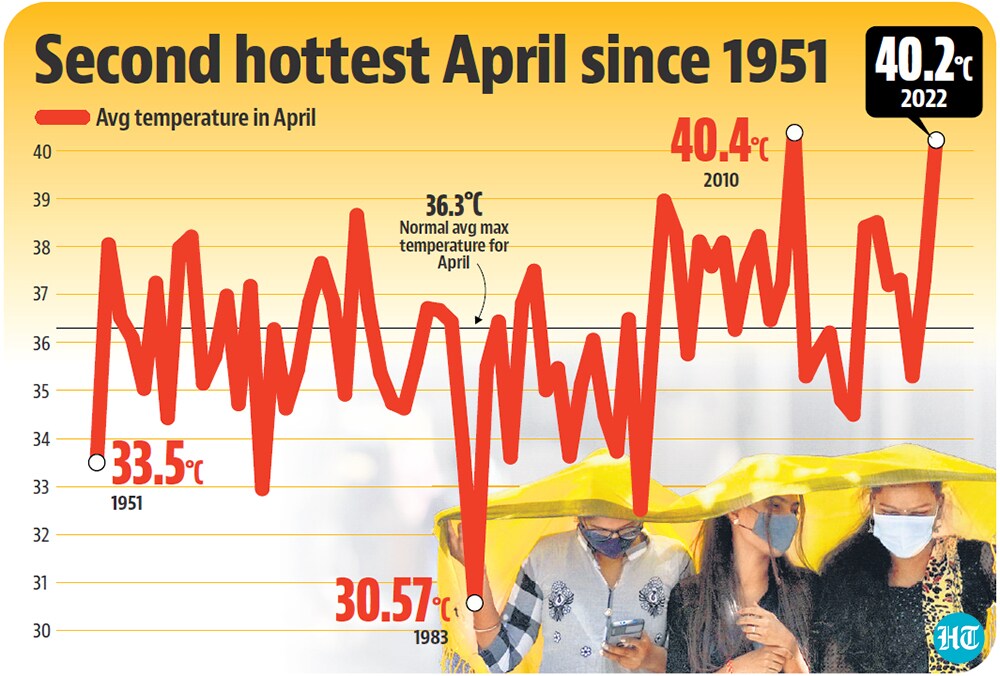
The normal average maximum for the month of April for Delhi is 36.3°C, and current temperatures are averaging at least four degrees above that, met officials said.
“If records are to be looked at, 2010 has generally been the hottest summer in recent times and the summer so far this year has been comparable to the one of 2010. Data from 1951 onwards shows that this is Delhi’s second hottest April in terms of the average maximum temperature,” said RK Jenamani, scientist at IMD.
Forecasts by the IMD show that Delhi is unlikely to get any respite from the ongoing heatwave, with an ”orange alert” in place for Saturday as well. Temperatures are expected to go as high as 44°C at Safdarjung and up to 46°C in other parts.
The IMD issues a ”yellow” alert to alert the general public in case an extreme weather event is likely to occur, however, It is upgraded to orange if preventive action is required from the public.
On Friday, the IMD asked people to be prepared and avoid unnecessary outings in the severe heatwave conditions. Delhi had an orange alert in place for Friday as well.
Data from Delhi’s 11 weather stations showed that all locations in the capital, except one, recorded a maximum temperature of 43°C or higher. The outlier was Mayur Vihar station, which recorded a maximum of 42.8°C.
After the Sports Complex station, the next hottest places were Pitampura, Mungeshpur and Najafgarh, which recorded a maximum temperature of 45.9°C, followed by the Ridge station, which saw a high of 45.7°C. The normal maximum at the Ridge for this time of the year is 38.7°C.
“Delhi is expected to see similar highs of 44 to 46°C on both Saturday and Sunday, but towards Sunday night, there may be some thundery development, with a fresh western disturbance likely to bring dust storm and gusty winds to Delhi by Monday. A second WD is expected by around May 4-5, with rain expected on May 4; that could bring down temperatures to around 40 degrees by May 5,” Jenamani said.
Delhi had seen a similarly hot March, ending with an average maximum of 33.1 degrees Celsius, making it the fourth hottest since 1951, behind only 2021 (33.1°C), 2004 (33.4°C) and 1953 (34.4°C).