
 E-Paper



Delhi's air quality still in ‘severe’ zone post-Diwali, AQI clocking at 533
The Air Quality Index or the AQI is used by government agencies, like SAFAR, to communicate to the public exactly how polluted the air currently is; an AQI of 401-500 and beyond is categorised as “severe” and is almost certain to have hazardous respiratory impacts even on otherwise healthy people.

 Prefer HTon Google


Delhi's air quality continues to be in the “severe” category even two days after Diwali, with the air quality index (AQI) registering at 533, according to data released by the System of Air Quality & Weather Forecasting & Research (SAFAR) on Saturday morning. The air quality in the national capital deteriorated by drastic levels following the festival of Diwali, reaching the ‘hazardous’ category on Friday morning. A thick blanket of smog shrouded the skies of Delhi, as several people complained of an itchy throat and watery eyes.
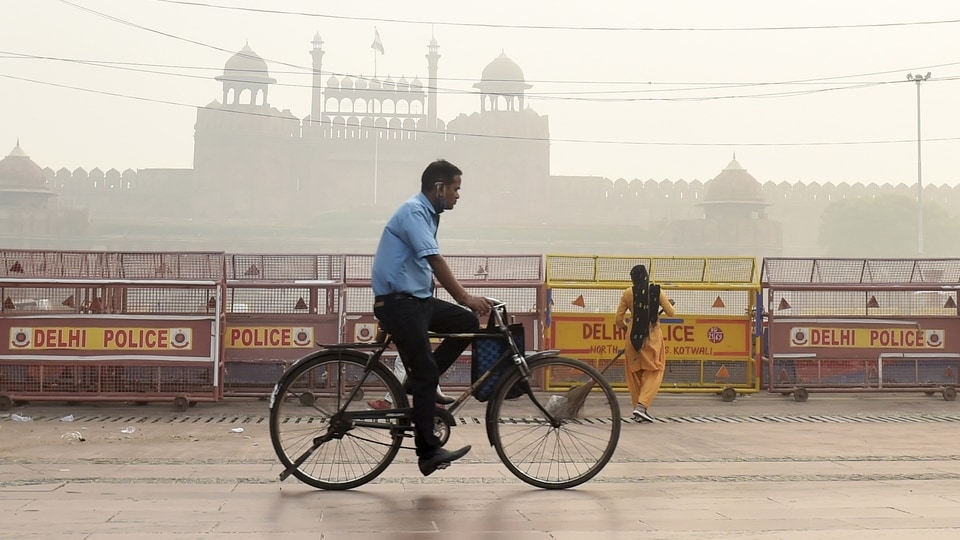
The Air Quality Index or the AQI is used by government agencies, like SAFAR, to communicate to the public exactly how polluted the air currently is or how polluted it is forecast to become. In India, an AQI of 401-500 and beyond is categorised as “severe”, indicating over 430 PM10 particles and such an air quality is almost certain to have hazardous respiratory impacts even on otherwise healthy people. People with lung disorders or heart diseases are seriously at risk, and the impacts may even be experienced during light physical activity.
Hindustan Times has compiled an hour-by-hour account of how Delhi’s air quality tanked on Diwali, with farm fires in Punjab and Haryana and the use of fireworks on Diwali night contributing to the spike. On the basis of available data, two things are clear: this was among the most polluted Diwalis in Delhi and fireworks are not the only cause for the spike in pollution.
However, it is worth noting that despite the Delhi government's ban on firecrackers, several people were seen bursting crackers on street on the occasion of Diwali, contributing to the degradation of the air quality. As per the Centre-run System of Air Quality and Weather Forecasting And Research (SAFAR), the air quality would not improve until Sunday evening (November 7). The improvement would, however, just fluctuate in the ‘Very Poor’ category.


