
 E-Paper



Delhi yet to implement bylaws for plastic waste management
CSE analysed data from the Central Pollution Control Board and found the country generated 25,940 tonnes of plastic waste every day


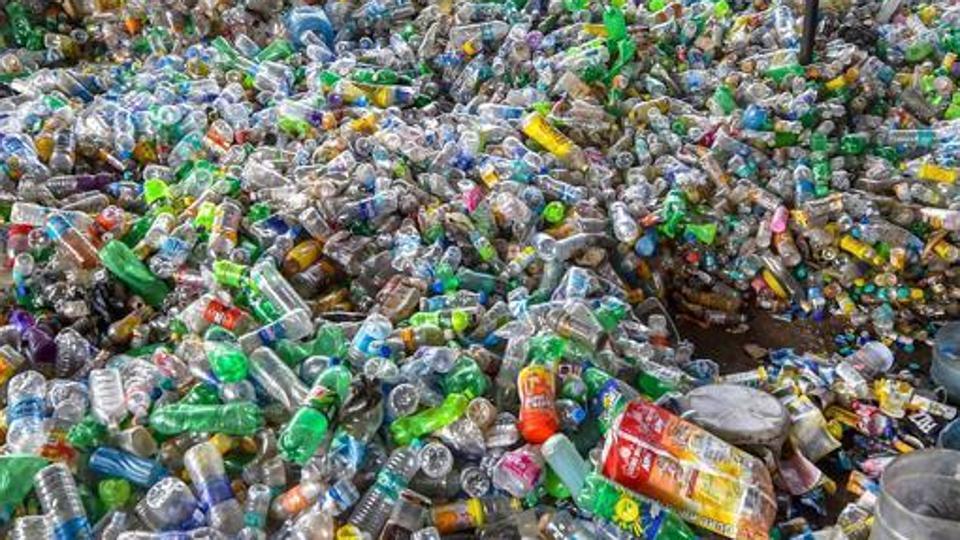
It is the largest producer of plastic waste among the metropolitan cities in the country, but Delhi continues to operate without any plastic waste management bylaws. The city banned 19 single-use plastic items on July 1 2022 and a comprehensive campaign – 100 Days to Beat Plastic – launched by the Municipal Corporation of Delhi (MCD) this January culminated on April 22, marking International Earth Day. But these drives against plastic continue to lack teeth due to non-operationalisation of plastic waste regulations, civic officials and waste management experts say.
Based on the government of India’s plastic waste rules 2016, the urban development department of Delhi government published draft bylaws on August 13, 2021 but lieutenant governor VK Saxena subsequently directed MCD in January 2022 to frame and publish plastic waste management bylaws. The draft bylaws were published by the urban development department on August 13, 2021 providing a 30-day period for seeking objections and suggestions regarding the rules.

The order received by the MCD dated January 10, 2023 says the draft was “published with the approval of the Lieutenant Governor (referring to Saxena’s predecessor Anil Baijal) and after consultation with stakeholders, the final draft of plastic waste management bylaws was submitted for approval of LG”.
Yet, the final bylaws are yet to be notified.
A senior municipal official associated with waste management said that the process is stuck on account of “legal complications”. “We sought opinion from legal department and the act says that if any new fine or user charge is being enforced, the government of the state or the central government will have to notify it. We have decided to put it as a preamble in the house of councillors whenever the election is finalized”, added this person who asked not to be named. The election for the post of mayor is expected to be held on April 26 and normal house proceedings are expected to resume from next month.
A senior municipal official from the sanitation department said that in the absence of bylaws, they have been using petty fines of insanitation and littering provisions to issue challans. “Specific fines for plastic waste as well as control over entire supply chain will widely empower our actions against the plastic waste,” the official said.
Under the 100 days to beat plastic campaign that ended on Saturday, the civic body seized 14,164kg of plastic products and issued 1,596 challans, but these were issued under insanitation/littering provisions, not the draft bylaws.
According to a second MCD official who too asked not to be named, “current municipal waste management rules prescribe a fine of ₹500 for littering but the penalty under the draft bylaws goes up to ₹50,000 with responsibility fixed on producers and importers of plastic items.”
The problem of plastic is acute in Delhi which, according to the “State of India’s Environment 2022” by the Centre for Science and Environment last month, generates 689.8 tonnes of plastic waste daily — the highest among India’s metropolitan cities. CSE analysed data from the Central Pollution Control Board and found the country generated 25,940 tonnes of plastic waste every day.
The draft bylaws also have a provision for a fine of ₹5000 for open burning of plastic waste while littering attracts a fine of ₹1000. Similarly, a ₹50,000 fine is mandated for producers/importers and distributors if they fail to make arrangements for waste collection system as part of extended producer responsibility or simply fail to collect used multilayer plastic sachet/pouches. The draft rules also mandate a thickness marking on plastic carry bags and a fine of ₹10,000 for violations.
“The draft bylaws treat single use plastic items much more stringently. Moreover, they require all producers and distributors to mandatorily register with Delhi Pollution Control Committee within three months of notification and to maintain records of people engaged in the plastic waste supply chain. According to the second MCD official, the draft bylaws also ban the use of single-use plastic in gutkha, tobacco pan masala and drinking water sachets of any size and packed water bottles having capacity less than 1 litre.
Bharati Chaturvedi, environmentalist and founder of Chintan Environmental Research and Action Group said that Delhi needs to put additional financial burden or tax to make some of these single use plastic items unviable. “We have seen very poor awareness campaigns being run by the agencies and that needs to change. The focus should be on the reuse economy. There are various ways of encouraging the reuse economy which is basically gone.”
HT reached out to the LG office for comments on the matter, but officials there declined to comment.
Atin Biswas, a waste management expert and programme director of municipal solid waste sector in Centre for Science and Environment (CSE), said the bylaws are the responsibility of the municipality and the registration of producers/importers may be beyond the scope of bylaws.
“The bylaws are a part of third layer of legal instruments under the decentralisation envisaged under 74th amendment to the Constitution. This empowers local body and pollution boards to impose fines or ban certain products. Specific bylaws are a wonderful legal tool provided they are implemented well,” Biswas said.
He added that the corporation can carry out large number raids and seize vast amounts of banned products but unless action is taken at the production level.
“Most of the banned single use plastic items are not branded so they cannot be linked to a particular manufacturer. Most of the manufacturing of such items occurs in informal industries. The source needs to be tackled. Multi-layered plastic which has low recycling value needs to be tackled for dealing with plastic waste and we need a more comprehensive communication strategy,” he said.
Siddharth Singh. programme manager of Environmental Governance and Solid Waste Management at CSE, said Delhi will need to enforce the single use plastic ban, but the city has failed miserably to do that. “Bylaws will help a city like Delhi to take the commitment to fight against plastic pollution a step ahead than the national law. However, Delhi is still struggling to meet the national law,” he said.
Stay updated with all top Cities including, Bengaluru, Delhi, Mumbai and more across India. Stay informed on the latest happenings in World News along with Delhi Election 2025 and Delhi Election Result 2025 Live, New Delhi Election Result Live, Kalkaji Election Result Live at Hindustan Times.


