
 E-Paper



Delhi’s progress towards sustainable development a mixed bag: Report
The report, compiled by the department of statistics of the Delhi government, charts the Capital’s progress towards achieving sustainable development goals across several indicators, including social, economic and environmental fronts.

 Prefer HTon Google


Delhi has made significant progress towards markers of sustainable development goals in health and agriculture sectors, while faring poorly and slipping in key sectors of sustainable transport and sewage, according to the “Delhi State Indicator Framework 2024: Status Report”.
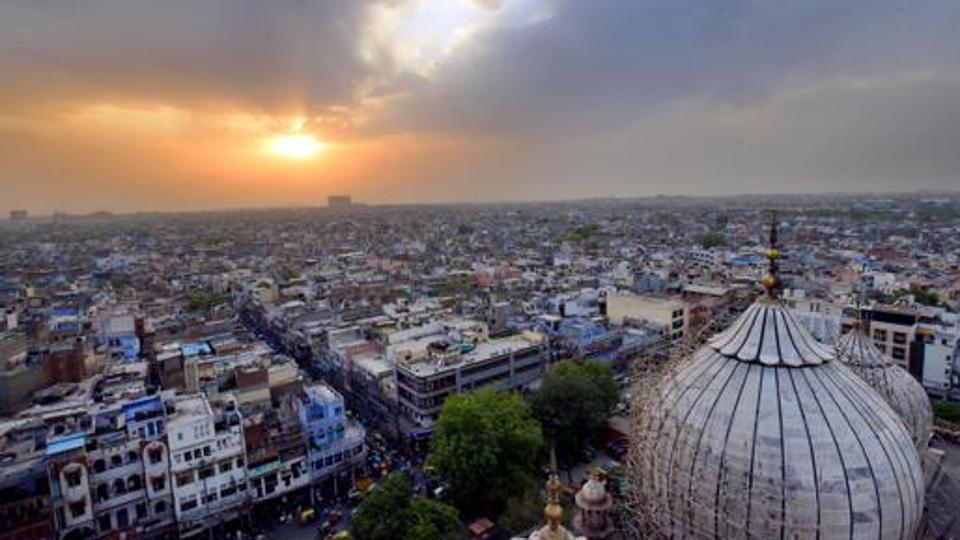
The report, compiled by the department of statistics of the Delhi government, charts the Capital’s progress towards achieving sustainable development goals across several indicators, including social, economic and environmental fronts.
According to the report, the number of vehicles per 1,000 residents in the Capital has seen a sharp decline from 530 in 2015-16 to 373 in 2023-24, even as Delhi witnessed a dip in the number of road accidents during the same period. It mentions that road crashes in the city reduced from 8,085 in 2015 to 5,560 in 2022.
Data from the National Crime Records Bureau, cited in the report, also reflects a similar trend. Deaths and injuries due to road accidents were logged at 9,880 in 2015, dropping to 5,228 in 2021 before rising again to 6,174 in 2022.
While private vehicle density has gone down, public transport indicators present a mixed picture.
The Delhi Transport Corporation (DTC) and cluster bus fleet expanded from 5,842 in 2015-16 to 7,485 in 2023-24. Yet, average daily ridership on buses fell from 4.59 million to 4.24 million in the same period. The Metro, however, has witnessed a sharp rise in ridership. Daily average ridership almost doubled, growing from 2.62 million in 2015-16 to 5.78 million in 2023-24, the report stated.
Access to public transport also fluctuated over the years. In 2015-16, 42.95% of Delhi’s population had access to public transport. This figure dipped to 40.80% in 2022-23 but improved to 45.83% in 2023-24.
“By 2030, provide access to safe, affordable, accessible and sustainable transport systems for all, improving road safety, notably by expanding public transport, with special attention to the needs of those in vulnerable situations, women and children, persons with disabilities and older persons,” the report said as the target for this indicator.
The report underlines the state’s targets under various indicators that the states need to achieve by 2030.
The sustainable development goals (SDGs), also known as the global goals, were adopted by the United Nations in 2015 as a universal call to action to end poverty, protect the planet, and ensure that by 2030, all people enjoy peace and prosperity. The 17 SDGs are integrated—they recognise that action in one area will affect outcomes in others, and that development must balance social, economic and environmental sustainability.
One of the most alarming reversals comes in the domain of “peace, justice and strong institutions”. Under this indicator, the report mentions that percentage of population covered under Aadhaar reduced from 117.80% in 2017-18 to 106.05% in 2022-23 and increased marginally the following year to 107.61%.
Also, the report mentions that the annual growth rate of the Net State Domestic Product (NSDP) per capita reduced from 9.32% in 2015-16 to 7.39% in 2023-24.
“The goal states that cities need to sustain per capita economic growth in accordance with national circumstances and, in particular, at least 7% gross domestic product growth per annum in the least developed countries…the target is to achieve higher levels of economic productivity through diversification, technological upgrading and innovation, including through a focus on high-value added and labour intensive sectors,” the report reads.
Under the "clean water and sanitation” indicator, the report mentions that the percentage of sewage treated before discharge into surface water bodies reduced from 72.43% in 2020 to 70.95% in 2022. However, the proportion of wastewater safely treated has gone up from 67% to 72% in the same period.
The percentage of groundwater withdrawal against availability was 119.61% in 2017 that reduced to 99.13% in 2023. So, while groundwater is not overexploited, as per the report, the extraction rate is still very high. The target in this area is that by 2030, states should implement integrated water resources management at all levels, including through transboundary cooperation.
To reverse the declines, the report suggests targeted intervention in lagging sectors, stronger monitoring and accountability, and interdepartmental convergence on issues of air quality, water stress and crime across multiple departments. It also suggests community engagement and decentralisation, incentives and disincentives and demand management and conservation for water, pollution and energy related issues.

Stay updated with all top Cities including, Bengaluru, Delhi, Mumbai and more across India. Stay informed on the latest happenings in World News along with Delhi Election 2025 and Delhi Election Result 2025 Live, New Delhi Election Result Live, Kalkaji Election Result Live at Hindustan Times.


