E-Paper



Delhi’s test positivity rate snaps 212-day streak, surges across 1%
The city added 923 cases of Covid-19 on Wednesday, as infections increased 86% over the previous day, when it had 496 new cases.

 Prefer HTon Google


The Covid-19 test positivity rate in Delhi went past the 1% mark for the first time in 212 days on Wednesday, as the city’s case graph continued to bend upwards in a surge likely driven by the Omicron variant of the coronavirus.
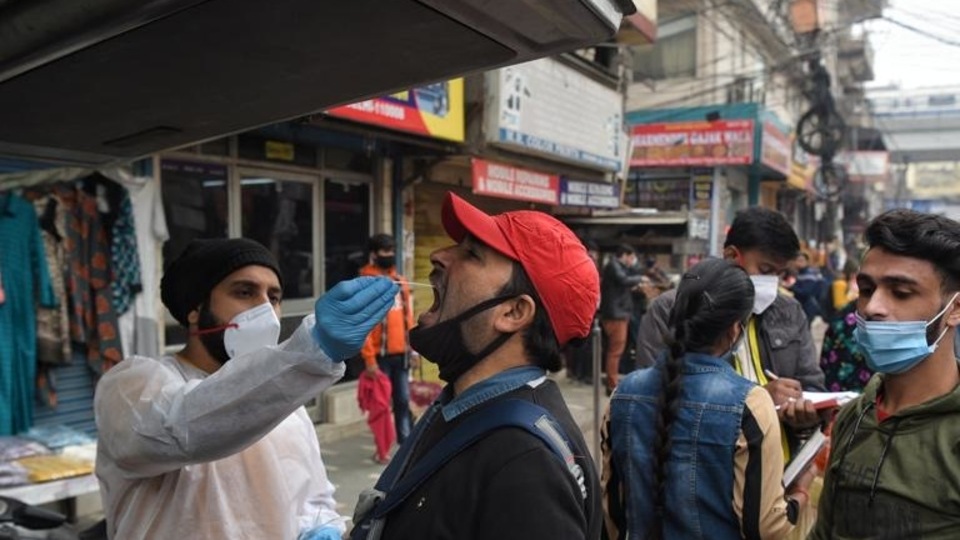
Delhi added 923 cases of Covid-19 on the day, as infections increased 86% over the previous day, when the city had 496 new cases, according to the state’s daily health bulletin. These infections came on the back of over 71,000 tests, of which 1.29% samples tested positive. The bulletin did not add any Covid-19 deaths to the tally.
Over the past week, the city added an average of 370 cases each day, the highest this number has been since mid-June.
The test positivity rate in Delhi was below 1% for 212 days; it was last above this mark on May 31 when 1.25% of tests were positive. Tuesday’s number was the highest since May 28, when the positivity rate was 1.59%.
Experts regard the test positivity rate as an important statistic to evaluate an infection outbreak in a region. The trajectory of this number can provide insights into whether cases in a city will rise or fall in the coming days: a rising positivity rate generally means cases will rise in the immediate future, while a dropping positivity rate tends to precede a drop in new infections.
The World Health Organization (WHO) recommends that the positivity rate from a region that has a comprehensive testing programme should be at or below 5% for at least two weeks before it can be considered that the outbreak is under control.
New infections started increasing sharply since mid-December, with the caseload now at levels of early-June, when the city was beginning to recover from the effects of the brutal fourth Covid-19 wave. In the first week of December, Delhi added an average of 48 cases each day. This number crept up to 49 in the second week. The city then logged 85 cases on average each day in the third week of December. In the eight days since then, Delhi has added an average of 339 fresh cases every day.
To be sure, an overwhelming majority of hospital beds are unoccupied even amid the rise in cases. Data from the state government on Wednesday showed that more than 97% of over 21,500 beds for reserved for Covid-19 patients in the Capital are vacant. Further, the state government has also previously assured that the number of beds can be scaled up to 37,000 in days, if required.
The state’s larger plans involve setting up over 65,000 Covid-19 beds in the coming weeks.