
 E-Paper



Delhiwale: A monument against temperature extremes
Ghiyasuddin Tughlaq's tomb impresses, but the lesser-known tomb of Zafar Khan, with its cooling design, captivates visitors more intriguingly.


Sometimes the accompaniment outshines the main course. Such is the case with the tomb of Ghiyasuddin Tughlaq. The emperor’s tomb is interesting, but the secondary structure appended to his majesty’s monument is more interesting.
That said, the red sandstone tomb built 700 years ago on the southern edge of present-day South Delhi is imposing. It radiates power and awe, qualities typical of tombs belonging to Dilli’s long-gone sultans. This one, after all, was built for a dynasty’s founder. The tomb is so famous that it shows up even in the comic book Tintin in Tibet!
To tell the truth, Ghiyasuddin’s tomb appears more enigmatic when viewed from the hilltop ramparts of neighbouring Tughlaqabad Fort, which was built by Ghiyasuddin himself. But if you view the same tomb from within its own enclosed garden, the edifice loses some of its visual drama. To start with, the tomb’s interior is underwhelming. It is a dimly lit space with three graves, one of these presumably belonging to Ghiyasuddin. This afternoon, a stray dog is lying sprawled on the floor, obviously trying to escape the April heat.
Step out of the grave chamber and wander through the compound. In one corner, you may notice a small, tucked-away structure. This is the focus of our story, believed to be the tomb of Zafar Khan, a long-ago military figure about whom factually credible gyan is impossible to unearth. The structure predates the larger tomb of Ghiyasuddin. From the outside, it seems unremarkable. Inside, it is quietly mesmerising.
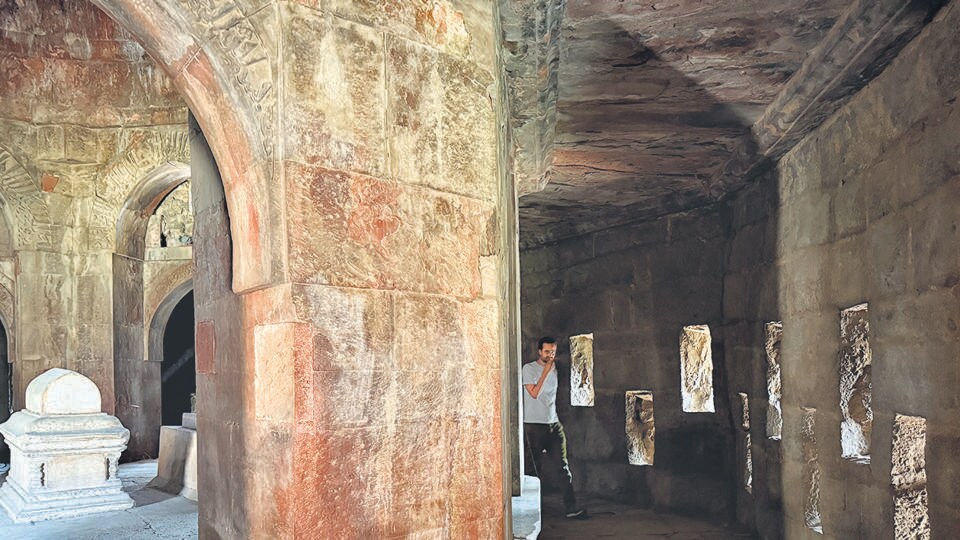
The central chamber is encircled by a narrow corridor (see photo). Long wide openings in the wall admit light—but gently, almost discreetly. Outside, the afternoon summer sun at the moment is harsh, glaring white. But as the light and heat enter through the rugged wall’s openings, that cruel intensity instantly softens into a muted glow. So much so that even during the hot months, the chamber remains relatively cool, its thick stone walls holding the sweltering heat at bay. In winter, the same space remains less freezing than the exteriors outside the thick walls.
The strategically placed openings in the wall also force the otherwise static air to circulate smartly. A cooling breeze is in fact currently running through the corridor, giving the effect of a summertime cooler. Indeed, the darkened chamber reflects its unknown architect’s prudent skills, ably shielding against Delhi’s extreme temperature, admitting light and air in measured ways.
Step outside of this structure, and dust clouds are swirling in from behind the desolate ramparts of Tughlaqabad Fort. Return to the chamber, and find refuge from the hostile climate again.


Stay updated with all top Cities including, Bengaluru, Delhi, Mumbai and more across India. Stay informed on the latest happenings in World News along with Delhi Election 2025 and Delhi Election Result 2025 Live, New Delhi Election Result Live, Kalkaji Election Result Live at Hindustan Times.


