
 E-Paper



Delhiwale: Into the lungs
Mangar Bani, a historic forest near Delhi, houses ancient tools and diverse wildlife but faces threats from urban expansion. Will it survive?


Delhi is so old. In fact, Delhi’s adjoining Gurugram is said to date back to the ancient days of Mahabharat. No exaggeration to state that the Delhi area must have been inhabited by mankind for millions of years.
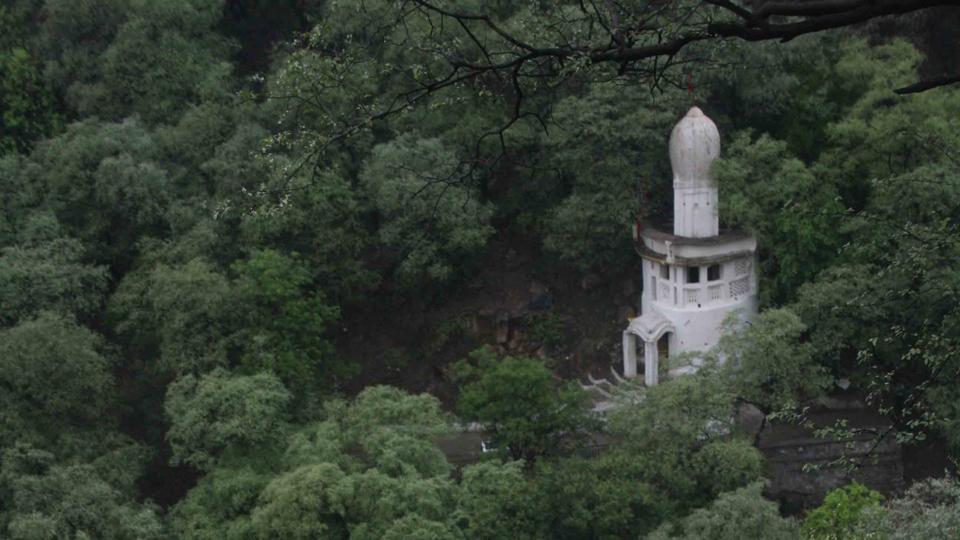
One area in fact might come close to confirm this fact. This region lies at the intersection of Delhi, Gurugram, and Fraidabad. It is called Mangar Bani. Last year, more than a hundred “pre-historic” tools, such as cleaves and hand axes, were discovered by archaeologists in the region. The tools dated back to a time that existed between 200,000 and 500,000 years ago.
This primeval land of Mangar Bani has been existing as a forest for a long time, maybe for thousands of years. (Consider the unexpected: while during the previous centuries, as hilly forests elsewhere in Delhi were remoulded into cities of stones and concrete, this forest somehow managed to escape this kismet.)
Nestled amid the ancient Aravali hills, Mangar Bani continues to be a cradle of nature, and of life in many forms. For instance, it has 240 species of birds. Guided walks have been conducted in the forest to spot… hold your breath— butterfly species! The Mangar Bani landscape possibly represents the most extensive and intact stretch of native tropical dry forest that subsists in the National Capital Region—per an article in Sanctuary Asia magazine by forest researcher Chetan Agarwal.
The Mangar Bani forest mainly consists of dhau trees, the ones with small leaves and silvery trunk. The forest has survived to this day partly because its trees have been considered sacred by the inhabitants of a village here. They believe that cutting as little as a branch would invite wrath from the greater powers.
During a visit with a group one rainy afternoon (see photos), there were magnificent sights beyond the lush greenery, and the great rocks of the jungle. A monitor lizard daringly surfaced along a track, a centipede plays dead, a sunbird flitted in the low branches of trees… and tiny red velvet mites too made their presence felt. Leopards, civets, four-horned antelope, hyenas, porcupines, jackals, and jungle cats have also been spotted in the forest, though not by this reporter. Recently, plans were announced by the forest officials to carry out a new animal census in the area; more than 50 camera traps will help map the animal movements.
That said, the precious forest has an existential problem in its hands—it is mere minutes away from the high-rises of the capital region. This geographical proximity might give Mangar Bani a metaphor of being Delhi’s lungs, but as the restlessly expanding megapolis continues to claim the surrounding country, will the ancient Mangar Bani manage to survive by the end of our lifetime? Point to ponder.


Stay updated with all top Cities including, Bengaluru, Delhi, Mumbai and more across India. Stay informed on the latest happenings in World News along with Delhi Election 2025 and Delhi Election Result 2025 Live, New Delhi Election Result Live, Kalkaji Election Result Live at Hindustan Times.


