
 E-Paper



Delhiwale: The Walled City dictionary
Exploring galiyan and kuchas of Old Delhi

 Prefer HTon Google


Delhi has been built, destroyed and rebuilt many times over. Its history goes back to several centuries, its earliest roots tap deep into a fabled past that many believe is real. In this megapolis of many cities, the most fascinating perhaps is the ever-changing Shahjahanabad, with its blend of old and new.
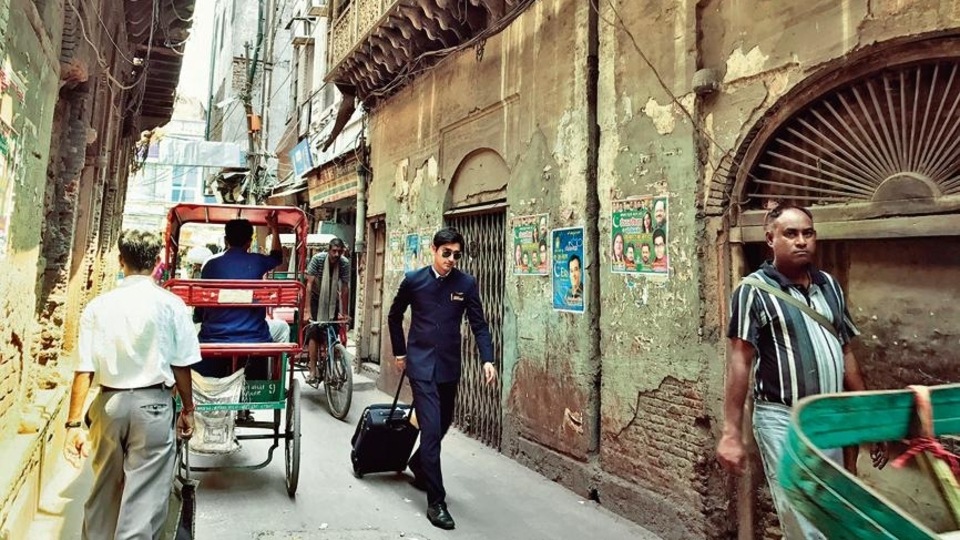
Dating from the early 17th century, the so-called Old Delhi is not really old, compared to Delhi’s other cities. But its dense history makes it appear ancient, like a young person’s prematurely greying hair. Also known as the Walled City, most of its stone wall has been lost to time. Its neighbourhoods and streets barely retain the substance of their original character. Even so, they hide a glimpse of the early days in the names of their lanes and localities. These identities have been derived from professions and peoples, landmarks and landscapes, and also legends, real and otherwise. To know how these localities used to be, and what they have become, might not tell us explicitly about notable aspects of the city’s past but they clearly show us the shifting life patterns of its people. These place-names speak to us not only of the way we were, but also about how we may turn out to be tomorrow.
Here’s a new series—The Walled City dictionary—that will explore stories of Old Delhi places and their names, until all the galiyan and kucha are exhausted. Here are two to start with. The details are borne out of conversations with people who live in those places.
Galli Imli Pahari
This is a hill, near Gali Chooriwalan. Hills are a natural feature of Old Delhi, but now almost invisible because of modern constructions. One side of this hill is called Bhojla Pahari — after a dacoit called Bhojla — and the other, Imli Pahari, after a tamarind tree long dead. The quiet street snakes its way up the hill and is flanked by houses with old-style courtyards. One of them is popularly known as Neem walla Ghar, because it does have a neem tree, though it’s “only” 300 years old.
Kucha Pandit
Near Lal Kuan, originally called Kucha Panghat because of a well—panghat means riverbank. Later, the well disappeared and the name evolved to Pandit. Today, the locality has dozens of shops selling motor parts. One lane here leads to Mohalla Niyaryan, the setting of Ahmed Ali’s classic novel Twilight in Delhi


