
 E-Paper



Delhiwale: This way to Gali Unchi Masjid
Aneesuddin reflects on Gali Unchi Masjid's past, witnessing changes from single-storey homes to flats, noting a loss of community and sunlight.

 Prefer HTon Google


The noon sun has created a small, squarish pool of bright light in a corner of Gali Unchi Masjid. The venerable Aneesuddin is sitting within the parameters of this soothing, warm zone. Hands folded over the grip of his walking cane, he is gazing at what looks like a ruin.
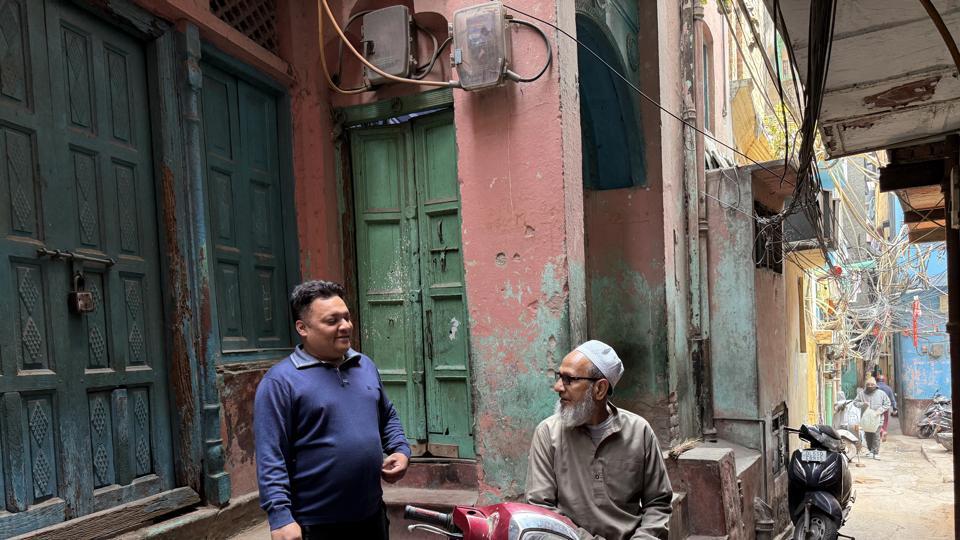
“That was a house,” he says. Only the building’s back wall remains. The wall’s slim, weathered lakhori bricks show through the plaster, the construction material of another era. “Earlier, all the houses here were made of lakhori,” Aneesuddin says. He has spent his entire life on this street. “I was born in this gali. My baap was born in this gali. My dada was born in this gali. My pardada was born in this gali. We have been living in this gali since the time of the Mughals.”
The conversation turns to the gali’s primary identity. Gali Unchi Masjid draws its name from a masjid that stood at an unchi, elevated, height. Over the decades, the ground gradually levelled. Today, the same masjid continues to stands on its original site, but it is rendered “unchi” only in name. Aneesuddin says all of this in a solemn tone.
At this moment, the lane is nearly empty. A cat is asleep on a parked scooter. Mongooses—so many of them!—are darting along the edges of the walls. “Our gali is full of cats and mongooses, and also rats,” Aneesuddin says, matter-of-factly.
The elderly man used to administer a “meat ka kaam” business. “My active life has concluded,” he says. Presently, he spends part of his waking hours at home, and the rest in his gali’s cozy outdoors, where he stays silent and contemplative.
During his childhood days, Aneesuddin says, every house in the gali was a single storey. In winter, the sun would spread evenly across the lane. Now, flats have replaced most of the old houses, and the tall buildings block the sunlight from entering most of the street. Soon he is joined by Nadeem, much younger, who introduces himself as the proprietor of a tandoori chicken momo shop. Nadeem says the “flats” began coming up in the gali 30 years ago. “Times have changed,” Aneesuddin says. “There is less love among people now. And less sunshine in the street.” Nadeem replies, “Less sunshine is good in summer.”
The two men rise and agree to stand together for a portrait.


Stay updated with all top Cities including, Bengaluru, Delhi, Mumbai and more across India. Stay informed on the latest happenings in World News along with Delhi Election 2025 and Delhi Election Result 2025 Live, New Delhi Election Result Live, Kalkaji Election Result Live at Hindustan Times.


