E-Paper



DJB says 67% STPs upgraded, rest to be done by 2026
The Delhi Jal Board upgraded 67% of its sewage treatment plants, aiming for full compliance by Dec 2025, amid pollution concerns from the NGT.

 Prefer HTon Google


The Delhi Jal Board (DJB) has upgraded 67% of its sewage treatment plants (STP) in accordance with the parameters prescribed by the Central Pollution Control Board (CPCB), while the remaining plants are expected to be upgraded by December 2025.
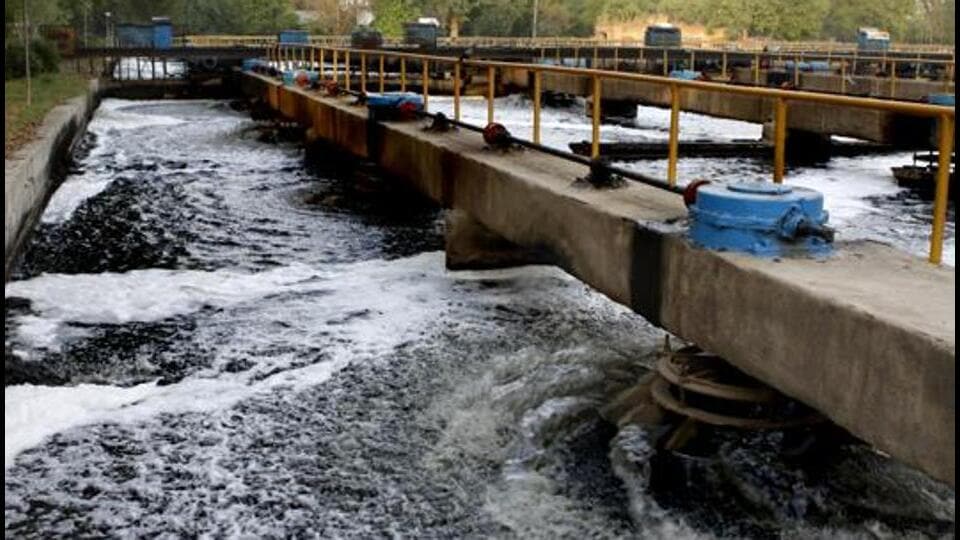
The water supply agency operates 37 STPs in the city, which generate 712 million gallons per day (MGD). Of these, the plants generating 479 MGD of water have been upgraded so far, DJB said in a report submitted to the National Green Tribunal (NGT) on Monday.
It also informed that the total water generation capacity is expected to be augmented to 804MGD by the end of this year and further to 964.5MGD by December 2025.
DJB was responding to the green court’s directions issued on September 4 this year when it criticised the water utility for failing to comply with its 2015 order calling for the operationalisation of 32 sewage treatment plants (STPs) on Delhi’s major and minor drains to trap local sewage.
The green court had observed that the water utility has built only 17 STPs over the past nine years, and noted that these plants are yet to be completed on the remaining 15 drains, which contribute to the high pollution levels in Delhi’s drain network and eventually in the Yamuna. It had further sought a response from DJB on the status of Delhi’s STPs and trapping of sewage.
NGT is hearing multiple pleas filed by RWAs and local residents, including the Nizamuddin West RWA, seeking remedial action to treat Barapullah drain and its subsidiary drains — Kushak drain, Defence Colony drain and Sunehripul drain. It is simultaneously hearing a plea on the Shahdara drain.
“The technology of the old plants is being upgraded to achieve the 10:10 parameters. Till date, plants with a capacity of 479 MGD have been upgraded on 10:10 parameters and the rest are also being upgraded on 10:10 parameters which are likely to be achieved by December 2025 in a phased manner,” said DJB in its submission.
The parameters require STPs to have the values of both biological oxygen demand (BOD) and total suspended solids (TSS) below 10mg/l post treatment.
Delhi is estimated to be generating around 792MGD of sewage each day, with only around 615MGD presently being treated.
Referring to the status of Delhi’s Decentralized STPs (DSTPs), out of the 32 planned, one had already been built at Sonia Vihar and is expected to be operational by end of this month. For the remaining 31 STPs, 40 spots have been identified, DJB said.
“As per the availability of lands, the balance of 31 has been accommodated in 40 locations, out of which, lands at 38 locations have already been allotted to DJB,” it said in the report.
Out of Delhi’s 639 JJ clusters, DJB said 581 had already been connected to STPs, with the remaining in various stages of completion. Only five were found to not be feasible for connection and trapping of sewage, it said.