E-Paper



‘Double-decker viaduct in South Delhi by 2024’
DMRC said the Metro viaduct will be on the upper deck, at a height of 18 metres from the ground, while a 2.4km flyover will run on the lower deck

 Prefer HTon Google


Authorities are set to complete south Delhi’s first double decker viaduct – which will see the construction of a six-lane flyover along the existing Mehrauli-Badarpur road, with a Metro corridor above it – by the end of 2024, Delhi Metro Rail Corporation (DMRC) officials aware of the matter said on Thursday.
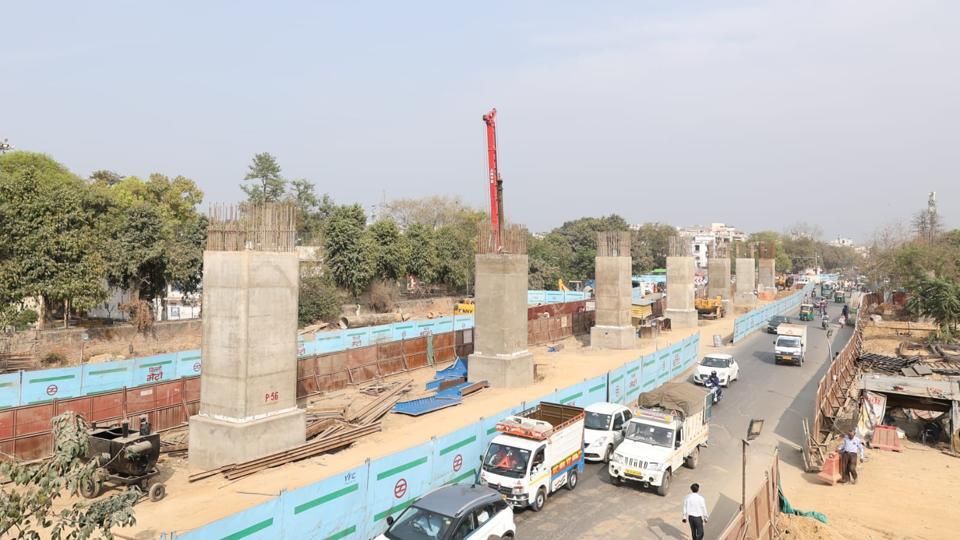
DMRC said the Metro viaduct will be on the upper deck, at a height of 18 metres from the ground, while a 2.4km flyover, which will start near the proposed Sangam Vihar Metro station and will end near the proposed Ambedkar Nagar Metro station, will run on the lower deck, built at a height of 9.3 metres. A road will also exist at the ground level.
The project is part of the DMRC phase 4 expansion, in which a new Silver Line corridor is being built between Aerocity and Tughalakabad. Though the deadline for the corridor itself is September 2025, officials said the flyover will be completed much earlier and will be handed over to the Public Works Department (PWD) for operationalisation.
“The construction of the double decker viaduct at the Ambedkar Nagar T-Point on the Aerocity - Tughlakabad corridor of phase 4 is progressing at good pace, and the first double height pier for this section has been cast. The double decker viaduct is likely to be ready by the end of 2024. This shall be south Delhi’s first such construction where a Metro line and a road flyover are being constructed one below the other,” said Anuj Dayal, principal executive director, corporate communication, DMRC.
PWD declined to comment about the project.
Officials said the project is fairly challenging as the road along which it is being built is very narrow. “This will be one of the most challenging engineering projects for DMRC since the space available for construction work here is extremely narrow. The launching work shall also be done at two levels for the road flyover and the metro viaduct, which will also be a challenge,” Dayal said.
DMRC is building two more such double decker viaducts as part of its phase 4 expansion – a 1.4km flyover-cum-metro viaduct on the Majlis Park-Maujpur section of the Pink Line, and an 880m section between Azadpur and Ashok Vihar on the Magenta Line.
To be sure, similar double-decker viaducts have already been built in Jaipur and Nagpur.
Another DMRC official, who declined to be named, said since PWD had already planned flyovers in these stretches, for feasibility purposes, it was decided that the Delhi Metro will complete civil construction of these flyovers as they are to be built along metro lines.