
 E-Paper



DPCC removes key dust norms in shorter checklist for builders
In a Sept 3 order, the list of compliances on DPCC’s dust portal has been reduced to 12 from the earlier 27 — effectively removing or merging at least 14 checks

 Prefer HTon Google


The Delhi Pollution Control Committee (DPCC) has reduced the number of self-compliance measures construction firms must follow to control dust pollution. In a revised order issued on September 3, the list of compliances on DPCC’s dust portal has been reduced to 12 from the earlier 27 — effectively removing or merging at least 14 checks.
Officials said the “rationalisation” was carried out to make reporting simpler, but a comparison of the old and new lists shows that several key requirements – including some relating to worker safety and on-site pollution control – no longer figure.
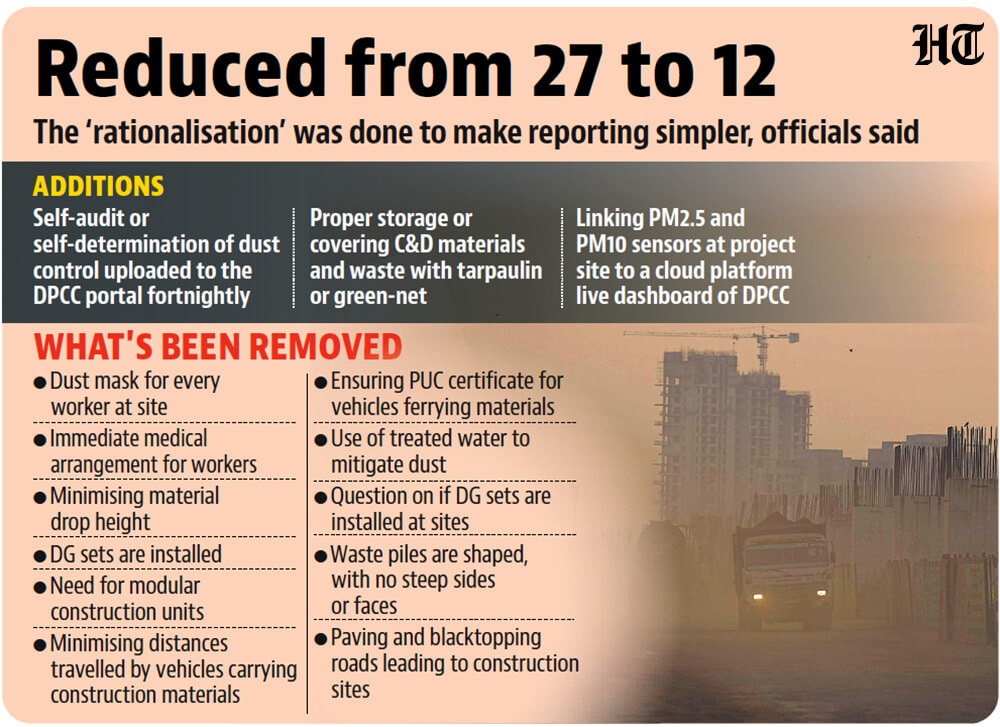
Among the points deleted are whether diesel generator (DG) sets are installed at construction sites, whether roads leading to sites are paved, and whether material mixing is carried out in enclosed areas. Further, questions asking whether workers were provided dust masks, or had access to immediate medical help for dust-related health issues, have also been dropped entirely.
Also removed from the checklist are requirements for displaying dust-mitigation measures prominently at construction sites, ensuring DG sets are fitted with acoustic enclosures and proper stack height, minimising material drop height, and using dust suppressants. Earlier checks on whether vehicles at construction sites carried valid pollution under control (PUC) certificates, whether modular construction units were used, and whether storage piles were properly shaped without steep faces, have also been struck off.
One major modification appears right at the top of the new list. Earlier, project proponents were asked if PM2.5 and PM10 sensors were installed at the site. Now, the question specifies “low-cost PM2.5 and PM10 sensors” and asks whether these are linked to a cloud storage platform with a live dashboard on DPCC’s dust control portal.
A fresh compliance requirement has also been added: whether construction and demolition (C&D) material and waste are stored properly and covered with tarpaulin or green net at the site. While the old list already had conditions on C&D waste disposal, this new version is more detailed on on-site storage.
Some measures have been retained, largely in line with earlier norms. These include installing video fencing with remote connectivity, erecting wind barriers and dust screens around construction sites, using anti-smog guns and adequate water sprinkling, covering vehicles carrying building material, wheel washing to prevent debris being carried onto roads, and using wet-jet systems for cutting and grinding materials in enclosed areas.
Under the new order, project proponents must continue to conduct self-assessments and upload fortnightly compliance reports digitally signed on the dust portal. DPCC and other agencies are expected to remotely monitor measures such as video fencing and the performance of low-cost PM sensors.
Officials said the reduction was aimed at eliminating “insignificant issues” and making the system easier for project developers to follow.
DPCC did not respond to HT’s queries on why points related to worker protection and site-level pollution checks were removed.
The Commission for Air Quality Management (CAQM) in the National Capital Region had originally directed that 27 compliances be incorporated into the DPCC dust portal. The new order now brings this down to less than half.
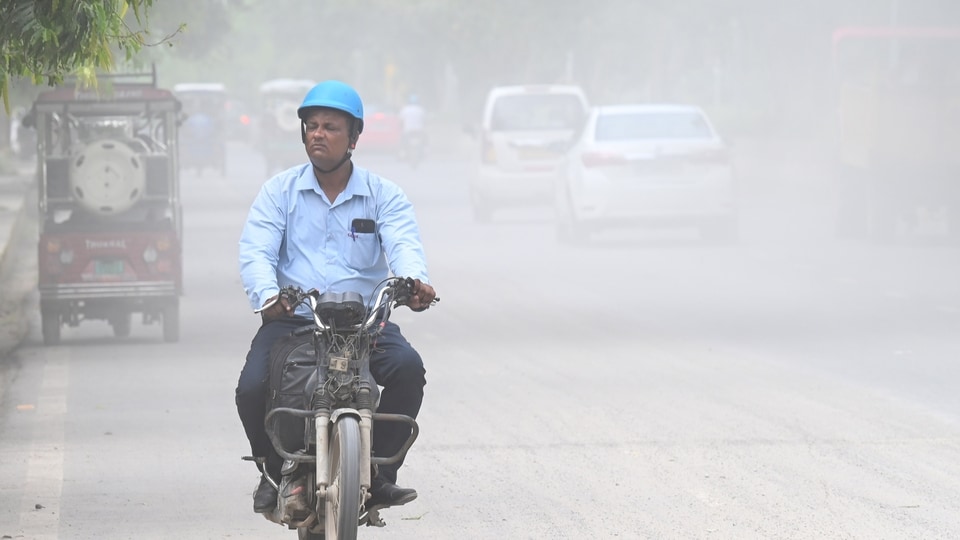
Environmental experts have long pointed out that construction dust contributes significantly to Delhi’s poor winter air quality.
S Velmurugan, chief scientist and head of the traffic engineering division at the Central Road Research Institute (CRRI), said, “Dust is a major issue for a city like Delhi and dust mitigation at construction sites is to be taken very seriously. While removing measures like minimising distance travelled by vehicles carrying construction materials or displaying dust mitigation measures at the sites can still be rationalised, removing questions related to whether workers have been provided with dust masks or immediate medical help available for workers at the site is very concerning.”
“Most workers at these sites do not have proper shoes or jackets. Dust masks are very essential in protecting the workers against a lot of medical issues. Moreover, availability of immediate medical help needs to certainly be included in the set of questions,” he said.

Stay updated with all top Cities including, Bengaluru, Delhi, Mumbai and more across India. Stay informed on the latest happenings in World News along with Delhi Election 2025 and Delhi Election Result 2025 Live, New Delhi Election Result Live, Kalkaji Election Result Live at Hindustan Times.


