E-Paper



DPCC to monitor impact of firecrackers on air quality
The panel will set up laboratories at the three locations —Satyavati College in Ashok Vihar; ITI Shahdara in Vivek Vihar and on Aurobindo Marg — to assess the impact of emissions from firecrackers on the air quality

 Prefer HTon Google


The Delhi Pollution Control Committee (DPCC) will monitor air quality at three locations in the city for a period of 15 days, beginning a week prior to Diwali, officials aware of the matter said.
The panel will set up laboratories at the three locations —Satyavati College in Ashok Vihar; ITI Shahdara in Vivek Vihar and on Aurobindo Marg — to assess the impact of emissions from firecrackers on the air quality. It will also analyse the quantity of different metals released by firecrackers, in addition to pollutants like PM 2.5, PM 10, SO2 and NO2, DPCC said.
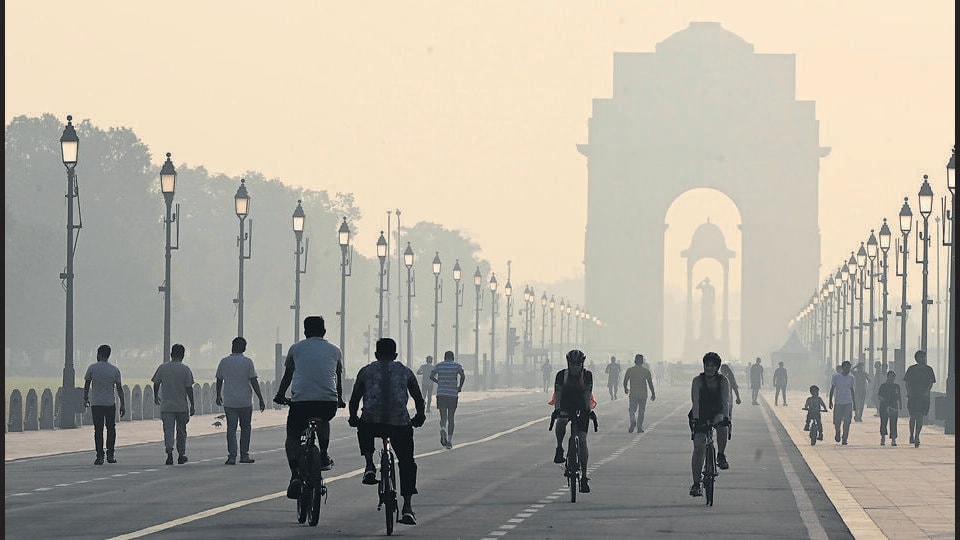
Every year, a thick haze shrouds the Capital just after Diwali as pollution due to bursting of firecrackers lead to a sharp dip in the air quality -- it is made worse by the smoke from stubble burning that also starts to pick up in the neighbouring state, making Delhi a gas chamber amid changing meteorological conditions that exacerbate the crisis.
“The assessment will be for a period of 15 days, which includes seven days before Diwali, on Diwali day and seven days after Diwali. This will give us an indication of the change in pollution levels and different pollutants that get introduced through firecracker emissions,” a senior DPCC official said.
A tender was floated in this regard on October 11, and bids will be opened on October 16, the official added. According to the tender, the exercise will cost around ₹8 lakh.
A toxic cocktail of heavy metals, including Lead (Pb), Nickel (Ni) and Arsenic (As), are released into the air when firecrackers are burst.
The Delhi government on September 9 announced a complete ban sale, purchase, storage and manufacture of all types of firecrackers, including green crackers till January 1, 2025. However, the ban is yet to be formally notified by DPCC. To be sure, the government has enforced a blanket ban on firecrackers every year since 2020, but it has little effect on the ground — a black market forms selling firecrackers unabated across NCR — and usually by Diwali, there is rampant violation, leading to the city getting engulfed in a thick haze for several days.