
 E-Paper



Grid not fully green yet, but full EVs still cleaner: Study
The study shows that BEVs in the passenger car segment emit at least 38% less greenhouse gases per kilometre than ICE vehicles


Battery electric vehicles (BEVs) are already significantly cleaner than petrol or diesel cars — even with India’s current electricity grid — and will become even greener as the power grid shifts towards more renewables, a new study by the International Council on Clean Transportation (ICCT) and IIT Roorkee has found.
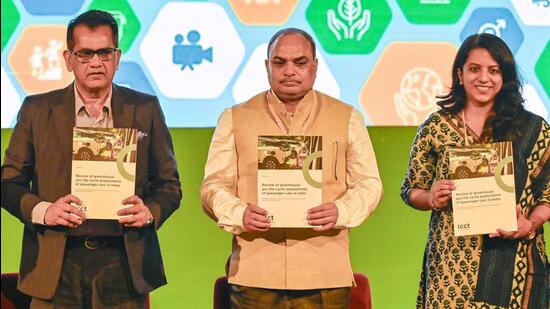
The study, released on Thursday, shows that BEVs in the passenger car segment emit at least 38% less greenhouse gases per kilometre than internal combustion engine (ICE) vehicles. And that gap will grow as India’s electricity gets cleaner. As of November 2024, renewable energy-based electricity generation capacity stands at 46% of the total installed capacity.
The researchers warned against delaying electric vehicle adoption while waiting for a greener grid. “Petrol and diesel cars bought today will stay on the road for 10-15 years, continuing to pollute,” the report notes. “But EVs will only get cleaner as the grid improves.”
The report also challenged claims around biofuels, saying many studies ignore the impact of land-use change — such as cutting forests to grow biofuel crops — which can cancel out the climate benefits.
Another major finding was that hybrid vehicles often show a big gap between lab-tested and real-world fuel use. The study called for more realistic emissions testing and accurate accounting for factors like charging losses in EVs.
“Life-cycle assessments need to reflect how our electricity grid is changing, how people actually use vehicles, and where biofuels come from,” said Sunitha Anup of ICCT, one of the study’s authors. “These things matter because today’s assumptions shape tomorrow’s climate impact.”
The findings come at a time when India is pushing for cleaner transport options to meet its 2070 net-zero emissions goal. Transport currently accounts for about 14% of India’s total emissions.

Stay updated with all top Cities including, Bengaluru, Delhi, Mumbai and more across India. Stay informed on the latest happenings in World News along with Delhi Election 2025 and Delhi Election Result 2025 Live, New Delhi Election Result Live, Kalkaji Election Result Live at Hindustan Times.


