
 E-Paper



Fresh tests show improvement in Satpula Lake water quality, DPCC tells NGT
The analysis showed total coliform levels in the lake at 2,200 most probable number (MPN/100 ml), below the standard of 5,000 MPN.

 Prefer HTon Google


After reporting earlier this year that water at south Delhi’s Satpula Lake was failing quality norms due to eutrophication (high algal bloom), the Delhi Pollution Control Committee (DPCC) has now told the National Green Tribunal (NGT) that fresh samples from both the lake and the adjoining sewage treatment plant (STP) largely meet the standards for propagation of wildlife fisheries. The committee added that the STP is operational and treating sewage before it enters the lake.
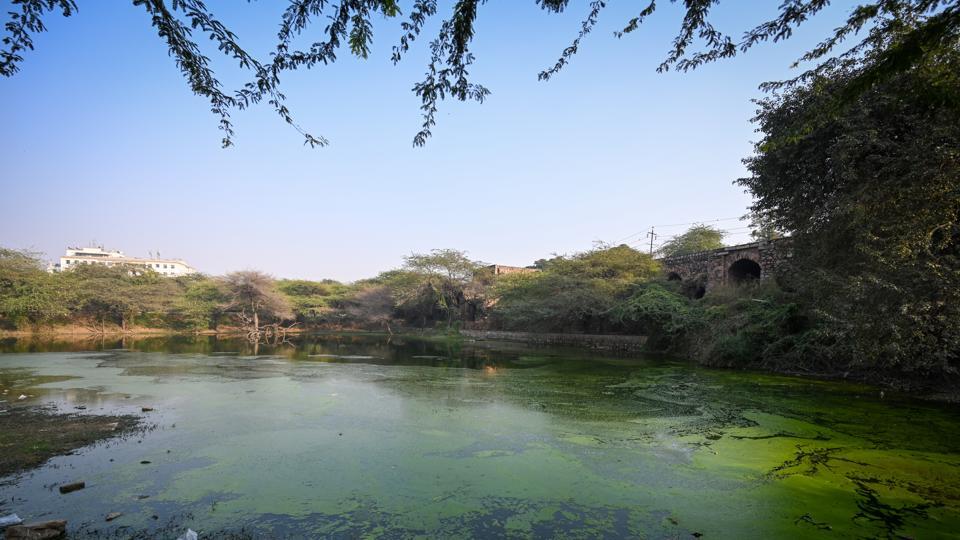
The update follows NGT’s August directive asking the DPCC to conduct a fresh inspection of the lake after receiving conflicting accounts on sewage discharge into the water body. A bench headed by NGT chairperson justice Prakash Shrivastava noted that while the DPCC had flagged poor water quality and said the STP next to the lake was non-functional, a Delhi Development Authority (DDA) report claimed the lake was in good condition and receiving only treated water.
Given the discrepancy, the tribunal directed the DPCC to verify the STP’s performance, collect and analyse water samples, and determine whether untreated sewage was entering the lake. The case stemmed from the tribunal taking suo motu cognisance of an April 2024 news report stating that sewage was flowing into the water body.
In its submission dated December 1, 2025, the DPCC said samples from the STP and the lake were collected on November 14. “During the inspection, the STP was found to be operational. As per information provided by the operator of the STP, DDA pumps wastewater from the adjacent drain and treats it in the STP, discharging the treated effluent into the lake for its rejuvenation,” the report said, adding that no bypass was observed.
The analysis showed total coliform levels in the lake at 2,200 most probable number (MPN/100 ml), below the standard of 5,000 MPN. Dissolved oxygen (DO), however, was 1.7 mg/l against the required 4 mg/l or more, while biological oxygen demand (BOD) was 20 mg/l, far higher than the prescribed 3 mg/l or less.
For the STP, ammonical nitrogen and phosphate were within permissible limits, but faecal coliform levels were found to be 1,800 MPN — well above the standard of 230 MPN for STPs.
Earlier, the DDA’s April 21 report had stated that there was no sewage contamination and that wastewater from the drain was being treated by the STP.
“In view of the above contradictory material on record, we direct the DPCC to carry out the spot inspection, ascertain the status of performance of the STP, get the sample analysis of treated water discharged from the STP as well as sample analysis of lake water, and also find out if the STP has any bypass permitting untreated sewage to be discharged in the lake,” the bench had said in its August 12 order.


Stay updated with all top Cities including, Bengaluru, Delhi, Mumbai and more across India. Stay informed on the latest happenings in World News along with Delhi Election 2025 and Delhi Election Result 2025 Live, New Delhi Election Result Live, Kalkaji Election Result Live at Hindustan Times.


