E-Paper



Half of Delhi’s water bodies remain only on paper, shows revenue dept survey
According to revenue records and satellite data, Delhi has 1,367 water bodies. However, a ground-truthing exercise shows stark difference.

 Prefer HTon Google


New Delhi
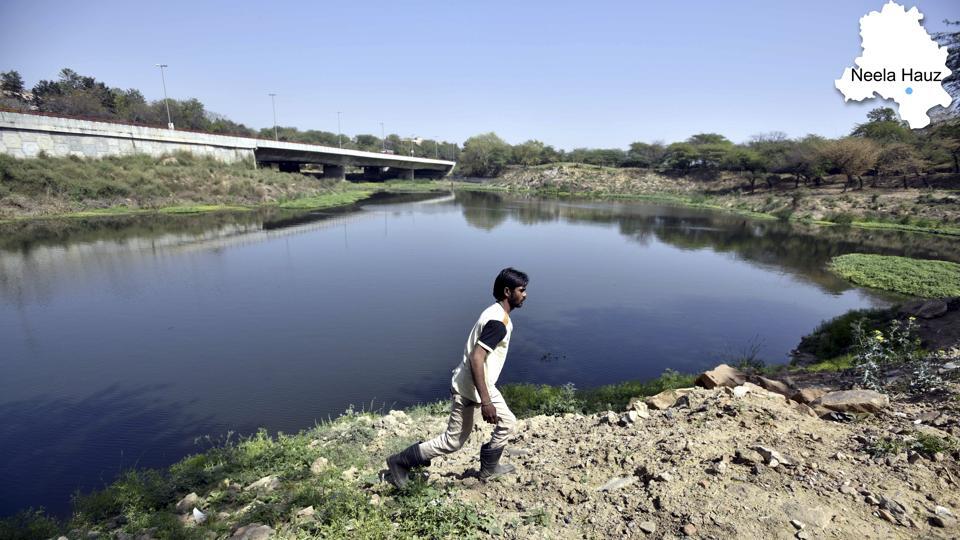
Nearly half (49.1%) of Delhi’s official water bodies do not exist anymore – they have either gone “missing” or have been encroached upon, according to an ongoing official ground assessment carried out by the Delhi government which startedin April.
According to a submission made by the Delhi government in the Delhi high court in April, the Capital had a total of 1,367 recorded water bodies – lakes, ponds andjohads (percolation ponds)—up from 1,045 based on revenue records, due to addition of more water bodies based on satellite imagery.
ALSO READ- Arvind Kejriwal moves Supreme Court for bail, cites Manish Sisodia order
The Delhi high court directed the government to carry an on-ground assessment of the water bodies, following which an exercise was kicked off in the same month by the Delhi revenue department and Delhi State Wetland Authority (DSWA). They have, so far, assessed 1,291 of these water bodies, out of which only 656 were found, and the remaining 635 do not exist other than in maps and records.
Officials familiar with the matter said that the exercise to assess the remaining 76 water bodies is underway and is likely to be completed in the next few months. Officials said they are yet to take a call on steps with regard to encroached water bodies.

For the surviving 656 water bodies, an officer will be appointed to ensure their upkeep and maintenance, officials aware of the developments said. “The officer will have to visit the water body at least once every fortnight and ensure it is being maintained adequately and that no encroachments have come up,” an environment department official, who was part of a meeting of the integrated drain management cell (IDMC), where the data was shared, said.
The census for water bodies showed encroachment over the years has eaten up a significant number of the water bodies.
According to the data, only 216 of 330 water bodies in southwest Delhi were found; the number was 135 of 249 in north Delhi, 78 of 190 in south Delhi, and 97 of 130 in northwest Delhi. The fewest water bodies were identified in east Delhi, where only six of the listed 50 were found. In Shahdara, only seven of the 37 water bodies were found.
ALSO READ- Delhi forest dept to drop 10,000 seed balls for plantation at Asola
The data was shared by the revenue department with IDMC in its latest meeting on July 15.
The environmental department official cited above, who did not wish to be named, said public participation to protect water bodies was also being explored, and the revenue department would take the help of the Public Works Department (PWD) to remove encroachments. “For the revival and upkeep of water bodies, a plan is being drawn and once an officer is assigned for each water body, work on their protection will begin,” the official added.
In the same meeting, the revenue department also said it formed district-level committees to protect water bodies and execute revival projects. Committees were created in nine of 11 districts, with their constitution pending in West and New Delhi districts.
Paras Tyagi, an environmental activist, who is part of the Delhi-based social NGO CYCLE India, said a majority of water bodies that have gone missing are old village ponds or “johads (percolation ponds)”, with no efforts being made to revive them and remove encroachments.
ALSO READ- Manish Sisodia may return to CM Kejriwal's Delhi cabinet
“In some cases, they have dried up but are not encroached upon. In most other cases, these water bodies have been encroached upon,” he said.
Tyagi, who is a resident of Budhela village in Vikaspuri, west Delhi, said he has been fighting to protect and revive a local water body spread over nearly 1.5 acres, as there are plans afoot to use the site to build a Sahitya Kala Parishad community centre.
Tyagi said the water body dried up nearly two decades ago, but any efforts made in the past decade, which included approaching landowning bodies and higher authorities in Delhi, yielded no results. In February this year, he filed a petition in the Delhi high court, seeking a stay on the construction of the centre.
“Old maps show the water body existed here. However, once encroached upon, it will be next to impossible to revive this water body,” he said.