
Sign in

Haryana’s first open jails to begin ops in Faridabad, Karnal

The state government in 2018 allocated ₹62 lakh for the renovation of 36 flats for this purpose at the Faridabad jail, and ₹60 lakh for 30 flats in Karnal

Published on: Dec 14, 2023, 22:31:23 IST
Share
Share via
  • facebook
  • twitter
  • linkedin
Copy link
  • copy link

The Haryana government is set to inaugurate the state’s first open jails in Faridabad and Karnal by the end of this week, senior officials aware of the development said on Thursday.
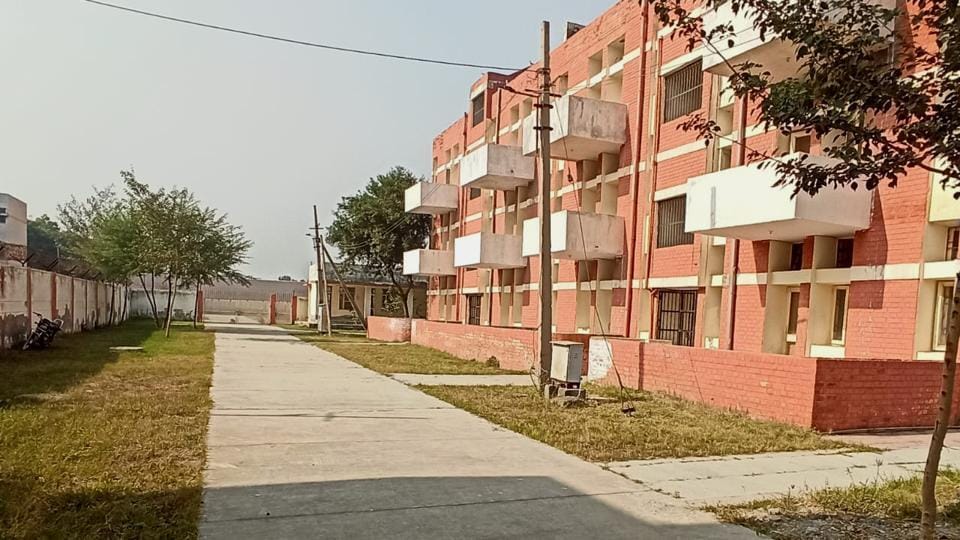
The state's first open jail at Neemka village in Faridabad’s Sector 73 on Thursday. (Parveen Kumar/HT Photo)

An open jail is a concept which relies on the self-discipline of inmates — prisoners are trusted to complete their sentences with minimal supervision and perimeter security, and are often not locked up in a cell. They are also permitted to take up employment, and are even permitted to live with their families inside the jail complex.

The open jail concept is popular in several countries, including the UK, Ireland, and the Philippines. In India, similar prisons currently function in the Capital’s Tihar jail, Uttar Pradesh, and West Bengal.

The Haryana government in 2018 allocated ₹62 lakh for the renovation of the 36 flats for this purpose at the Faridabad jail, while nearly ₹60 lakh for 30 flats in Karnal.

Officials said 54 convicts have been selected from 20 jails across Haryana to serve out their sentences in open jails — 20 shall be moved to Faridabad, while the 34 will be shifted to Karnal. A majority of the inmates selected for the programmes are serving life terms, the officials added.

The 54 have been selected on the basis of good behaviour while serving their sentence in prison, officials said.

Haryana director general of police (prisons) Muhammad Akil said that, as part of the open jail concept, inmates will be allowed to live with their families in apartments inside the jail complex. He said that those selected for the programme will be allowed to work outside the prison between 10am and 6pm if place of employment is within a 10km radius from the jail complex.

“Inmates living in open jails cannot leave the city, or spend time at any place apart from their workplace. They are trusted to complete their sentences with minimal supervision, and perimeter security and are often not locked up in their prison cells,” the DGP said, adding that the prison department will not be responsible to find a job for them.

Jawahar Yadav, officer on special duty (OSD) to Haryana chief minister Manohar Lal Khattar, said, “Once started, the concept will motivate inmates to focus their efforts on reformation so that they too can work and support their families in an open jail.”

The residential facility inside the jail complex will be free of cost — inmates or their families will not be charged any rent or fee for basic amenities. Akil said each inmate will get support for a month until he gets a job, and his groceries, electricity bill and other expenditures will be borne by the department.

  • Leena Dhankhar
    ABOUT THE AUTHOR
    Leena Dhankhar

    Leena Dhankhar is Senior Editor and Bureau Chief, Gurugram, at Hindustan Times, where she has spent over 17 years chronicling the transformation of one of India's fastest-growing urban regions. From starting her career as a crime reporter to leading the Gurugram bureau, her journalism has been defined by investigative reporting, in-depth storytelling and an unwavering focus on public interest. Over nearly two decades, she has reported extensively across crime, politics, civic governance, elections, real estate, environment, courts, sports, education and entertainment, covering Gurugram, Faridabad, Nuh and Palwal. Her reporting has exposed several major scams and systemic failures, including insurance frauds, waste management irregularities, illegal arms manufacturing units in Nuh, illegal mining in the Aravallis, organised crime networks and governance lapses affecting millions of residents. Known for her investigative work and exclusive stories, Leena has reported on high-impact national issues, including the Nicaragua charter flight carrying Indian migrants that was turned back amid allegations of human trafficking, exposing the growing network of illegal immigration rackets. Her work has also focused on gang wars, prison administration, juvenile crime, women and child protection systems, the functioning of the Juvenile Justice Board and Child Welfare Committee, and environmental challenges such as pollution, waterlogging and deteriorating civic infrastructure. Beyond hard news, Leena has extensively documented Haryana's rich heritage, forests and wildlife, bringing attention to the state's historical landmarks, biodiversity, conservation efforts and ecological challenges through immersive reportage and feature writing. Her journalism has consistently gone beyond breaking news. She has documented Gurugram's rapid urbanisation through long-form narratives and enterprise reporting on issues ranging from pothole-ridden roads, flooding and waste management to the changing social fabric of India's Millennium City. She also writes widely read feature columns, including The Outsider, Changemaker, and Concern for Gurugram, profiling people, places and ideas shaping the city's identity. Leena is the author of Gurugram School Murder, published by Juggernaut Books, a deeply reported account of one of India's most high-profile school murder investigations. She is currently working on her second book, an investigative work exploring some of India's most significant scams and fraud investigations. Beyond print journalism, she has expanded her storytelling through public speaking and digital media. She is a TEDx speaker and has produced podcasts exploring Gurugram's transformation, civic challenges and untold stories. Her work reflects a commitment to narrative journalism that combines rigorous reporting with compelling storytelling. A law graduate with an MBA in Human Resources, Leena brings a multidisciplinary perspective to her reporting, particularly on governance, public policy and legal affairs. She has travelled extensively across India to pursue investigative assignments, often reporting from remote locations and conflict-prone areas in search of stories that matter.Read More