
 E-Paper



HC hits out at schools for not giving entry to EWS students
Under the Right to Education (RTE) Act of 2009, at least 22% seats in entry-level classes have to be reserved for students from EWS or disadvantaged groups and 3% seats for children with disabilities.


The implementation of the Right to Education (RTE) Act at the elementary school level in the national capital is “miserable” and in “tatters”, the Delhi high court said on Friday, adding that it “cannot remain a mute spectator to the outright bulldozing of human rights” by those imparting education.
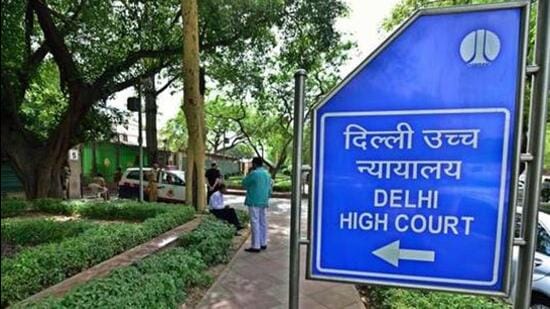
The court’s remarks came while deciding a batch of 39 petitions by students from the economically weaker section (EWS) category, who alleged that they were denied admission to private unaided schools in the Capital, despite receiving admission letters from the Delhi government’s department of education (DoE).
Justice Chandra Dhari Singh on Friday said no private unaided school in the city can deny admission to EWS students, and added that the government can derecognise erring schools for not complying with DoE directives.
Also Read | Students left in lurch as U.P. govt fails to pay school fee under RTE
The court said if schools want to refuse admission to EWS students, they need to file an application with DoE within a week of the confirmation of admission. The department will then decide the plea after allowing the school an opportunity to place its stand.
Under the Right to Education (RTE) Act of 2009, at least 22% seats in entry-level classes have to be reserved for students from EWS or disadvantaged groups and 3% seats for children with disabilities.
Remarking that the “only crime of these children is that they were born in poverty”, the court asserted that “its conscience is laden with the woes of the poor children and their parents”.
Also Read | Exams for classes 3 to 8 as Maha adopts ‘Kerala model’
“The state of affairs is appalling, anguishing and agonising. It is a travesty of justice and an utter failure on the part of the state in its duties of a welfare state… This court, as a custodian of the Constitution, cannot remain a mute spectator to the outright bulldozing of human rights by those in the noble service of imparting education, thus bringing bad name and repute to the same,” the court said in an 85-page judgment.
DoE submitted that despite directions and circulars issued, private schools have been undoing the mandate and intent of the RTE Act.
The court said that the provisions of the RTE Act and directives of DoE are “being violated and brutally lynched in broad daylight”.
Also Read | Recognition of DPS Rohini suspended for hiking fee in ’21-22 session
“This is the status, where circulars in form of letters are exchanged between the State and the Schools, while poor children along with their parents, despite having followed the due procedure, are forced to move from pillar to post and are being humiliated at every step with the only hope that on some fortunate day, Lady Luck will shower her blessings and these children will get admission in a school,” the court said.
During the proceedings, the counsel representing the private unaided schools argued that in order to secure admissions, parents play fraud and forge documents.
On this aspect, the court directed DoE to carry out necessary screening as well as to mandate the submission of necessary documents to authenticate the credentials of the child and their parents, and to verify the facts regarding eligibility while shortlisting, allotting and notifying the candidates who are found fit for admission to respective neighbourhood schools under the EWS quota.
The court, however, clarified that the admission of an EWS student shortlisted and allotted by the DoE for being admitted shall not be denied for want of satisfaction of credentials of the candidate by the school.
“Mere suspicion or doubt on the credentials of the candidate on the basis of fact-finding exercise carried out by the school, cannot be a ground to deny admission, otherwise it will render a death knell to the spirit of the RTE Act. The schools as such, in the matters of admission under the Act/Rules, cannot bestow upon themselves the roles of the complainant, advocate as well as the adjudicator in such cases. Rather, if despite the due process adopted by the DoE for screening, in case the school, after admitting the child, suspects fraud being committed by the ward or their parents, they can seek recourse to legal remedies as available,” the court said.
The court also rejected the arguments by the schools that they are only required to admit EWS students corresponding to the general category admissions, adding that it is not the school’s discretion to refuse admission to students on the basis that there are “insufficient general category admissions”.
“The object of imparting education is charitable and not to profiteer, and the appropriate government is duty bound to reimburse the expenses of the students admitted against the EWS category. Therefore, no question arises to peg the number/percentage of the students admitted under this category to the actual number of admissions. It is thus settled that the number of the students to be admitted has to be calculated on the basis of the strength as self-declared by the school,” the court said.
Justice Singh also held that the “declared strength cannot be dynamically updated on the basis of the actual admissions being carried out and the poor children cannot be kept in limbo on a daily basis”.
“This will lead to a state of chaos and will defeat the very intent of the legislation. Lesser admissions as compared to the declared strength could be taken as a defence when the nation was fighting with the Covid-19 pandemic; however as on date, lesser admissions made cannot be considered to be a ground reality, and even be considered as an argument,” the court said.
The court said that economic empowerment to the weaker sections of the society is a fundamental requirement for ensuring equality of status and to promote fraternity assuring dignity as envisioned by the founding fathers of our Constitution.
Quoting a Sanskrit poem, the court said that while charity by way of giving food to a person is a great deed, giving “vidya” (education) is even better, since the satisfaction obtained from consuming food is momentary, but that obtained from “vidya” lasts a lifetime.
“This probably could be translated, not precisely yet contextually, to the saying ‘Give a man a fish, you feed him once. Teach him to fish and you feed him for life’. Thus, the charity of imparting education is the greatest of all charities. Imparting education is a charitable cause and a calling that cannot be allowed to be metamorphosed into a platform for profiteering,” the court said.
The judge also quoted Mahatma Gandhi’s thoughts on “nai talim” (new education), saying the Father of the Nation expressed that the basic education should be free and compulsory for all people between the ages of 7 and 14, irrespective of their economic backgrounds.
It said that while the country is rejoicing the Azaadi ka Amrit Mahtosav, on the occasion of the 75th Anniversary of Indian Independence – of liberty from the clutches of colonialism, it is an occasion to relish as well as retrospect, adding that even though we have achieved political independence in 1947, but social and economic freedom still evades us.
“…. that letters of law remain in black and white devoid of flesh and blood unless they are given effect to. Welfare legislations must be implemented in letter and spirit to ensure that objectives sought therein are implemented by making the fruits accessible to and exercised to the benefit of the last person in the society for whom the legislation was brought in,” the judge asserted.


Stay updated with all top Cities including, Bengaluru, Delhi, Mumbai and more across India. Stay informed on the latest happenings in World News along with Delhi Election 2025 and Delhi Election Result 2025 Live, New Delhi Election Result Live, Kalkaji Election Result Live at Hindustan Times.


