E-Paper



Indians losing 1.51 years of life on average to pollution: Health Effects Institute study
The report also found that on an average, more than 40% of the world’s population currently lives in areas where ozone levels exceeded the least stringent WHO interim target (100 µg/m3) in 2019, with 95% of the Indian population currently living in areas where the long-term ozone targets of 60 µg/m3 are not being met.

 Prefer HTon Google


On an average Indians lose 1.51 years of their life to air pollution, according to a report by the US-based Health Effects Institute (HEI).
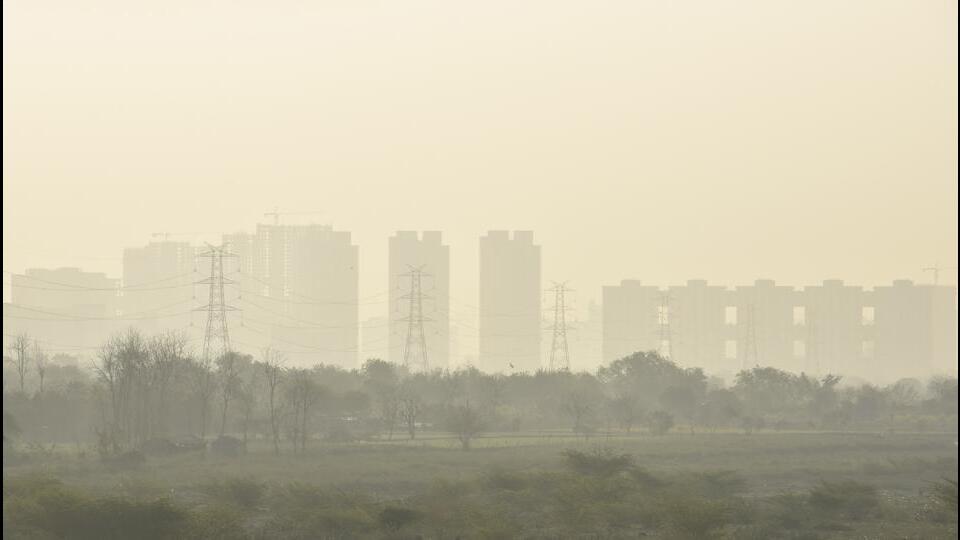
In a separate report, the institute also said that 93% of India’s population lived in areas where air pollution was nearly seven times of the World Health Organisation (WHO) standards.
In an annual report, titled State of Global Air analysis for the year 2020, HEI said that 93% of India’s population is currently exposed to the air containing at least 35µg/m3 concentration of PM2.5 (particulate matter of the size of 2.5 microns). According to the WHO standards, the upper annual limit for PM2.5 is 5µg/m3, and the 24-hour ceiling is 15µg/m3.
Based on the estimates for 2019, no country reported average national PM2.5 levels below the WHO standards of of 5µg/m3, the report said.
In the first report titled ‘How Does Your Air Measure Up Against the WHO Air Quality Guidelines?’ -- HEI, in collaboration with the Institute for Health Metrics and Evaluation’s (IHME) Global Burden of Disease (GBD) project, looked at the percentage of population in each country that was currently meeting WHO’s norms for both PM 2.5 and ozone.
According to the assessment, no country in the world is currently meeting WHO’s new guidelines of 5µg/m3 for PM 2.5, while fewer than half of the world’s countries meet the least stringent interim target of 35µg/m3.
Based on this target, India is currently ranked as the fifth most impacted country in terms of air pollution, behind Egypt (1st), Pakistan(2nd), Bangladesh (3rd) -- where 100% of their population exposed to 35µg/m3, followed by Nigeria in fourth, with 95% of its population receiving such an exposure.
The report also found that on an average, more than 40% of the world’s population currently lives in areas where ozone levels exceeded the least stringent WHO interim target (100 µg/m3) in 2019, with 95% of the Indian population currently living in areas where the long-term ozone targets of 60 µg/m3 are not being met.
“Only 3% of the population in the Philippines lives in areas where the WHO guideline value for long-term ozone level is exceeded. On the other hand, countries including China, Germany, the United States, and India have more than 95% of their populations living in areas where the guideline value is not met,” said the study.
Dr. Pallavi Pant from Health Effects Institute, USA, says the two reports show the impact air pollution can have on the lives of people across the world.
“When we think about air pollution, we not only need to consider the PM 2.5 levels, but ozone and other major air pollutants also need to be looked at. Targeted, long-term action on air pollution is critical to address matters related to public health and WHO’s Air Quality Guideline values, and the associated interim targets offer a useful pathway for countries towards cleaner air,” she said.
As per the second report released, titled ‘How Does Air Pollution Affect Life Expectancy Around the World?’ -- the average Indian is losing 1.51 years of their live due to high PM 2.5 levels, behind only Egypt (2.11 years) and Saudi Arabia (1.91 years). It also found that with an Average Annual Population-Weighted PM2.5 of 83 µg/m3 in 2019 for India, as many as 9,79,700 deaths in the country could be attributed to PM 2.5.
Both reports used air quality data from the year 2019 (the latest year for which globally comparable estimates are available).
“In India, the life expectancy reduction from exposure to ambient PM2.5 (1.51 yr) is greater than the reduction in life expectancy from all cancers (1.39 yr),” the study states, putting India’s loss of life expectancy in perspective.
Dr. Arden C Pope from the Brigham Young University in USA says the study can allow countries and its citizens to work on targets for air quality to ‘regain’ life expectancy years currently being lost.
“Studies of air pollution provide compelling evidence that long-term exposure to air pollution contributes to increased mortality risk and significant loss of life expectancy—two or more years in highly polluted areas. There is, however, good news and this life expectancy can be improved once again with sustained reductions in air pollution levels,” he said.