
 E-Paper



Lack of night cooling period poses risk to health: Experts
Delhi's warmest May night in 14 years poses health risks, particularly for vulnerable groups lacking cooling, as warm nights hinder body recovery.

 Prefer HTon Google


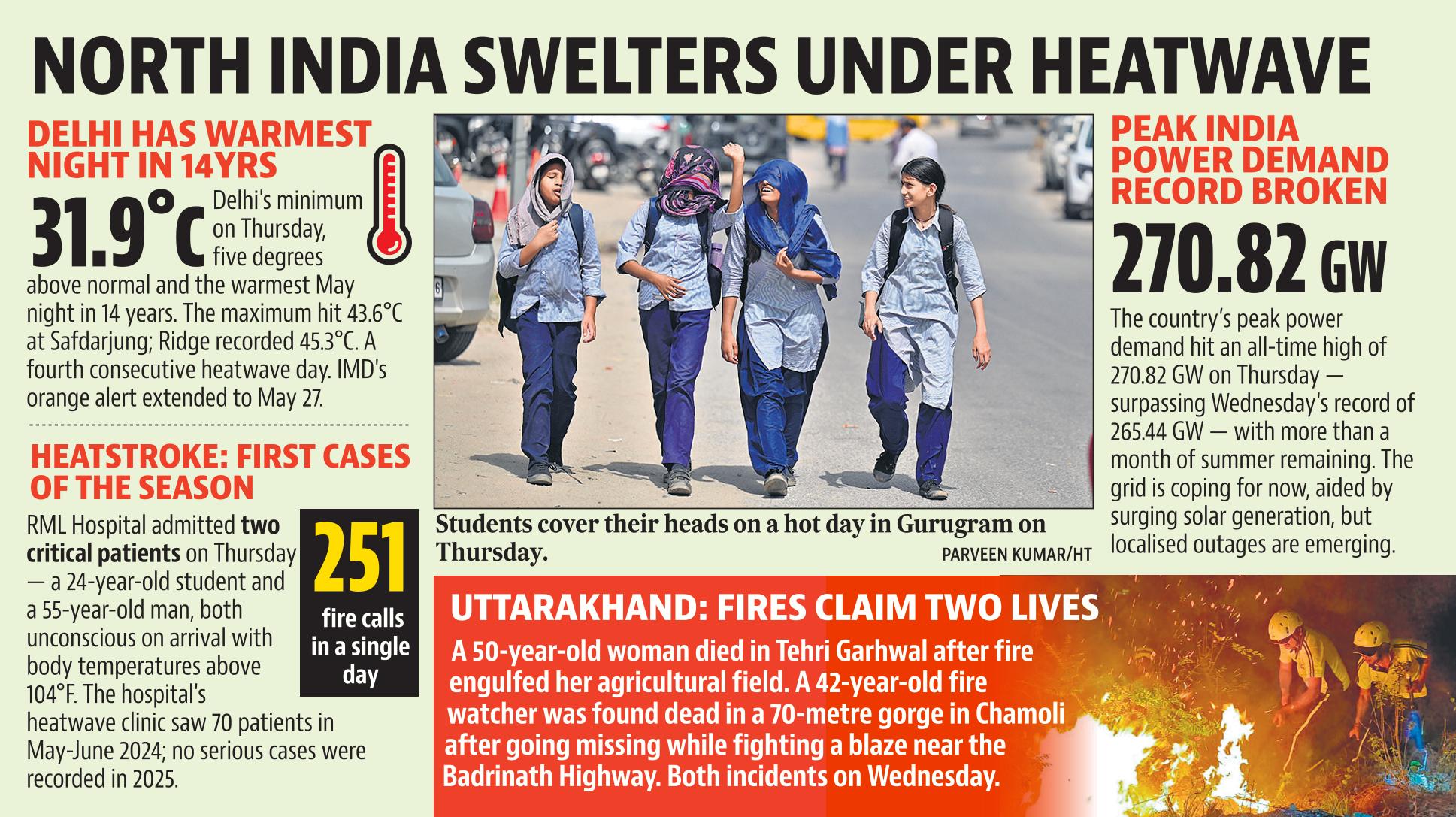
New Delhi: Thursday’s 31.9°C minimum — Delhi’s warmest May night in 14 years — brought with it a public health threat that operates outside the framework of heat advisories that typically focus on daytime exposure dangers.
Warm nights, doctors warn, deny the body its only recovery window, and for vulnerable populations without air-conditioners or coolers, the danger that accumulates after dark can be as serious as anything the afternoon sun delivers.
The mechanism begins with the buildings people sleep in. A study released last week by the research organisation Climate Trends, conducted across 50 low and middle-income households in Chennai between October 2025 and April 2026 using high-resolution sensor data, found that indoor spaces reached their peak temperatures not at midday but between 8pm and 9pm — as reinforced concrete structures released the heat stored through the day and remained above 34°C well into the night.
The health consequences of such exposure follow a clear progression. “During the day, when there are extremely high temperatures, nights are usually the only time when the body gets to recover,” said Dr Yogesh Jain, public health physician. “During periods of higher night temperatures, the body does not get adequate recovery time, leading to health imbalance.”
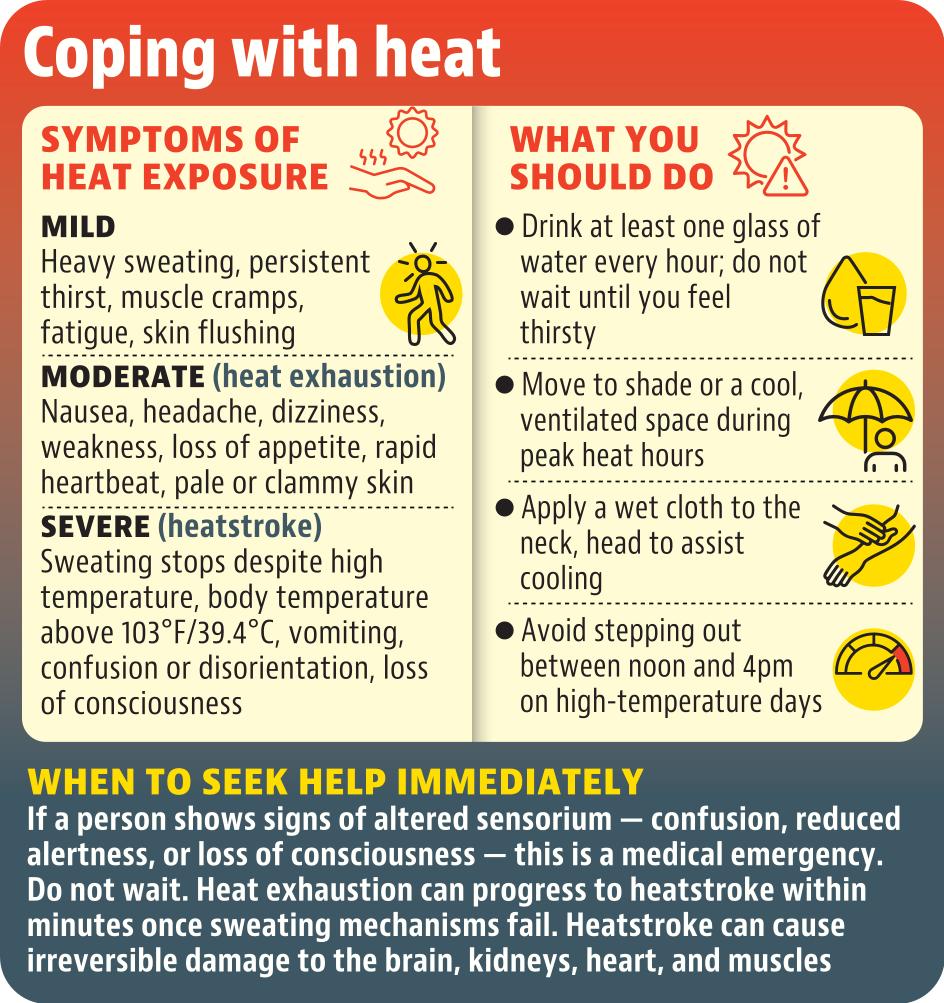
For those who work outdoors or in poorly ventilated conditions, the risk compounds sharply. Without overnight recovery, heat rashes and cramps can advance to heat exhaustion — which, if unrecognised, can tip into heatstroke.
“When a person experiences altered sensorium, it means brain function is declining, resulting in reduced awareness, alertness or consciousness,” Dr Jain said. “This happens when the body loses its ability to regulate temperature because sweating mechanisms begin to fail.”
Sweating is the body’s primary cooling defence; once compromised, core temperature can rise to life-threatening levels.
“Warmer nights prevent the human body from cooling down,” said Vishwas Chitale, fellow at the Council on Energy, Environment and Water (CEEW). “This significantly increases health risks such as heat strokes and worsens non-communicable diseases such as diabetes and hypertension.”
Disrupted sleep adds a compounding layer: a body denied restorative rest accumulates cardiovascular stress, declining concentration, and reduced physical resilience across successive days. For vulnerable groups — the elderly, young infants, pregnant women, and those with chronic conditions — doctors place the safe upper limit for summer nighttime temperatures between 20°C and 24°C.
The Climate Trends study establishes that the burden is not distributed evenly. Every high-income household in the sample had an air conditioner. Every low-income household had only a ceiling fan. “The cooling gap is binary: thermal comfort is achievable for those who can afford mechanical cooling. For those who cannot, heat exposure persists through the night,” the study found.
Indoor heat exposure, it concluded, is determined not by outdoor temperature alone but by the structural characteristics of housing — construction materials, ventilation, and density. Across the 50 households studied, nearly all had concrete roofs with similar thermal mass properties, the same material that ensures the heat of the day follows residents into the night.
That finding carries a direct policy implication. India currently has over 300 Heat Action Plans, with 100 more in development. None mandate indoor temperature monitoring. The country’s heat governance architecture has been built around outdoor thresholds and daytime declarations — leaving the hours between 8pm and 6am, and the tens of millions who have no mechanical cooling to survive them, outside its frame entirely.


Stay updated with all top Cities including, Bengaluru, Delhi, Mumbai and more across India. Stay informed on the latest happenings in World News along with Delhi Election 2025 and Delhi Election Result 2025 Live, New Delhi Election Result Live, Kalkaji Election Result Live at Hindustan Times.


