
 E-Paper



Reframing the fertility debate as a women’s rights issue
So much has changed since 2003 when India’s TFR — the number of children an average woman would have in her lifetime — was three. By 2024, it had fallen to 1.9

 Prefer HTon Google


The Supreme Court added its weight to the growing fertility debate. Laws aimed at limiting population growth “have now lost their significance”, the apex court noted on November 4, referring to legislation that disqualifies people with more than two children from contesting panchayat elections.
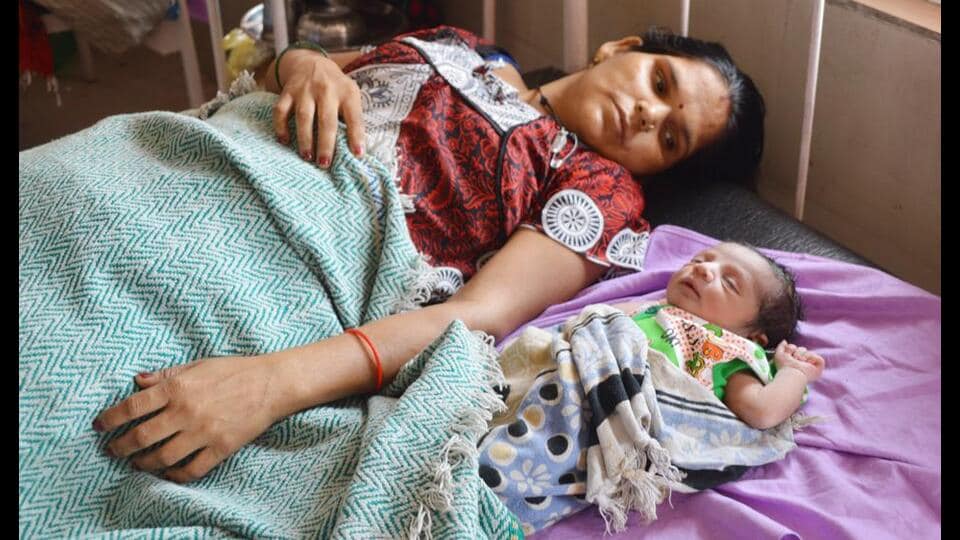
The court was hearing a case brought by Mangala Bhimrao Ingle, former sarpanch of Kakoda gram panchayat in Maharashtra who gave birth to her third child in 2014 and, contested, won and was subsequently disqualified from the 2022 panchayat elections in the state.
Allowing Ingle to continue as sarpanch under an interim order, the court has also asked for a larger bench to relook its own 2003 judgment in another case, Javed v State of Haryana where it had upheld the two-child cap saying it was for a “laudable purpose”.
Those who chose to have more than two children were free to do so, the court had then observed, but would have to “pay a little price.”
Who paid that price? It was disproportionately women, particularly the poorest and most marginalised, found a 2009 study commissioned by the ministry of panchayati raj. Their position had been weakened rather than empowered, the study noted.
So much has changed since 2003 when India’s total fertility rate — the number of children an average woman would have in her lifetime — was three. By 2024, it had fallen to 1.9, according to the Sample Registration System.
In a single generation we have moved from national anxiety over population explosion to a growing concern over declining fertility and its implications for an aging population and fewer people available to work.
The two-child cap for those contesting local body elections was introduced in 1993 in various states, starting with Rajasthan, as a population control measure. But the rationale of imposing this cap only at the grassroots level of democracy and exempting the states and Parliament was baffling. The 73rd Constitutional Amendment, which earmarked 33% of seats in local bodies for women, was to increase women’s political participation. How then did it make sense to shrink the pool, no matter how “laudable” the purpose?
“We cannot ride into the future on a horse that is dead,” the court said. Its questioning of the two-child limit can only be welcome. But it goes beyond the question of demographic realities to recognise and link reproductive autonomy, women’s equality, and the right to participate in democratic governance.
It understands that women do not always have control over their own fertility and reproductive decisions. And it is aware of society’s continuing bias towards sons, regardless of economic, social, and educational levels, and asks for a broader policy framework to address this.
It identifies instances where women face electoral disqualification for having another child, or where they might be subjected to forced abortions or desertion or even the denial of paternity to evade disqualification.
In doing so, it recognises unequal power relations within marriages where reproductive decisions are made.
Six states continue to have the two-child limit. It can only be hoped that any larger bench decision will recognise and frame the language of fertility in terms of reproductive rights, and not punitive measures.
“The choice of whether, when, and how many children to have is a decision of the most intimate and personal character,” the court recognises. This, it added, “must ordinarily remain within the autonomous domain of the individual, free from external coercion.”
Namita Bhandare writes on gender. The views expressed are personal


