
 E-Paper



Lakhwar dam delayed by three years, hits Delhi’s long-term water plan
The Lakhwar dam's completion in Uttarakhand, crucial for Delhi's water supply, is delayed until 2034, worsening the city's 250mgd water demand gap.

 Prefer HTon Google


New Delhi
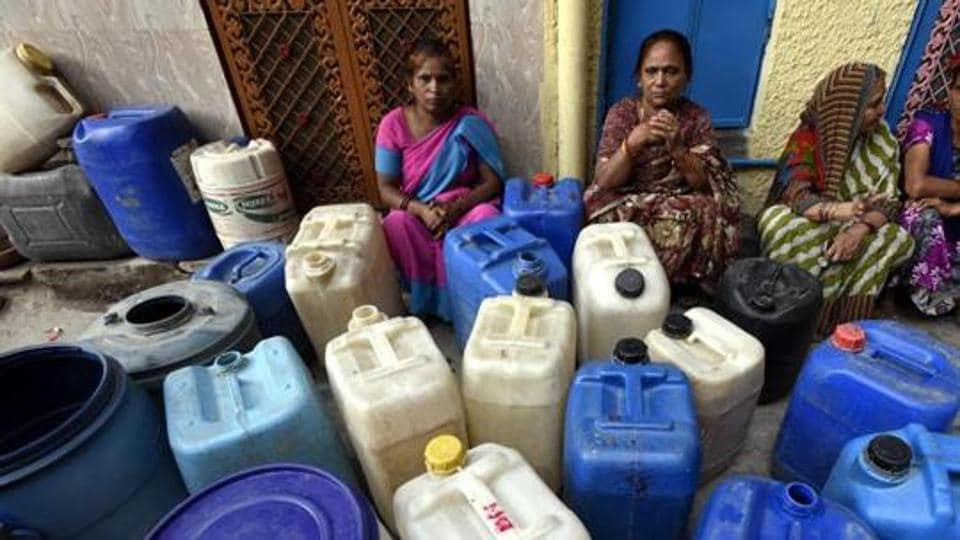
The Lakhwar dam on the Yamuna in Uttarakhand, which is expected to supply 134 million gallons a day (mgd) of water to Delhi upon completion, is facing a three-year delay and is now set to be completed by 2034, officials of the Delhi Jal Board (DJB) said, adding that they have been asked to modify their future plans accordingly.
A senior government official, who did not wish to be named, said that Delhi’s long-term strategy for meeting growing water demand relies on three dams upstream of the Capital. These are the Lakhwar dam, Renukaji dam on Giri River in Himachal Pradesh and Kishau on Tons River near the Uttarakhand-Himachal Pradesh border.
“Of these three dam projects, only Lakhwar dam is in advanced development state, while the other two projects are still at very preliminary stage. We had anticipated receiving 135mgd of water from the Lakhwar dam in the next five years. This supply was intended to meet the demand supply gap of 250mgd in Delhi, but in the recent interstate meetings with the Upper Yamuna River Board, we have been informed that the Lakhwar project will only be able to deliver water by 2034,” the official said.
The Renukaji and Kishau projects have the potential to provide the city with 275mgd and 372mgd of water, respectively.
The 2025-26 Economic Survey tabled in the Delhi assembly states that the DJB estimates the city’s water demand at 1,250mgd, leaving a demand-supply gap of 250mgd. “DJB considered per capita potable water requirement 50 GPCD (gallons per capita per day). Water demand for population of 25 million projected for 2025@ 50 GPCD works out to 1250 MGD,” the report states.
This does not include water requirement for horticulture, gardening, agriculture and industrial process water.
To be sure, the daily water supply in Delhi has remained constant, at around 1,000mgd in 2024, 2025 and 2026. It includes 1,133 cusecs (612.5mgd) from the Yamuna, DSB and CLC canals; 470 cusecs (254.08mgd) from the Ganga and around 135mgd from groundwater resources, such as tubewells and Ranney-wells. A water-stressed city, Delhi remains primarily reliant on its neighbours for its raw water supply.
A DJB official said that the water utility has already provided its share of ₹7.7 crore to UJVN Limited towards the Lakhwar dam, ₹8.1 crore to the Kishau Corporation Limited, and ₹214 crore to HPPCL, which is developing the Renukaji dam.
Delhi’s future water infrastructure and planning initiatives, including the construction of new water treatment plants, the scaling up of water supply systems to match population growth, and other related projects, are being formulated based entirely on the anticipated water supply from these sources in the future, the official said.
“Board has now been informed that it is not feasible to complete the Lakhwar dam’s construction by the originally stipulated deadline; consequently, the completion date has been pushed back to 2034. Similarly, currently no significant updates regarding the construction progress of other dam either,” the second official said.
The Lakhwar project is the largest of the three and involves the construction of a 204-metre-high concrete dam on the Yamuna near Lohari village in Dehradun. In planning since 1976, construction was suspended in 1992 due to funding constraints. The Kishau multi-purpose project, planned on the Yamuna’s tributary Tons, will feature a 236-metre-high dam with a storage capacity of 1,324 million cubic metres. The project faced delays due to interstate disagreements and financial hurdles.
The second official said that the projects are getting delayed while Delhi’s population is growing every year.
“Currently, the gap between water demand and supply in Delhi stands at approximately 250mgd. If Delhi does not receive water from other states, bridging such a massive gap becomes extremely difficult. The gap between supply and demand cannot be bridged solely through tubewells. Even if a single tubewell is operated continuously for several hours, it would yield only 0.01mgd of water,” the official said.


Stay updated with all top Cities including, Bengaluru, Delhi, Mumbai and more across India. Stay informed on the latest happenings in World News along with Delhi Election 2025 and Delhi Election Result 2025 Live, New Delhi Election Result Live, Kalkaji Election Result Live at Hindustan Times.


