
 E-Paper



Moderate three-hour spell of rain in Delhi hits traffic, causes waterlogging
The maximum temperature recorded at the Safdarjung, considered representative for Delhi’s weather, was 32 degrees Celsius, two below what is considered normal for this time of the year.

 Prefer HTon Google


In what was nearly a repeat of Thursday’s sequence of events, a moderate three-hour spell of rain on Friday left major stretches across Delhi inundated, and brought traffic to a standstill,
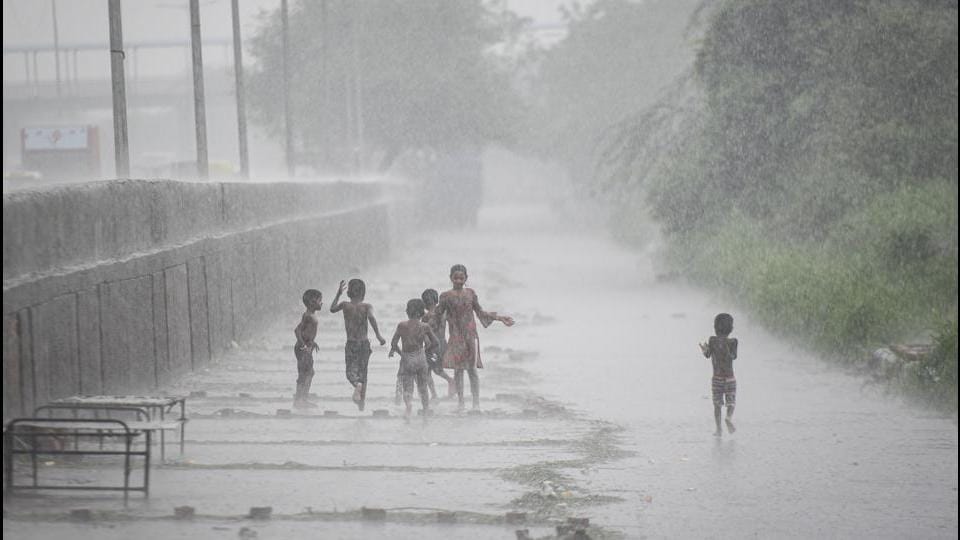
The Capital received a bulk of 42.8mm rainfall on Wednesday between 2.30pm and 5.30pm, enough to throw a spanner in the city’s flood and traffic management systems, which have repeatedly been overwhelmed by the short, but intense spells of rain that Delhi has received over the past few years.
The maximum temperature recorded at the Safdarjung, considered representative for Delhi’s weather, was 32 degrees Celsius, two below what is considered normal for this time of the year. The minimum temperature was 24.5°C, three below normal.
Kuldeep Srivastava, head of IMD’s regional weather forecasting centre, said that there is a forecast of ‘moderate’ showers on 31 as well. “Patchy rainfall will continue even after that and a heavy spell in parts of the city is expected on August 2. The monsoon trough is persisting in Delhi and hence more showers are likely over the next couple of days. This will also keep the temperature in check,” he said.
Delhi saw a similar sight on Thursday as well, when an intense spell of showers between 2.30pm and 5.30pm left many roads flooded and commuters stranded.
Over the last decade, the Capital has been receiving shorter and more intense spells of rain, weather scientists have said, a change in monsoon patterns that is the primary reason behind increasing instances of urban flooding and flash floods in Delhi and the National Capital Region (NCR).
Rainfall data maintained by the Indian Institute of Tropical Meteorology (IITM) in Pune shows that in the 1980s and 1990s, in July, Delhi used to record 15-20 rainy days on an average. This has, in the last decade, reduced to eight to 10 days.
In line with this pattern, Delhi got a 100mm spell of rain in a three-hour span on Tuesday morning, inundating low-lying areas and key arterial stretches, and confirming this as the wettest July in Delhi since 2003. So far this month, Delhi has received over 506mm. The Capital’s wettest July on record was in 2003, when it received 632.2mm of rain.
Many commuters posted photos of inundated roads and crawling traffic.
Delhi traffic police data showed that a host of vital arterial stretches, including Vikas Marg, IP College to Mall Road (both carriageways), Signature Bridge to Yamuna Vihar, Dhaula Kuan, both ends of Nizamuddin flyover, Zakir Hussain Marg, AIIMS flyover, Geeta Colony and Laxmi Nagar, among others.
“There was a long jam near Saket Metro station, as vehicles crawled through the waterlogged road. Every time it rains, it becomes a struggle,” tweeted Shalini Iyer, a commuter
.


