E-Paper



NDMC to revamp all road signs in Lutyens Delhi
The New Delhi Municipal Council (NDMC) will replace all existing road signs in Lutyens Delhi to ensure uniformity in size and colour according to Indian Roads Congress (IRC) rules, senior NDMC officials have said

 Prefer HTon Google


The New Delhi Municipal Council (NDMC) will replace all existing road signs in Lutyens Delhi to ensure uniformity in size and colour according to Indian Roads Congress (IRC) rules, senior NDMC officials have said. It will convert all green background road signs into blue ones, correct any mistakes in the signs, and add new ones near vulnerable sites such as schools, they added. The project will cost ₹18 crore.
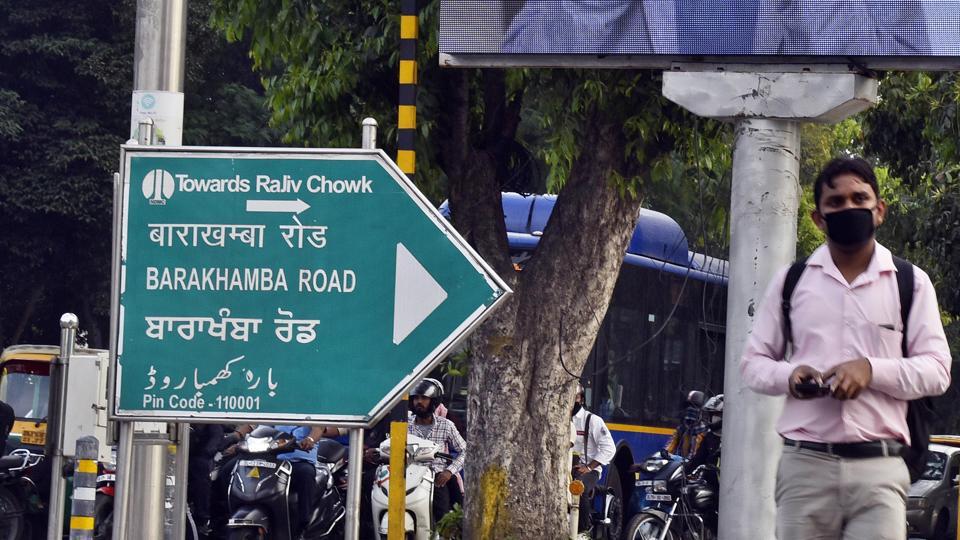
A senior NDMC official on condition of anonymity said that a survey has been completed and a proposal in this regard is expected to be presented before the next council meeting.
“All executive engineers of the road division have surveyed existing signs. Road signs are present at 6,439 points in the Lutyens Delhi area, and at least 80-100 new signs are required for vulnerable points that have schools or hospitals. The total expenditure to replace all the existing signs along with the provision of new signs will be ₹18.07 crores. We will present a proposal before the council,” the official said.
NDMC manages 1,298 km roads in central Delhi along with 52 rotaries and roundabouts where there are more than 6,000 signs. The road signs have green backgrounds with names written in English, Hindi, Urdu, and Punjabi. Unlike the rest of the city, NDMC areas have signboards on roads in green colour in both rectangular and triangular shapes. According to Indian Road Congress guidelines on signages, green signages are meant for national highways. Similarly, all information-based signage should be on rectangular boards.
The NDMC official said that the changes will bring all road signs in conformity with the rest of the city. The official added that existing sign frames will be used in the revamp to minimise expenditure. “The permissible speed limits in New Delhi are not more than 50km/hr for non-commercial vehicles and 40km/hr for commercial vehicles. No highway and expressway falls in the jurisdiction of NDMC and there is 24x7 no-entry zone for all commercial vehicles without valid permission from Delhi traffic police in the NDMC area,” the official added.
All road signs in NDMC areas were last replaced ahead of the 2010 Commonwealth Games and many agencies are still following the rules from that period. In the annual budget for 2024-25 presented in December last year, the NDMC chairman said that road signs in the area were “installed mainly in 2009-10 with reflective sheets and they have outlived their life.” “IRC has revised the specifications with type XI reflective sheet. To achieve proper safety it is proposed to replace road signages in the NDMC area in the next 2024-25,” the budget speech said.
The official cited above said that all road signs in the NDMC area will be designed through software for uniformity and consistency. “This project is already planned. We will engage a third party for this project during execution,” the official added. The replacement was previously expected to take place ahead of the G20 Summit but the project was delayed.
(Independent comment to be added here)