E-Paper



Nearly 10 million adults in Delhi fully vaccinated against Covid-19
Nearly 10 million of Delhi’s 15 million adults are now fully vaccinated against Covid-19, a significant landmark amid fears of the Omicron variant

 Prefer HTon Google


Nearly 10 million residents of the national capital have been completely inoculated against Covid-19, showed government data, and the city is likely to cross that figure on Thursday, exactly 11 months after the nationwide coronavirus disease vaccination programme kicked off.
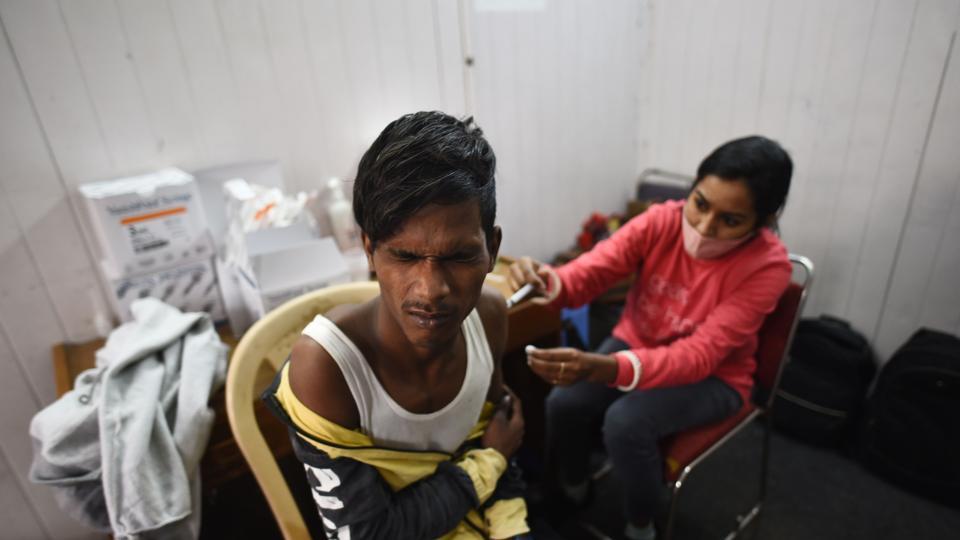
According to data from the CoWin dashboard, as of 11pm on Wednesday, 9.94 million people in Delhi had received both doses of a coronavirus vaccine, roughly half of the city’s 20 million population, and just about 2/3rds of the city’s 15 million adults (according to January 2021 electoral data) eligible for shots. At the time of going to press on Wednesday, the city was just over 53,000 doses away from completely vaccinating 10 million adults.
The landmark is especially significant in the wake of the Omicron variant of the Sars-CoV-2 virus, which has sparked global fears of a resurgence of the pandemic, even as experts have reiterated that vaccines, masks and distancing are still the best protection against the infection.
So far, 56 people across the country have been sequenced with the Omicron variant, of whom six are in Delhi.
Experts, meanwhile, asked for a decision on booster doses of vaccines while the Covid-19 caseload stayed low.
So far, around 14.5 million people in Delhi have got at least one shot of a vaccine, showed CoWin data, which means the city is days away from inoculating every adult with at least one dose.
As of 11pm on Wednesday, the city administered 106,681 vaccine doses, showed the dashboard. The split between first and second doses was not immediately available.
Delhi has over the past week administered an average of 109,362 vaccine doses per day. Between December 1 and 14, just over 72,000 people on an average got their second shot in Delhi, which means the Capital is set to cross the 10-million complete inoculations mark on Thursday.
Daily vaccinations in the Capital have picked up in the past few weeks, especially since news of the Omicron variant of Sars-CoV-2 emerged globally on November 25.
In the seven days that ended November 25, Delhi administered an average of 87,309 vaccines every day, according to the CoWin dashboard. A week later, on December 2, this number had shot up to 100,476 jabs a day. On December 9, it went up further to 128,120 doses a day. In the six days since then, this number fell marginally to 107,190, but is well above the rate the city logged three weeks ago.
A Delhi government spokesperson said, “The Delhi government would like to congratulate all the doctors, nurses and health care professionals who have taken the baton of our vaccination program forward efficiently.”
“The government is reaching out to each and every eligible resident and motivating them to come forward to get their doses as soon as they’re due and will continue to show the same resolve in protecting all the people of Delhi from Covid-19,” the statement added.
The vaccinations are also another milestone for a city that has endured four separate Covid-19 surges since the virus first set foot in March last year, and so far lost 25,100 people to the infection, according to state government data.
The most brutal of these waves was the fourth, between April and May this year, which left health infrastructure overrun, medical workers overwhelmed, and led to crematoriums running out of space. Over 760,000 people were infected in that period, while over 13,000 died of the infection in those two months alone. Cases in the city began to peter out towards the middle of May on the back of a lockdown, which the state government imposed from April 19.
The Covid-19 caseload has remained at record lows since the fourth wave ebbed, and both the fresh infection count and test positivity rate have been well within control for much of this time, which experts have previously said is likely due to the steady rate of vaccinations and the sheer scale of the fourth wave, which would have left a vast majority of the city’s population infected.
Delhi’s sixth serological survey, a preliminary report of which was released in mid-November, showed that 97% of the city’s population had antibodies that react with the Sars-Cov-2 virus.
“We don’t know how the virus is going to behave in future. Therefore, we need to remain preparers and the preparations should start now when the numbers are low,” said Dr Vikas Maurya, director and head of respiratory medicine department, Fortis Healthcare.
“Now is the time to take a decision on booster dose, especially for the high risk persons, and also begin vaccinating children. Children may not run the risk of developing severe disease but there is always a risk of them transmitting to others who may get severe symptoms,” he added.