
 E-Paper



NGT questions Haryana on sewage in Delhi’s drinking water drain
The issue is significant because DD-8 is a freshwater drain that carries water eventually treated and supplied to Delhi, making any mixing of untreated waste a serious environmental and public-health risk.

 Prefer HTon Google


The National Green Tribunal (NGT) has raised fresh concerns over possible contamination of a key stormwater drain that feeds Delhi’s drinking water supply, after being informed that sewage from Haryana’s Diversion Drain No. 6 (DD-6) is spilling into Diversion Drain No. 8 (DD-8). The tribunal has now asked the Haryana government to clarify whether DD-6 is, in fact, a stormwater drain and whether it is being permanently tapped and diverted to a sewage treatment plant (STP).
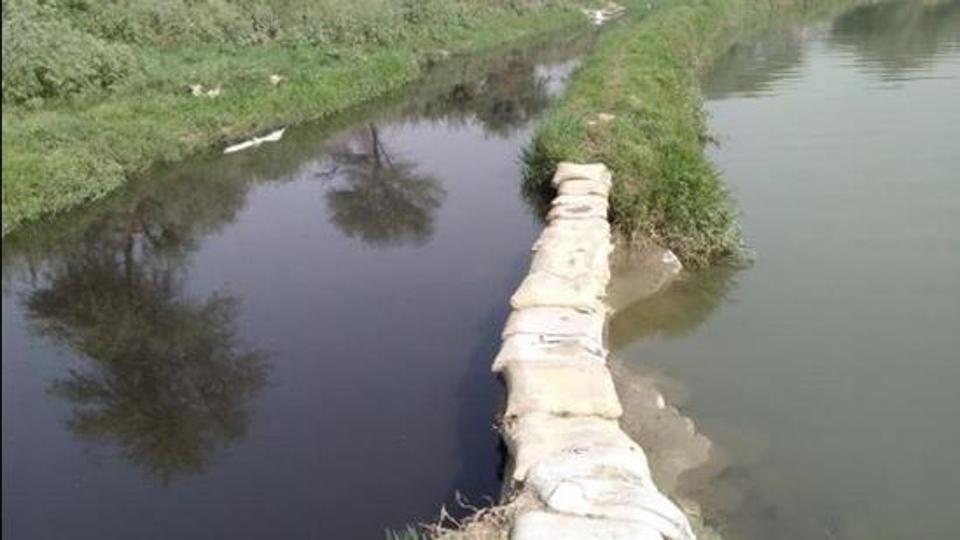
The issue is significant because DD-8 is a freshwater drain that carries water eventually treated and supplied to Delhi, making any mixing of untreated waste a serious environmental and public-health risk.
The NGT had first taken suo motu cognisance of the matter in July after a media report highlighted thousands of fish deaths in the Yamuna near Burari in north Delhi. Similar incidents were reported in May this year. The report attributed the deaths to chemical-laden industrial discharge, prompting the tribunal to seek action-taken reports from the authorities.
At the hearing on December 1, a bench headed by Justice Prakash Shrivastava noted that while STPs and common effluent treatment plants (CETPs) with capacities of 67 MLD and 46.2 MLD exist, the drains continue to receive untreated waste. “It has also been observed that DD-6 is receiving sewage or industrial wastewater to an extent of 51.124 MLD, but the report discloses that installed capacities of four STPs and three CETPs are 67 MLD and 46.2 MLD, respectively. Further, Drain Number 8 (DD-8), which is said to be a freshwater drain, is also receiving sewage from three STPs (Gohana and Kharkhoda town) of 15.8 MLD capacity,” the bench said.
The Central Pollution Control Board (CPCB) told the tribunal that a joint meeting of the Delhi Pollution Control Committee, the Haryana State Pollution Control Board, and the Haryana irrigation department was held on October 30. According to the minutes, DD-8 is confirmed to be a freshwater drain, while DD-6 is not. Crucially, the report recorded that the mixing of effluent-laden water from DD-6 with the freshwater of DD-8 was occurring due to a breach in the separation wall between the two drains downstream of Akbarpur Barota.
Haryana officials informed the tribunal that the breach had since been repaired.
The NGT will hear the matter next on February 20, 2026.
This is not the first time the tribunal has flagged the issue. In March 2024, it had directed Haryana to complete long-term remedial measures for DD-6 and DD-8 within 12 months after a similar complaint of sewage and effluent contamination in DD-8.


Stay updated with all top Cities including, Bengaluru, Delhi, Mumbai and more across India. Stay informed on the latest happenings in World News along with Delhi Election 2025 and Delhi Election Result 2025 Live, New Delhi Election Result Live, Kalkaji Election Result Live at Hindustan Times.


