
 E-Paper



Once upon a summer in a Delhi house
Delhi's amaltas trees bloom each summer, reflecting a lost connection to seasonal living as modern homes adapt to air-conditioning, losing awareness of nature.

 Prefer HTon Google


Delhi may be full of flaws, but the trees in the city outnumber them. Summer in Delhi is flushed with the yellow and red of the amaltas and the gulmohar. The shower of amaltas flowers is what paints some fortunate neighbourhoods of Delhi yellow. The tree falls into its namesake, also called the Golden Shower Tree, or laburnum, but to the romantic, it simply remains the amaltas.
Native to the subcontinent, it flowers at the height of summer, not in anticipation of relief but in full submission to heat. Its cycle is brief and exact. The buds descend into bloom, forming pendulous clusters that hold for a moment before release. The form is not ornamental alone. It has weight and rhythm. Like a bangle slipping from the wrist, the flowers fall without announcement. By late afternoon, they lie scattered across pavements, caught in the edges of boundary walls, resting on terraces that carry the residue of dust and heat. The tree does not cool the city, but it changes how the city is seen.
This is also the time when Delhi houses begin, or once began, to change.
Before the widespread use of air-conditioning, the shift into summer was not optional. It followed a sequence. It required attention. Houses were not sealed containers but working environments that had to be adjusted.
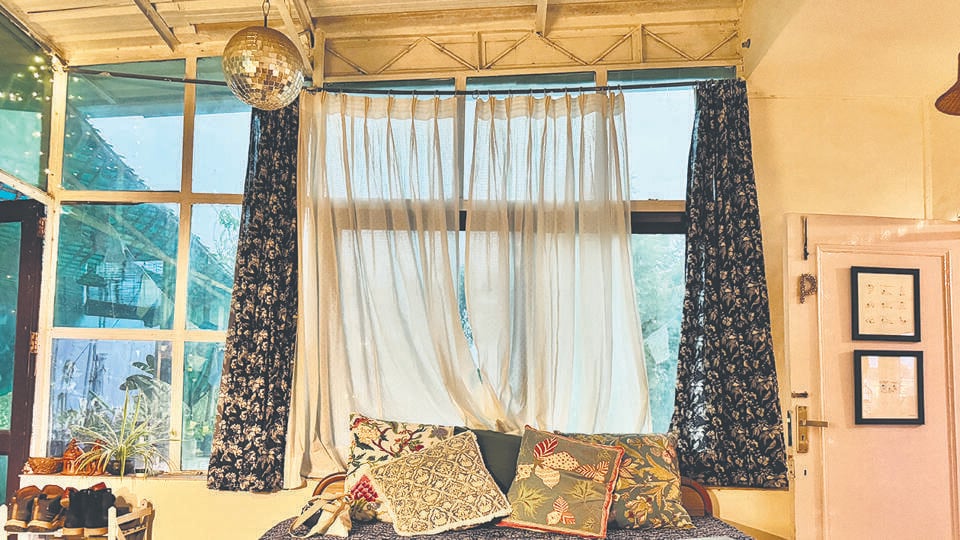
Curtains were taken down and replaced. Heavy winter drapes were folded away, often with care, and lighter cottons took their place. The aim was simple. Let air pass. Cut the glare. Hold some privacy.
Khus (vetiver or a perennial grass known for its fragrance) screens appeared across windows and doors. They were soaked through the day, and darkened with time as they held water. As air moved through them, it cooled slightly. The effect was modest but real. The smell of wet khus settled into the house and stayed through the afternoon.
Floors were treated with equal practicality. Stone and cement, which held heat, were sprinkled with water towards the evening. Courtyards, wherever they existed, were dampened in the same way. The drop in temperature was negligible but enough to shift the use of the space.
Furniture was not replaced but adjusted. Thick upholstery was removed. Cotton covers came out. Carpets were rolled up and stored. The house was made lighter and more heat-resistant.
Sleeping moved. The terrace shifted its use from the afternoons in winter to its summer schedule as a place of refuge. Charpais or Khaats and thin mattresses were carried up at dusk. Families slept under the open sky, not out of preference but because it worked.
Kitchens changed their rhythm. Cooking shifted to earlier hours. Meals became simpler. Curd, raw mango, sattu, and bael entered daily use. These were not seasonal luxuries. They were part of an older knowledge of managing heat.
In older neighbourhoods, this shift was visible across homes. Curtains changed together. Screens appeared together. Terraces filled up at night. The house and the street responded to the same season.
Also read: Are Bengaluru housing complexes better prepared to handle the water crisis this summer?
What has changed is not just the climate but also our response to it.
Air-conditioning has altered how houses behave. Interiors are held at a fixed temperature. Windows remain shut. Sofa, cushion and curtain fabrics are chosen for how they look rather than how they perform. The house is separated from the season.
Something more intuitive is lost in that separation. Not comfort but awareness. The small acts that marked the arrival of summer no longer structure daily life.
In Japan, the transition between seasons still carries this kind of attention. Homes adjust with the weather. Certain objects are put away, and others brought out. Linen replaces heavier weaves. Light is filtered differently. The house acknowledges the season through use, not statement.
Delhi once worked in a similar way, in many ways, with the same formal discipline. Khus instead of bamboo. Cotton instead of linen. Terraces instead of enclosed rooms. The materials differed, but the intention was aligned. The house shifted because the environment demanded it.
The amaltas is the timekeeper of this cycle. The cycle of its flowering is at the point when these changes should already be in place. Today, that connection is thinner. The tree continues to flower, but the house does not always respond. Yellow gathers outside, while inside remains unchanged. And yet, traces remain. In a replaced curtain, through a chatai spread out in the evening, on a terrace used for a night. Small continuities that still keep the Dilliwallah in us alive.
The amaltas simply return each summer at the same moment of heat. In this beating heat, as the city goes yellow with spots of red, it’s these flower-showered avenues that sometimes are enough to make someone step out.

Stay updated with all top Cities including, Bengaluru, Delhi, Mumbai and more across India. Stay informed on the latest happenings in World News along with Delhi Election 2025 and Delhi Election Result 2025 Live, New Delhi Election Result Live, Kalkaji Election Result Live at Hindustan Times.


