Vehicle breakdowns have remained a perennial problem on Delhi’s major roads in the past few years, bringing traffic to a crawl for hours, traffic police officials familiar with the department’s data said.
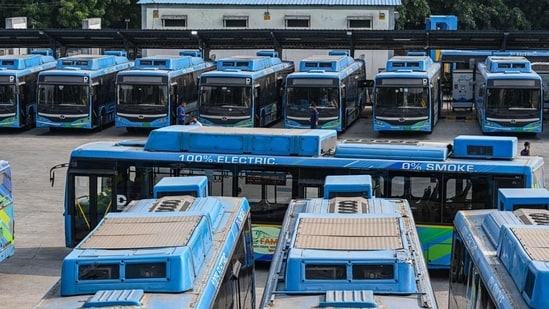
The problem is particularly acute when buses and large commercial vehicles break down, as their removal requires specialised cranes and a different recovery procedure from that used for ordinary vehicles, they added.
Delhi Traffic Police data showed 468 vehicle breakdowns have been reported as of September 17. Police receive alerts about breakdowns on major roads almost every day, with Ring Road, Outer Ring Road and Mathura Road among stretches frequently affected. Most breakdowns involving prolonged traffic disruption are of buses, officials said.
A total of 845 breakdowns were reported in 2025 and 1,190 in 2024, according to the data.
Traffic police officers posted on the field said breakdowns of large commercial vehicles, particularly buses, pose the biggest challenge. Specialised cranes have to be brought from the nearest Delhi Transport Corporation (DTC) depot, and buses generally have to be lifted from the rear rather than the front.
The recovery process can take more than two hours, during which traffic continues to build up behind the stranded vehicle, a traffic official said.
{{/usCountry}}The recovery process can take more than two hours, during which traffic continues to build up behind the stranded vehicle, a traffic official said.
{{/usCountry}}The problem is compounded by the age and condition of parts of the DTC fleet. A CAG performance audit of DTC for the period between 2015-16 and 2021-22 tabled in the Delhi Assembly in March last year found the bus service had one of the highest bus breakdown rates in the country attributing the problem in part to an ageing fleet and maintenance deficiencies.
As per the CAG report, vehicle productivity per day per bus ranged from 180km to 201km as against the target ranging of 189km to 200km per bus per day during 2015-22, due to frequent breakdowns and existence of 656 overaged buses in its fleet as on March 31, 2022.
Senior traffic police officers said they have verbally asked DTC to train drivers to release the buses’ wheel-lock mechanism — which prevents the wheels from turning when a bus is immobilised — so that stranded vehicles can be moved more easily.
DTC employees said the actual number of mechanical problems could be higher than those formally recorded as breakdowns. A DTC driver, requesting anonymity, claimed that over 200 buses report some form of issue daily, with monsoon conditions, potholes and waterlogging adding to the problem. Officials explained that large buses and loaded commercial vehicles cannot simply be attached to an ordinary tow truck and pulled away.
Their size and weight require recovery equipment capable of lifting or securing them, while the position of the vehicle on a busy road can determine how the crane approaches it. In some cases, the recovery vehicle has to approach from the opposite direction (wrong way) to manoeuvre into position before the stranded vehicle can be removed, traffic officials said.
Traffic police officers and experts said vehicle breakdowns have a direct impact on road capacity, slowing traffic and creating queues, longer travel times and secondary congestion on adjoining roads. They can also increase fuel consumption and vehicular emissions. “Even a single vehicle breakdown can significantly affect traffic movement, particularly on busy roads and during peak hours. When a vehicle becomes immobile, it reduces the effective road or lane capacity, slows down traffic and can lead to long queues behind the stranded vehicle. This not only increases the travel time of commuters but also results in higher fuel consumption because of prolonged idling and repeated acceleration,” said a senior traffic police officer.
Also Read | 'End of an era': Delhi’s last red DTC bus retired after 15 years of service
The officer said congestion could also spill over to adjoining roads, intersections and alternative routes, creating secondary bottlenecks. “Slow-moving and stationary vehicles contribute to increased vehicular emissions and air pollution. More importantly, such obstructions can affect the movement of emergency vehicles, including ambulances and fire tenders,” the officer said. “Clearing a breakdown, therefore, is not merely about removing one vehicle from the road.
Depending on the location and extent of congestion, traffic personnel, recovery cranes and diversion measures may have to be deployed to restore normal movement. The impact is particularly pronounced during peak hours,” said additional commissioner of police (traffic) Dinesh Kumar Gupta.
The traffic police have 110 cranes for removing such vehicles. Traffic police officers said enforcement drives against improper parking and other violations had helped improve compliance, but breakdowns remained more difficult to address.
Dr S Velmurugan, former chief scientist and head of the traffic engineering and safety division at the Central Road Research Institute, said the design of DTC buses also made their removal difficult because of the location of the engine and distribution of weight.
He said delays in sending technicians could be reduced by pooling resources across depots. Special commissioner of police Ajay Chaudhary said, “We have planned a few measures such as additional deployment of traffic personnel, recovery cranes and traffic diversion measures.”
Stay updated with all top Cities including, Bengaluru, Delhi, Mumbai and more across India. Stay informed on the latest happenings in World News along with Delhi Election 2025 and Delhi Election Result 2025 Live, New Delhi Election Result Live, Kalkaji Election Result Live at Hindustan Times.
Stay updated with all top Cities including, Bengaluru, Delhi, Mumbai and more across India. Stay informed on the latest happenings in World News along with Delhi Election 2025 and Delhi Election Result 2025 Live, New Delhi Election Result Live, Kalkaji Election Result Live at Hindustan Times.