
 E-Paper



Only 3 Delhi tehsils in ‘safe’ zone for groundwater, but levels on rise
The report for the year 2021-22 also indicates that Delhi’s groundwater table is gradually on the rise, with 61% of the city’s wells recording an increase in groundwater levels in August 2021, compared to the 2011-20 decadal mean for the month


Nearly a third of Delhi has groundwater available at a depth of 5 and 10 metres below ground level (mbgl), but only three out of 34 tehsils in the city are within safe limits as far as groundwater is concerned, the latest annual report by the Central Groundwater Board (CGWB) states.
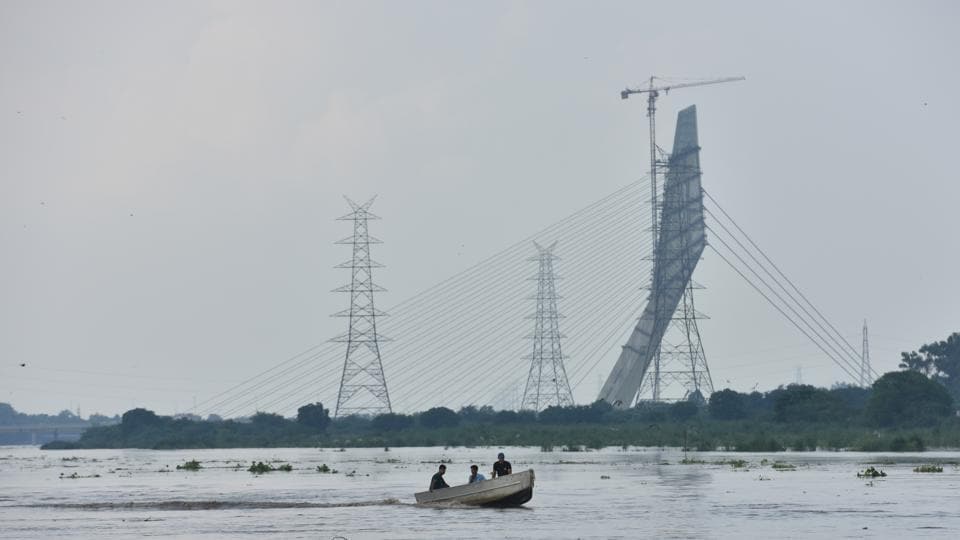
The report for the year 2021-22 also indicates that Delhi’s groundwater table is gradually on the rise, with 61% of the city’s wells recording an increase in groundwater levels in August 2021, compared to the 2011-20 decadal mean for the month.
For groundwater readings, safe zones are those where the ratio of recharge to extraction is 70%, meaning for every 1 litre of groundwater recharge, 0.7 litres is extracted. This can translate to an increase of up to 2 metres each year. In semi-critical zones and critical zones, the ratio is 70-90% and 90-100% respectively, indicating a limited recharge of 0.5-1 metre each year. In overexploited zones, the ratio is over 100%, meaning the extraction is greater than the recharge.
The CGWB data states that out of 34 tehsils in the city, only three are in the safe zone, while seven are semi-critical, seven are critical, while 17 are over-exploited.
An assessment of a break-up of Delhi’s groundwater table between May 2021 and January 2022 shows that 32% of the city had a groundwater table reading between 5 and 10 mbgl in May, while 27% of all locations were between 5 and 10 mbgl in January.
However, 7% of all locations for all months had a groundwater table reading of 40 mbgl or more -- mostly in south and southwest Delhi -- indicating possible extraction in these areas. On the flipside, at Hiran Kudna near west Delhi’s Punjabi Bagh, the groundwater was found at a relatively shallow depth of 0.60 mbgl, while at Kanjhawala, it was at 0.72 mbgl.
“Readings are collected in May to assess pre-monsoon levels, during the monsoon month of August to analyse the impact of monsoon rains and then in the winter months of November and January once again to see how much the water level has once again dipped following the monsoon,” said a CGWB official on condition of anonymity, stating south Delhi was found to have the deepest groundwater readings, largely owing to a combination of illegal extraction and poor recharge.
“Topography and soil type also play a key role, but over time, we have seen considerable extraction in south Delhi, particularly in areas around the Aravallis. South Delhi mainly has hard rocks, which make percolation of water difficult,” said the official, stating other parts of Delhi were showing a gradual improvement over time. In comparison, he said north, northwest and east Delhi were faring much better, owing to their proximity to the Yamuna.
According to the report, the groundwater recharge in Delhi was 0.32 billion cubic metres (bcm) in 2020, while the total extraction in Delhi for the same year was 0.29 bcm, indicating that Delhi is adding more water than what is being extracted overall.
Experts say in the long-term, Delhi is not only adding more rainwater harvesting structures but also simultaneously reducing illegal groundwater extraction through borewells.
“The long-term improvement as compared to the decadal means is, to a large extent, down to adding of more rainwater harvesting structures, particularly in government buildings, where this is mandatory. Even more important is the crackdown on illegal borewells, which are being sealed across the city over the last two years,” said Shashank Shekhar from the department of geology at Delhi University.
Vikram Soni, emeritus professor at Jawaharlal Nehru University (JNU), said another factor is the improvement in the overall water supply across the capital over the last decade, which has reduced the need for illegal extraction. “If one gets access to water, either through pipelines or tankers, there is no longer a need to use groundwater. At the same time, the quality of groundwater is also not ideal for consumption,” he said.
The report noted that monsoon rains also had a considerable impact on Delhi’s groundwater recharge, with data comparison of readings from May 2021 and August 2021 showing an improvement in 89% of all monitored wells in the Capital.
However, the CGWB report also found heavy metal concentrations in groundwater above permissible levels at certain locations in the city. For example, the concentration of manganese at Jagatpur was 2.293 mg/l, much above the safe limit of 0.3 mg/l. Meanwhile, the concentration of iron was found to be over the permissible 1 mg/l limit at four locations in Delhi -- Rohini sector-11, Nangli Rajapura, Bhalswa Lake and Burari.
The report also found high uranium levels at three locations -- Kanjhawala, Jaunti and Nizampur.
DU’s Shekhar said the high concentrations of heavy metals in the groundwater is largely down to anthropogenic reasons. “This includes extensive urbanization, which in turn is leading to industrial effluents, leachate from waste and sewage seeping into the earth’s surface,” he said.
Stay updated with all top Cities including, Bengaluru, Delhi, Mumbai and more across India. Stay informed on the latest happenings in World News along with Delhi Election 2025 and Delhi Election Result 2025 Live, New Delhi Election Result Live, Kalkaji Election Result Live at Hindustan Times.


