
 E-Paper



‘Our vision of deshbhakti is driven by providing excellent education’: Sisodia
"The goal is to ensure that all citizens nurture love, honour and affection for the country, for the people of the country and for the unity of the country," Sisodia said.


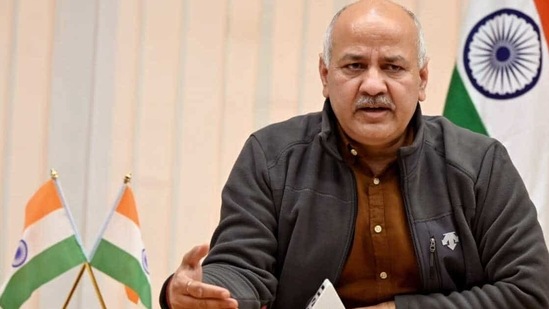
A day after he presented his seventh state budget, Delhi’s deputy CM and finance minister Manish Sisodia spoke about the challenges to the city-state’s economy and the AAP government’s vision for Delhi’s growth in an e-mail interview. Edited excerpts:
Delhi’s economy is still recovering after the Covid-19 pandemic led to loss of livelihood, contraction of GSDP, and the decline of per capita income, then why was the budget’s theme patriotism?
This budget has been presented under unprecedented circumstances. It comes at a time when the nation is going to celebrate the 75th anniversary of Independence. It covers and focusses on the development of all aspects of our society, from women to the elderly, students, youth -- all religions, and all castes.
Despite the tough circumstances over the past one year due to Covid-19, all our government subsidies have continued, be it free electricity and water, free education, free medicines and health care, and free travel for women in buses. The trend of dedicating one-fourth of our budget to education and 14% to health care from the last six years has continued this year as well. For us, the vision of Deshbahakti is driven with the objective that excellent education is provided to all students and all citizens have access to high-quality health care. The goal is to ensure that all citizens nurture love, honour and affection for the country, for the people of the country and for the unity of the country.
The BJP and the Congress have said the Delhi budget dreams of what could happen in the Capital 25 years from now — and not what will be done by the Delhi government in the coming one year. Should the budget have had more on issues such as pollution, infrastructure, social welfare, and so on?
Every year, the Delhi government carefully curates the budget, keeping in mind the plans it has for the subsequent year with strict timelines, as well as its vision for the city and the country in the longer term. This year as well, the budget has been designed to address issues, provide resources, and invest in the development of Delhi and the whole country.
As we are approaching a century of our country’s Independence, we would all like to put an end to environmental pollution. Work is being done with a 360-degree approach in this direction under the leadership of chief minister Arvind Kejriwal. Similarly, I have proposed separate allocations for installation of CCTV cameras, free Wi-Fi through hot spots, and the development of roads and bridges as well.
So, in this budget, the focus has also been on pollution, infrastructure and social welfare along with aspirations and dreams that we see for our country.
Three years ago, you tabled a Green Budget. However, air pollution still remains a major problem in Delhi.
Combating air pollution has been one of the major priorities of this government since the beginning, and we have introduced many initiatives over the past six years. These include extending Delhi’s green cover to the extent possible, using anti-smog guns at construction sites, encouraging the use of bio decomposers made by agricultural scientists of Pusa to prevent pollutants, banning single-use plastic, prohibiting the practice of burning garbage and leaves in the open, and shutting of thermal power plants.
Along with this, an electric vehicle policy is being implemented with the utmost care and seriousness because we have to stop fuel burning to curb pollution. This is why we are giving it intense attention.
How exactly does Delhi plan to increase its per capita income to bring it at par with Singapore by 2047?
The goal of reaching the per capita level of Singapore implies that we have to increase the income of our citizens by about 16 times, which is a difficult target, but not impossible. Education, health care, and social security are our topmost priorities, and we have introduced several initiatives in these sectors.
The per capita income (at constant prices) of Delhi in 1993-94 was ₹ 18,166, which increased to ₹2.54 lakh in 2020-21. Our goal is to create an educated population which we have seen from global examples leads to significantly increased productivity and economic growth. We are confident that these measures will lead us to our per-capita income targets.
You have allocated ₹45 crores for installing 500 Indian flags across the city. Almost a similar amount ( ₹50 crores) has been given for free Covid-19 vaccination which has taken at least 10,900 lives in Delhi so far. There is an argument that the money allocated for flags and patriotism could be better used to make Covid vaccination free in private hospitals as well.
Health is still our major focus, and it has always been. We have allocated 14% of our budget to the health sector which totals to about ₹9,394 crores. Free Covid vaccination is available to every one at all government hospitals across the city, in addition to this, the government has capped the price of vaccine at ₹250 for those who are able to afford it.
What steps have you planned for boosting Delhi’s tax revenues.
In the past year, sources of income for the government diminished while the expenditure incurred increased manifold. To recover from such a decline, we are aiming to use data analytics and business intelligence to prevent any possible leakages in taxes. We have commissioned a study on improved GST implementation for this purpose. We have also started keeping an eye on the commercial vehicles going in and out of Delhi through RFID (radio frequency identification), and have initiated a dialogue through SMS with businesspersons over tax issues. Comprehensive changes are being made to the excise policy of Delhi to improve the collection of taxes. This will include preventing the sale of non duty-paid liquor (smuggled from other states) and various new changes to bring liquor shopping in Delhi up to international standards. Further, to deal with the economic slowdown due to the lockdown and facilitate the real estate market, the government has also decreased circle rates by 20% for six months. We believe these factors will help us increase our tax collection.
You said you plan to host the Olympics in 2048. Where exactly do you see Delhi now in terms of infrastructure needed for that?
We have laid down a vision for hosting the Olympics in Delhi and have initiated the steps to achieve it. As a first step, the Delhi government has decided to establish a sports university to train athletes and create a pool of talented and competent sports professionals who can represent the country and win medals at the international level. We aim to spend the next 15 years to build adequate infrastructure and create an atmosphere where sports flourishes.
The Delhi government has proposed a virtual Delhi model of schools in its budget. Please elaborate on the project.
The design for the virtual Delhi model school is still underway. The specifics are being deliberated on. It will have students enrolled and will conduct examinations, but it won’t have a physical existence. The virtual model will benefit students in Delhi as well as all those children who live in any part of the country but want to benefit from the Delhi education model. We want to provide learning opportunities to all those students under the principle of “anywhere living, anytime learning, anytime testing”.
The government is going to launch its own education board this year starting with 20-25 schools. How different it will be from the CBSE board in terms of curriculum and teaching-learning process?
The Delhi Board of School Education will conduct assessments throughout the year to develop holistic learning outcomes, instead of an annual assessment that focuses on rote learning. Around 20-25 schools will become a part of the Delhi Education Board in the 2021-22 academic session, after which the other schools will be looped in eventually in 4-5 years.


Stay updated with all top Cities including, Bengaluru, Delhi, Mumbai and more across India. Stay informed on the latest happenings in World News along with Delhi Election 2025 and Delhi Election Result 2025 Live, New Delhi Election Result Live, Kalkaji Election Result Live at Hindustan Times.


