
 E-Paper



Chronicling the living heritage of India's cities
A growing community of architecture and history buffs documenting on Instagram the built heritage of their cities across India

 Prefer HTon Google


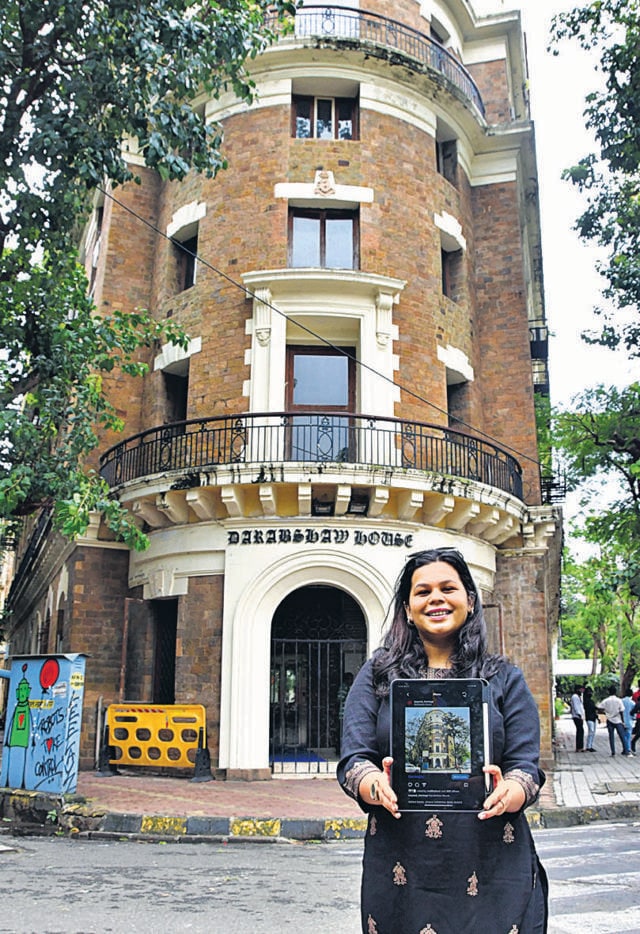
Mallika Keer is on a mission to document Mumbai’s living heritage. Her Instagram page, titled ‘Beyond Heritage’, seeks to look at Mumbai beyond the usual notion of culture by not just appreciating the city’s monuments, but also what she calls its everyday heritage — houses, cinema halls, offices, and markets, among others.
Read here: Delhi-NCR inundated after heavy showers, civic agencies in damage control mode
She uses her page as a forum to share the story of these structures, holding discussions on their history, architecture, their present condition, and the need for their conservation.
“I studied architectural conservation in Delhi, and returned to my hometown Mumbai during the Covid-19 lockdown. I started exploring my neighbourhood of Shivaji Park and realised that there are so many houses and other buildings with interesting architectural features which face extinction due to the mass redevelopment of entire neighbourhoods. These buildings are a part of the city’s evolution, and I wanted to document them before they are lost forever,” the 26-year-old said.
Keer is part of a growing tribe of history and architecture buffs who use Instagram to create an online repository of built heritage in their respective cities. They also raise awareness about such buildings, and help foster public dialogue about the need for their conservation.
Celebrating Art Deco
Many online repositories of built heritage are devoted to Art Deco — a style of architecture that originated in Paris and became popular in the US during the 1920s (popularly called the “Roaring Twenties”). In India, Mumbai was the fulcrum of the Art Deco movement during the 1930s, and the style later spread to other cities such as Kolkata, Delhi, Chennai, and Hyderabad.
Read here: Tomatoes cost ₹160/kg in Delhi; 445% jump in price amid 'free iPhone' jokes
Mumbai’s Marine Drive is home to arguably the world’s second-largest Art Deco cluster of buildings (Miami in the US has the most), while Delhi’s Asif Ali Road and Daryaganj also boast an impressive ensemble of such buildings. Kolkata, meanwhile, has a large aggregate of intact Art Deco buildings at the Esplanade area and Ganesh Chandra Avenue — mostly office buildings and mixed-use apartments.
“The movement to preserve Mumbai’s Art Deco heritage has been an inspiration to us to try and replicate the same in our cities. Today, Art Deco’s very existence is threatened, largely because of rampant and unplanned redevelopment. Hence, I think there is a desire, especially among the younger generation, to preserve the memory of this history and heritage for future generations,” said Adhiraj Bose, 30, a corporate lawyer who runs the Instagram page Calcutta Art Deco.
Prathyaksha Krishna Prasad, 31, who curates the Art Deco Madras page, said she hopes to create awareness about Art Deco in the chronological evolution of the city of Chennai, and the values associated with the style.
“Art Deco in India came about at a juncture when we had Indian architects, designers, and people, in general, adopting a style that was Indian in its soul but international in its outlook. I have been studying how art and cultural heritage can work together to engage with communities, creating awareness and invoking appreciation,” Prasad said.
A house for heritage lovers
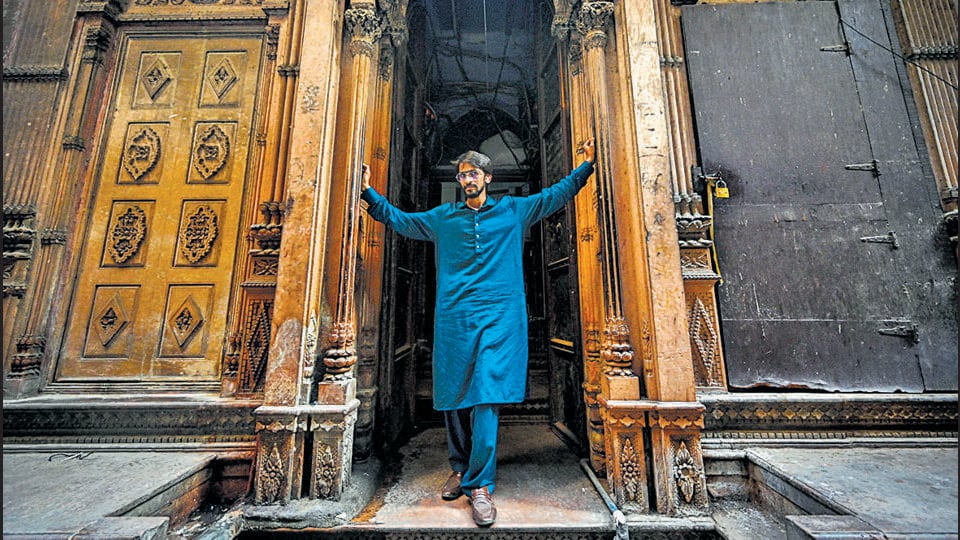
Many Instagram pages are devoted exclusively to a particular style of houses in a city. Delhi Houses, a page run by art historian Anica Mann, archives modern houses of the Capital in neighbourhoods like Sunder Nagar, Vasant Vihar, and Nizamuddin, which were built in the post-Independence era.
Read here: Record rain batters Delhi, rivers in spate across northern India
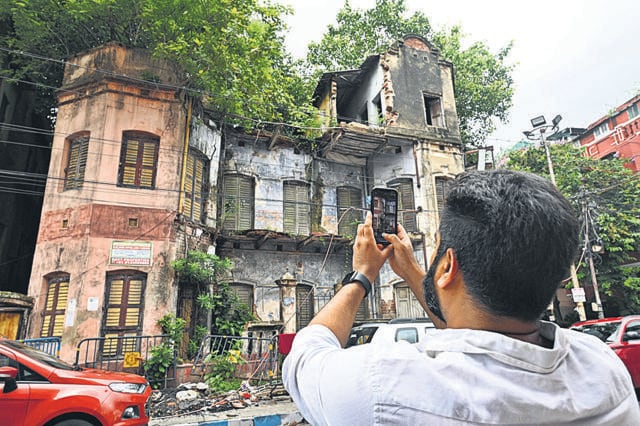
The Calcutta Houses, another photography project on Instagram, is a repository of the photographs of many magnificent houses — many of them over a century old — dating back to a time when Kolkata was the seat of colonial power.
Oxide-red floors, slatted green Venetian, or French-style windows, and a long first-floor verandah with patterned cast-iron railings are among some of the striking characteristics of these grand homes. “These heritage houses are being torn down to make way for modern commercial and residential buildings. Our photography project seeks to document these homes and help Kolkata residents connect with their past. After all, these houses give a peek into the past of these neighbourhoods and their everyday life,” said filmmaker and photographer Manish Golder, who co-started the page.
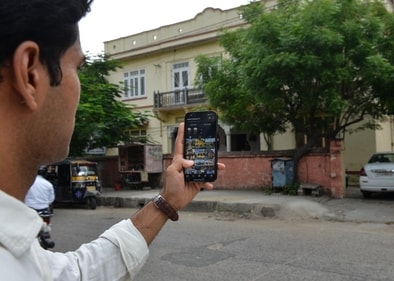
Similarly, the Houses of Jaipur page features many grand houses with eclectic architectural styles. “Unlike in other cities, houses in Jaipur have varying architectural styles, so you have Greco–Roman, Art Deco, Mughal-Rajasthani, and Indo-Saracenic architecture. There are neighbourhoods that are like open museums of beautiful houses,” said Bharat Singh, 30, who runs the page.
“Unfortunately, like most cities across the country, Jaipur is fast turning into an apartment city from a bungalow city.”
Sharing history
Abu Sufiyan, who runs the Instagram page Purani Dilli Waley, which is dedicated to Delhi’s people, culture, and heritage, says social media can contribute in a big way to the conservation of urban heritage by enhancing public engagement.
“Social media plays an important role in how people experience cities, and offers new ways of engaging with historic urban landscapes. No wonder then museums and archives across the world are using Instagram in a big way to share objects from digitised heritage collections and to enter into a dialogue with their audiences,” he said.
Many of these chroniclers like to refer to their cities by their original names. So, for Keer, Mumbai continues to be Bombay, while for Prasad, Chennai continues to be Madras.
They also like to take the photographs they upload themselves.
“A few people suggested that I should hire a professional for more beautiful photos, but as a conservation architect, I believe I have a better appreciation of a building’s architectural value,” Keer said.
Increasing public engagement
Golder says many Kolkata residents have begun inviting him to document their houses. “There are many people who are interested in finding a sustainable solution to conserve older buildings and approach us for ideas. Recently, a house owner refused to sell his house to a real estate developer and instead turned it into a heritage café,” he said.
Read here: Delhi schools to remain closed on Monday due to rain, announces Kejriwal
Earlier this year, the West Bengal government announced an incentive of ₹1 lakh to owners of heritage buildings to turn their houses into a homestay. “The incentive is not very encouraging, and the government needs to do more to preserve these houses, which are an integral part of the city’s identity,” he said.
Sufiyan added, “Now, a lot of people do not want to sell their havelis to builders. Some of them now invite us to organise several cultural events such as literary meets in their havelis.”


