E-Paper



Delhi logs max temp of 38.1°C on warmest August day in 4 yrs
Delhi experienced the highest August daytime temperature in four years, reaching 38.1°C. It is expected to cool down with light rain and a drop in mercury.

 Prefer HTon Google


The Capital on Monday was unusually hot, as it recorded the highest day-time temperature for August in the last four years, but the weather department predicted that the discomfort will subside in a day with light rains followed by a sharp drop in mercury the day after.
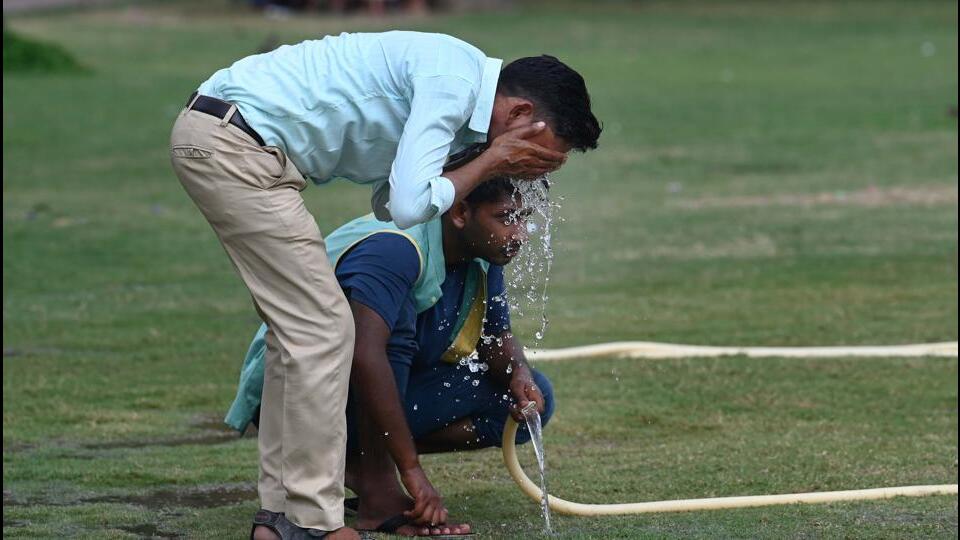
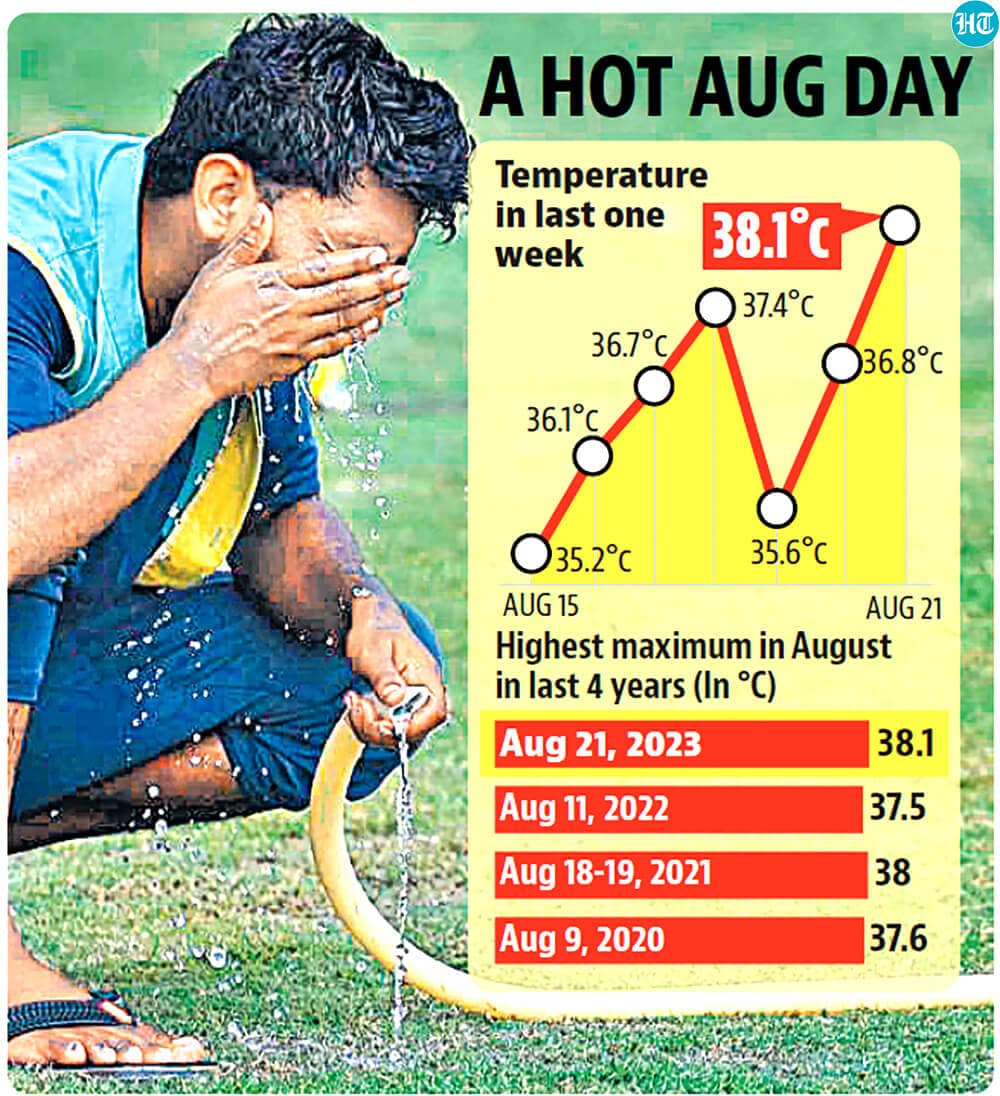
On Monday, mercury at Safdarjung — the base weather station— touched 38.1 degrees Celsius (°C), which was four degrees above normal for this time of the year. It was also more than Sunday’s 36.8°C.
Also read: Hills on alert as monsoon trough shifts north again
The India Meteorological Department attributed this to mostly clear skies on both Sunday and Monday.
Kuldeep Srivastava, scientist at IMD, said the maximum temperature has risen by around 2.5 degrees over the last three days. “Mostly clear sky conditions, coupled with limited impact of the moisture-laden easterly winds has led to such high temperature. The wind direction during this period was mostly westerly to southwesterly, which are dry winds. It only briefly shifted to easterly during this period,” he said.
This is likely to change with the passing of the monsoon trough over Delhi, he said. Mercury is also likely to dip once again in the next 48 hours due to light rain, according to IMD, with the maximum to dip by around five degrees by Wednesday.
“The maximum will be around 36°C on Tuesday and dip down to 33°C on Wednesday. On Tuesday, we expected some rain in the early hours of the day and this activity is mainly due to the monsoon trough moving northwards. It is likely to pass through Delhi during this period,” Singh said.
While the maximum temperature for this time of the month remains below 40°C, high humidity exacerbates the ‘real feel’ or heat index, making it feel much warmer. Delhi’s relative humidity on Monday oscillated between 53 and 88% in the last 24 hours. This gave Delhi a heat index (HI), or real feel temperature, of 47°C at 2:30pm on Monday.
The minimum temperature, meanwhile, stood at 28.4°C .
Last year, the highest temperature in August was on the 11th of the month at 37.5, 38 in 2021 (August 18 and 19), and 2020 saw a high of 37.6 (August 9).
In the last 10 years, the highest maximum in August was recorded on August 27, 2014 at 39.4°C, while the all-time high for the month is 42°C, which was recorded on August 12, 1987, according to IMD data.