E-Paper



SC affirms death penalty in 2000 Red Fort attack case
A bench, headed by Chief Justice of India Uday Umesh Lalit, dismissed the review petition filed by Arif noting that the order of his conviction and sentence do not warrant any intervention in the wake of adequate evidence to prove his involvement in the crime beyond any doubt.

 Prefer HTon Google


The Supreme Court on Thursday affirmed the death sentence of Lashkar-e-Taiba militant Mohd Ashfaq Arif, convicted of attacking an army barracks at Delhi’s Red Fort in December 2000, underlining that there was a direct strike at the unity, integrity and sovereignty of India.
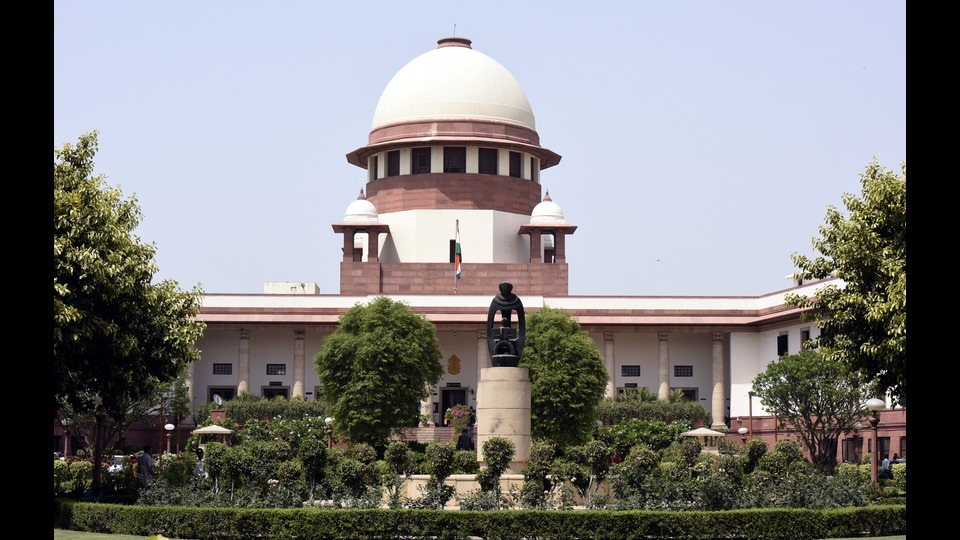
A bench, headed by Chief Justice of India Uday Umesh Lalit, dismissed the review petition filed by Arif noting that the order of his conviction and sentence do not warrant any intervention in the wake of adequate evidence to prove his involvement in the crime beyond any doubt.
Charting out aggravating and mitigating circumstances of the case to ascertain whether the capital punishment is the only fitting punishment for Arif, the bench that also comprised justices S Ravindra Bhat and Bela M Trivedi noted that there is no ground to believe a possibility of retribution and rehabilitation of Arif, who is a Pakistan national.
Also read: Can’t deny citizens grounds for refusing security clearance: SC tells Centre
“On the other hand, the aggravating circumstances evident from the record and especially the fact that there was a direct attack on the unity, integrity and sovereignty of India, completely outweigh the factors which may even remotely be brought into consideration as mitigating circumstances on record,” held the bench.
Arif, who was convicted for masterminding the attack, was given the death penalty by a Delhi trial court in 2005. The capital punishment for Arif was confirmed by the Delhi high court in 2007, and later upheld by the top court in 2011.
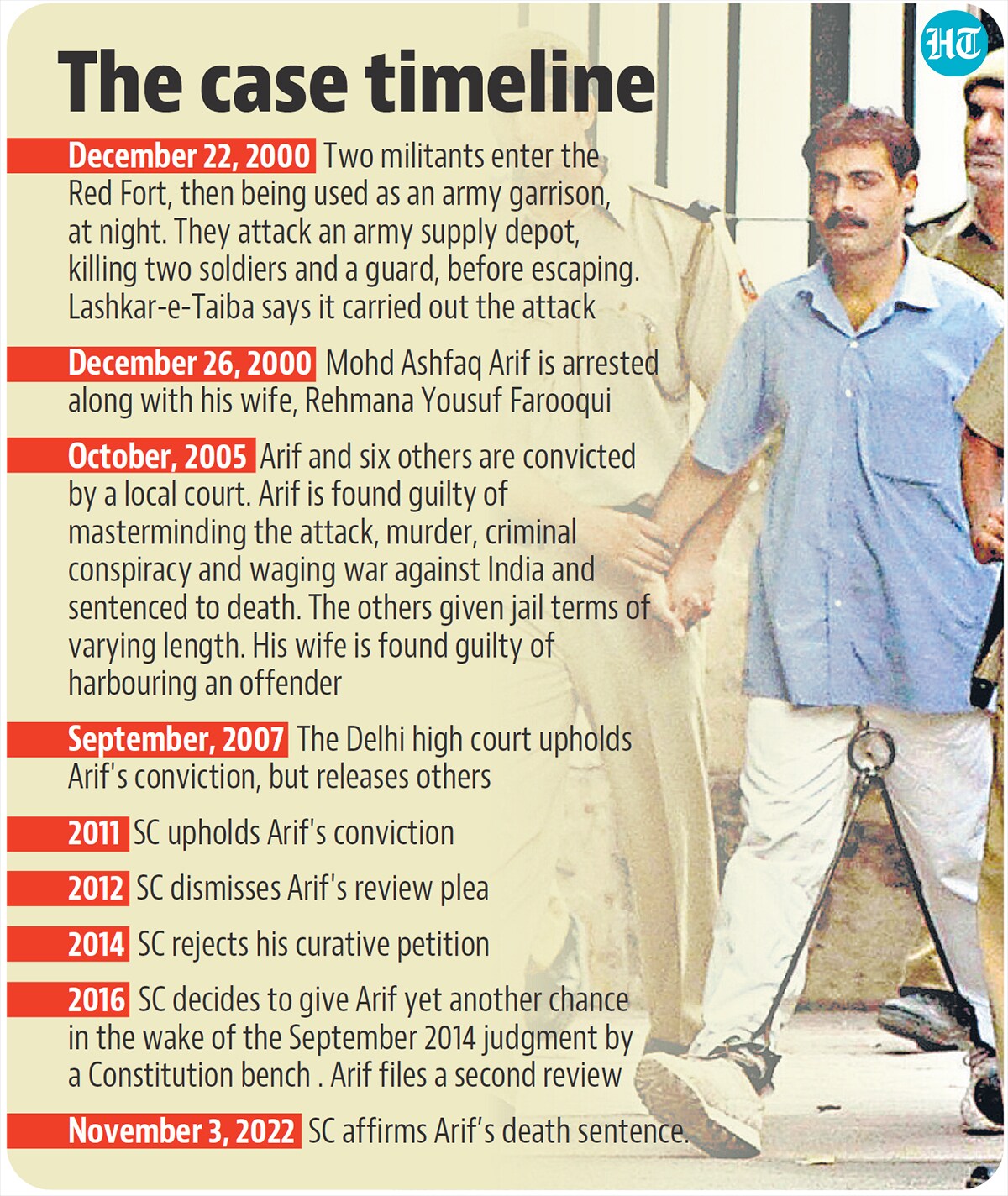
While the review petition filed by Arif was dismissed in 2012, his curative petition was rejected in January 2014, marking the end of all legal remedies available to him. But in 2016, the Supreme Court decided to give Arif yet another chance to fight for his life in the wake of the September 2014 judgment by a constitution bench that held that review petitions of the condemned prisoners must be heard in open court rather than inside judges’ chambers without according them an opportunity to argue.
Subsequently, Arif filed a second review petition in which he sought setting aside of the order of his conviction and sentence on several grounds, including inadmissibility of call detail records (CDRs) which were mentioned by the prosecution as the most crucial piece of evidence to link the LeT terrorist with the attack.
In its judgment on Thursday, the Supreme Court said that discounting the CDRs will not impact the outcome of the case since there was overwhelming evidence to prove Arif’s culpability.
“In conclusion, it must therefore be observed that even after eschewing circumstances which were directly attributable to the CDRs relied upon by the prosecution, the other circumstances on record do clearly spell out and prove beyond any doubt the involvement of the review petitioner in the crime in question,” held the bench.
Also read: SC seeks reply from 4 staffers over delay in listing of cases
Three people died in the December 2000 attack on the 17th Century fort, one of India’s most famous landmarks. Arif was arrested along with his wife, Rehmana Yousuf Farooqui, four days after the incident. The trial court convicted him and six others in October 2005 under the charges of murder, criminal conspiracy and waging war against India. He was sentenced to death, while the others received jail terms of varying length.
The high court in September 2007 affirmed his conviction, but ordered the release of all other co-accused for lack of evidence.
According to the prosecution, two militants entered the Red Fort -- then being used as an army garrison -- on the night of 22 December, 2000. The gunmen attacked an army supply depot, killing two soldiers and a guard, before escaping.
The Pakistan based militant group Lashkar-e-Taiba claimed responsibility for the attack, straining relations between India and Pakistan.