
 E-Paper



SC flags Delhi’s ‘ad-hocism’ over repeated protection for unauthorised constructions
The Supreme Court criticized repeated extensions of a temporary law, hindering Delhi's governance and Yamuna river conservation efforts, calling for an effective action plan.

 Prefer HTon Google


The Supreme Court on Wednesday observed that the repeated extension of a law providing temporary protection to unauthorised colonies, slums and constructions in Delhi has contributed to “ad-hocism” in Delhi’s governance and could undermine any action plan to remove encroachments from the Yamuna riverbed.
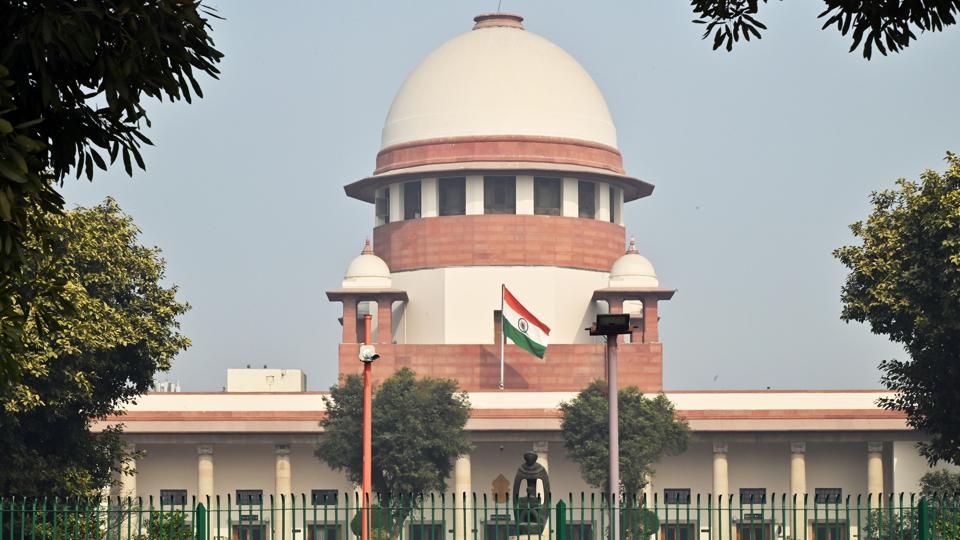
The court was hearing proceedings on the preparation of a comprehensive Yamuna Action Plan (YAP) for conservation of the river, which flows through Delhi and several other states. In May this year, the court had constituted a committee headed by the Union home secretary to prepare the plan.
A bench of justices Manoj Misra and Manmohan said the continued protection provided under the National Capital Territory of Delhi Laws (Special Provisions) Act, 2006, could make it difficult to implement the proposed plan. “See how ad-hoc this city is being governed. You have a Master Plan for Delhi and it has not been allowed to be implemented for 20 years,” the bench said.
The court was referring to the 2006 law, which provides protection from sealing and demolition to unauthorised colonies, slums and unauthorised constructions. The legislation, originally intended as a temporary measure, has been extended repeatedly and was last extended in 2023 until December 31, 2026.
“This is what is leading to ad-hocism. The 2006 Act protects everything. If you bring the Yamuna Action Plan, the entire exercise will be futile if you are not able to implement it,” the bench remarked while hearing arguments on the implementation of the YAP.
Additional solicitor general Aishwarya Bhati told the court that the Master Plan for Delhi 2047 had been tabled and finalised. The bench, however, said: “You cannot govern a city like this. For 20 years, Delhi is not allowed to have a Master Plan.”
Senior advocate K Parmeshwar, assisting the court as amicus curiae, said that pursuant to the court’s May 21 order, the Union home secretary-led committee had prepared a draft YAP, but it would require more time before being finalised. On the concerns over its implementation in view of the 2006 Act, Parmeshwar agreed to examine the issue and submit suggestions.
The court posted the matter for September 22 and granted the committee further time to submit the YAP. The amicus pointed out that the 2006 Act was intended to be temporary but had been extended several times since its enactment.
The bench said, “The political administration will not allow any plan to be implemented,” as one of the judges on the bench – justice Manmohan, shared his experience in a matter while he was the acting chief justice of the Delhi High Court. He stated that in Nizamuddin West, a basti (slum) was built blocking the natural flow of water into the Yamuna. During the monsoon, this resulted in backflow and flooding in areas such as Maharani Bagh.
“When we wanted to remove the basti (slum), the political administration did not allow us citing the 2006 Act. There is a statutory prohibition prescribed by the Act. Unless it is interfered with, no action plan can be implemented,” the bench said.
The bench said that the life of a Master Plan is roughly 20 years and it is unfortunate that the same is frozen by the 2006 Act. The court in its May 21 order had said: “Encroachment on the riverbed (particularly in fragile Zone ‘O’ in Delhi) along with indiscriminate discharge of toxic effluents from illegal industries, untreated sewage from unauthorized colonies and mixing of sewage with rainwater drains has reduced Yamuna to little more than a sewage channel.”
The court had called for a comprehensive approach to the river’s conservation, noting that multiple agencies often worked in silos or at cross purposes. It directed YAP committee to include the chief secretaries of all states and Union territories through which the Yamuna flows, heads of their State Pollution Control Boards and the amicus curiae.
The order of the court had further stated that agencies often work at cross purposes. “Instead of curbing pollution, they are aggravating it. Hard decisions like removal of encroachments, closure of illegal industries and relocation of unauthorized colonies are unavoidable. Such measures can only succeed if the Union of India, states, and UTs act in concert,” the order said.
With this view, the court directed the committee to come out with a long-term, integrated strategy similar to the Namami Gange Programme laying out its objectives, implementation strategy, roles and responsibilities of each agency, budgetary allocations, and timelines.

Stay updated with all top Cities including, Bengaluru, Delhi, Mumbai and more across India. Stay informed on the latest happenings in World News along with Delhi Election 2025 and Delhi Election Result 2025 Live, New Delhi Election Result Live, Kalkaji Election Result Live at Hindustan Times.


