
 E-Paper



SC protects judicial officer who was kidnapped in 2008
The Supreme Court on Thursday stepped in to protect a judicial officer and his family from continuing threats by convicts involved in his kidnapping as a minor in 2008, directing that they shall not be released on parole or remission without prior permission of the Punjab and Haryana High Court


The Supreme Court on Thursday stepped in to protect a judicial officer and his family from continuing threats by convicts involved in his kidnapping as a minor in 2008, directing that they shall not be released on parole or remission without prior permission of the Punjab and Haryana High Court.
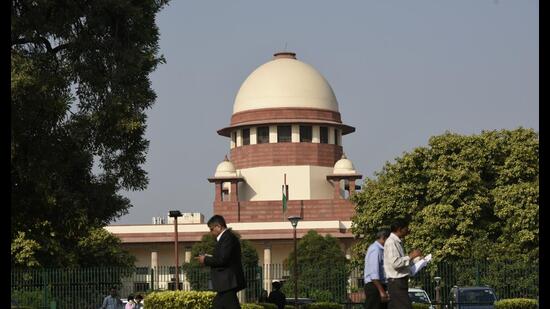
A bench comprising Chief Justice of India Surya Kant and justices Joymalya Bagchi and Vipul M Pancholi further ordered Delhi Police and Haryana’s Kurukshetra police to provide adequate security to the officer, Snehil Sharma, and his family, in view of perceived threats from the convicts, who are currently serving life sentences.
The court directed that the Haryana government cannot grant parole or remission to the convicts without seeking permission from the high court. It added that even if such permission is granted, Sharma and his family must be given at least two weeks’ notice to take appropriate safety measures. The bench also told both police departments to conduct a fresh threat perception assessment and ensure protection for the family.
The latest directions build upon the court’s earlier intervention in December 2025, when it had restrained the release of the convicts on remission after Sharma approached the court citing “persistent and escalating threats” from them and their associates.
The case presents an extraordinary trajectory. Sharma, who was kidnapped for ransom as a minor in March 2008, is today a serving judicial officer in Delhi. Nearly two decades after the crime, he approached the apex court as a victim seeking protection from those convicted for the offence.
Ten persons were convicted under Section 364A of the Indian Penal Code for the kidnapping and sentenced to life imprisonment by a trial court in 2013. Their convictions were upheld by the Punjab and Haryana High Court in 2017 and later attained finality after the Supreme Court dismissed their appeals.
However, according to Sharma’s petition, the end of the trial did not mark the end of the ordeal. His plea detailed a continuing pattern of intimidation, threats, and coercion, particularly intensifying when the convicts sought parole or premature release. The petition described “post-offence criminal continuity,” pointing to multiple FIRs over the years, including incidents of alleged firing during parole in 2021 and fresh threats in 2025 when remission applications were under consideration.
It also flagged extortion attempts and intimidation directed at his father in Kurukshetra, who has been opposing the convicts’ premature release before state authorities. The plea further referred to coordinated online campaigns and videos allegedly circulated by the convicts and their associates to malign the officer and pressure the family into withdrawing objections to remission.
Senior advocates Sidharth Luthra and Geeta Luthra, appearing for Sharma, had earlier urged the court to recognise the case as emblematic of systemic gaps in victim protection, particularly in the context of parole and remission in serious offences.
The petition highlighted the absence of mandatory victim hearing and risk assessment in existing remission frameworks, arguing that such omissions undermine the rights to life and dignity under Articles 14 and 21 of the Constitution. It also pointed to alleged inaction by law enforcement agencies despite repeated complaints, including the lack of a formal threat analysis report or structured protection plan.
Taking note of these concerns, the Supreme Court had in December issued notices to the Union government and the states of Haryana, Delhi and Gujarat, and halted any move to release the convicts.
Stay updated with all top Cities including, Bengaluru, Delhi, Mumbai and more across India. Stay informed on the latest happenings in World News along with Delhi Election 2025 and Delhi Election Result 2025 Live, New Delhi Election Result Live, Kalkaji Election Result Live at Hindustan Times.


