
 E-Paper



SC removes reference to Sikkimese-Nepalese as ‘foreigners’ after govt sought order’s review
The court also said its judgment had no bearing on the constitutional provision that accords special status to Sikkim nor did it have any occasion to examine the issues surrounding the citizenship in the state.


New Delhi: The Supreme Court on Wednesday removed a statement from its January 13 judgment that called Sikkimese-Nepalese “people of foreign origin” after the Union government sought the review of the observation, which led to protests across the northeastern state.
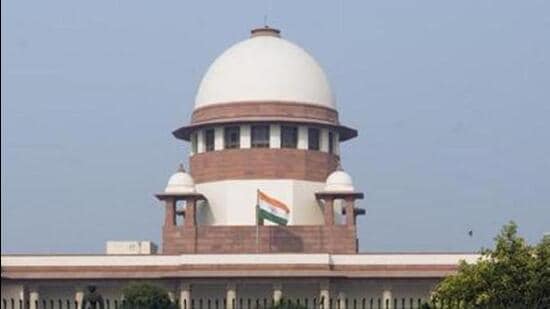
A bench of justices MR Shah and BV Nagarathna deleted the contentious part, noting that it is “just and proper” to correct the statements that described Bhutia-Lepchas as the original inhabitants of Sikkim and Nepalese as persons of foreign origin settled in Sikkim.
The court also said its judgment had no bearing on the constitutional provision that accords special status to Sikkim nor did it have any occasion to examine the issues surrounding the citizenship in the state.
In its rectification order, the bench also pointed out that the error had crept in the judgment due to the lawyers’ failure to bring the amendments in their petitions to the notice of the court. As one of the lawyers in the case tendered her apology, the bench retorted: “Apologise to the people who were affected because of this.”
On January 13, while delivering its verdict on the petition filed by Association of Old Settlers of Sikkim (AOSS), demanding exemption of income tax for the old settlers who had settled in Sikkim before its merger with India on April 26 1975, the apex court observed that Sikkimese-Nepalese were people of foreign origin. The apex court also exempted old settlers of Indian origin from paying income tax.
The Indian Income Tax Act, 1961 was applicable in Sikkim with effect from April 1, 2008 vide section 10 of 26 AAA wherein majority of Sikkimese population were exempted from paying Income Tax and the term Sikkimese was defined. The old settlers of Indian origin residing in Sikkim prior to the merger were left out from the said definition.
The AOSS in 2013 filed a petition in the Supreme Court seeking exemption from paying income tax and the judgment in their favour came on January 13 this year.
Though the verdict in favour of old settlers was widely welcomed, the apex court’s observation terming Sikkimese- Nepalese as people of foreign origin triggered an unrest with political parties, including the ruling Sikkim Krantikari Morcha (SKM) and the Bharatiya Janata Party (BJP), and several organisations taking out protest rallies.
On Monday, the Union government, through the ministry of home affairs, filed the review petition, seeking deletion of the contentious portions from the judgment. Solicitor general Tushar Mehta, representing the Centre, submitted before the bench on Wednesday that removal of the statements regarding Sikkimese-Nepalese will not impact the final ruling.
He also said the government of India is committed to the special status granted to Sikkim and that the court judgment should not be construed as an interpretation on the citizenship status of Sikkimese people.
According to 1891 census of Sikkim, the population of Sikkim — which was a separate sovereign country till 1975 — was 30,458. Among them, Bhutias and Lepchas were 10,656 while the Nepalese were 19,802. Bhutia, Lepcha and Nepali are the three main ethnic communities in Sikkim.
Out of the six chief ministers so far Sikkim had, five were Nepalese and majority of the population is also from the same community. Most of the old settlers in Sikkim are into trade and business.
Stay updated with all top Cities including, Bengaluru, Delhi, Mumbai and more across India. Stay informed on the latest happenings in World News along with Delhi Election 2025 and Delhi Election Result 2025 Live, New Delhi Election Result Live, Kalkaji Election Result Live at Hindustan Times.


