
 E-Paper



SC stays Delhi high court order on EWS seats in city schools
Several private schools had approached the top court challenging the high court’s May 26 order passed on a petition filed by NGO Justice for All, seeking enforcement of Right of Children to Free and Compulsory Education Act, 2009 (RTE) provisions.


The Supreme Court on Tuesday stayed a Delhi high court order directing private schools in the Capital to fill up all seats reserved under the economically weaker section (EWS) accruing over the past decade in a phased manner over the next five years.
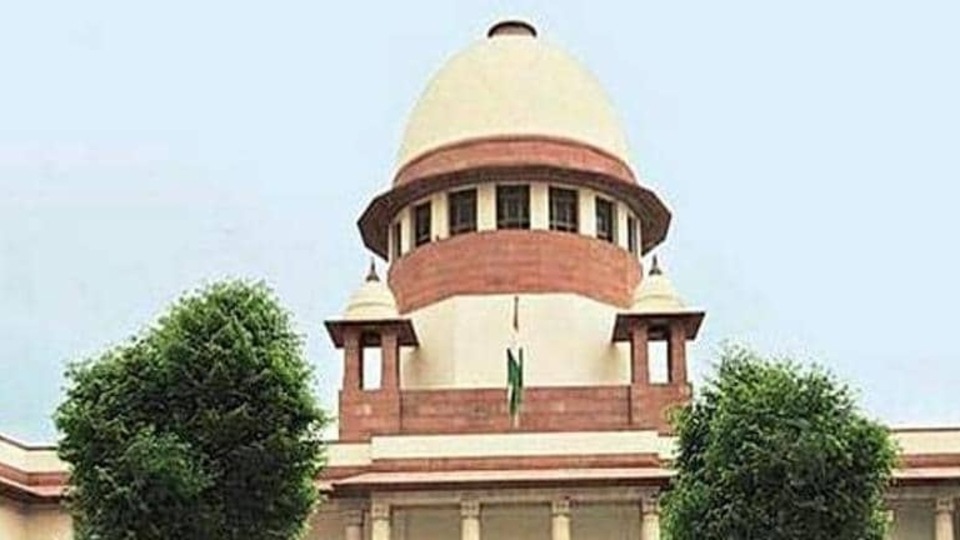
Several private schools had approached the top court challenging the high court’s May 26 order passed on a petition filed by NGO Justice for All, seeking enforcement of Right of Children to Free and Compulsory Education Act, 2009 (RTE) provisions. The NGO was aggrieved by an order passed by a single judge of the Delhi high court passed in March 2017 fixing December 31 of every year as the last date for admitting students under EWS catregory.
Issuing notice on the private schools’ plea, a bench of justices Sanjay Kishan Kaul and MM Sundresh said, “Issue notice. In the meantime, there shall be stay of the impugned order(s) as also further proceedings.” The court posted the matter for hearing on September 1, and allowed the lawyers appearing for both the Delhi government and the NGO to respond before the next date of hearing.
The schools in their plea filed through advocate Gaurav Kejriwal said, “Impugned directions of the division bench (of the Delhi high court) would have catastrophic effect on the working of the private unaided recognised schools, as the schools will be forced to admit EWS/DG (disadvantaged groups) category students beyond the 25% strength of the class and this would result in putting undue strain on financial resources of school, besides putting extra burden on the general category fee paying students, since the schools have no other sources of income and are solely dependent upon the fee.”
Appearing for the schools, senior advocates Shyam Divan and Maninder Singh told the Supreme Court that the high court’s direction impinged upon the autonomy of private unaided schools and that it proceeded on the basis that there is a concept of “declared strength” of EWS under the RTE Act, 2009 when nothing of this sort exists.
In its May 26 order, the high court said, “The state shall ensure that the 25% seats in the EWS category students shall be filled up on the basis of declared sanctioned strength at the entry level (Pre-school/Nursery/ Pre-primary/KG and Class 1), irrespective of the actual number of students admitted in the general category.”
Private schools on public land have to admit 25% students in the EWS category for which the government pays the school a fee equivalent to the expense incurred on a student in a government school.
Last month, the Delhi government’s directorate of education (DoE) had asked officials to ensure all vacant seats that are reserved for candidates under EWS/DG and children with special needs (CWSN) categories in city’s private schools are filled up. .

Stay updated with all top Cities including, Bengaluru, Delhi, Mumbai and more across India. Stay informed on the latest happenings in World News along with Delhi Election 2025 and Delhi Election Result 2025 Live, New Delhi Election Result Live, Kalkaji Election Result Live at Hindustan Times.


