
 E-Paper



SC to hear matter to change rules to designate senior advocates
The Advocates Act provides for two categories of lawyers – advocates and senior advocates. Under Section 16(2) of the Act, the Supreme Court and the high courts have the power to designate senior advocates based on their ability, standing at the bar, special knowledge or experience in law.

 Prefer HTon Google


The Supreme Court on Tuesday set out to revise rules to designate senior advocates in the top court and high courts, indicating that it will consider the suggestion to refer the matter to a five-judge bench when it takes it up next month.
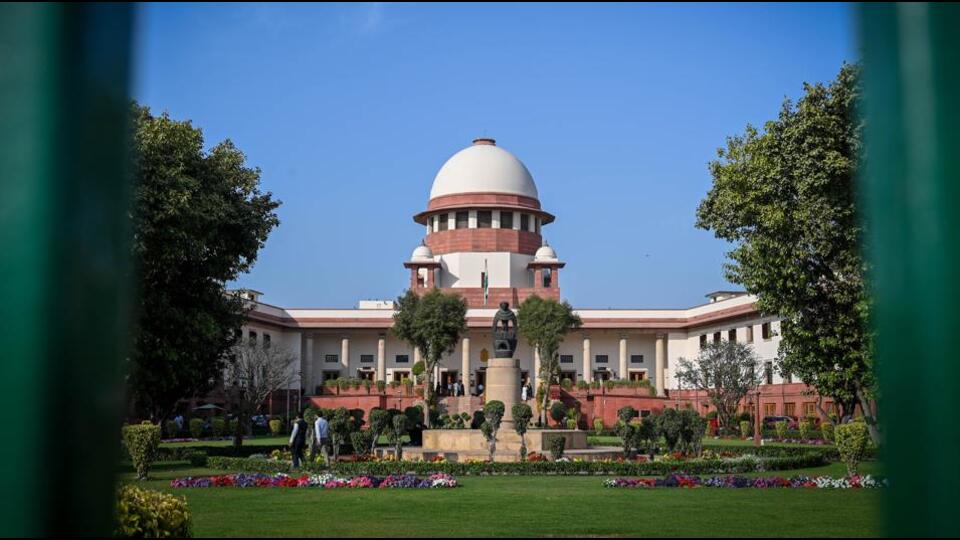
The procedure for designation of senior advocates currently follows two decisions of the Supreme Court passed in 2017 and 2023 – both by three-judge benches. On January 20, a two-judge bench doubted certain norms laid down in these two decisions and referred the matter to the Chief Justice of India (CJI) for constituting a bench of “appropriate strength” to modify or revise the parameters set by the two judgments.
On Tuesday, the matter was placed before a three-judge bench headed by justice Abhay S Oka, the same judge who authored the January 20 decision. As this exercise would require reconsideration of the past two decisions, the bench, also comprising justices Ujjal Bhuyan and SVN Bhatti, issued notice to all parties who contributed to the decision in the 2017 decision titled Indira Jaising v Supreme Court of India.
Accordingly, the bench issued notices to the Attorney General, Union government and the Supreme Court secretary general along with Bar Council of India, Supreme Court Bar Association (SCBA) and Supreme Court Advocates-on-Record Association (SCAORA), directing them to file responses by March 6. The 2023 decision (also titled Indira Jaising v Supreme Court) had further made improvements to the procedure provided by the 2017 judgment.
Jaising, who appeared in person, told the bench that if the past two orders are to be reconsidered, propriety demands that the matter is heard by a bench of five-judges. According to her, a three-judge bench cannot reverse or modify another three-judge bench decision.
The bench told Jaising, “We will hear you on that issue also. It will be open for you to canvass this point.” She further requested that the secretary general of the Supreme Court should file a report indicating about the experience gained in implementing the senior designation process under the 2017 and 2023 rulings. Prior to this, the Full Court of the Supreme Court or high court used to designate senior advocates by a process of secret ballot. Jaising had approached the court in 2015 objecting to the lack of transparency that led to certain undeserving persons getting senior designation by lobbying with judges.
The Advocates Act provides for two categories of lawyers – advocates and senior advocates. Under Section 16(2) of the Act, the Supreme Court and the high courts have the power to designate senior advocates based on their ability, standing at the bar, special knowledge or experience in law.
The 2017 and 2023 judgments came out with a points-based criteria and formed a permanent committee headed by chief justice of the Supreme Court/high court to allot the points based on years of practice in law, contribution to judgments, publications, pro bono work, followed by personal interview for which 25 points was allocated. The committee also comprised of two seniormost judges, Attorney general/advocate general and a nominee from the bar. It is based on the committee’s recommendation, the Full Court will issue final orders conferring designations.
The recent judgment of January 20 found this process to lack a mechanism for the permanent committee to reduce marks in the event of any candidate lacking integrity or has disciplinary proceedings pending before any bar council. The court flagged other concerns whether a five-minute interview was sufficient to assess the suitability of a candidate and doubted the need for persons to apply for getting designation, when it is meant to be a “conferment” by the Full Court.
Further, the decision noted other concerns such as the lack of consideration of trial court lawyers for getting the senior distinction, and the need for the committee having CJ and two senior judges to go through every journal, judgment, book, submitted by every candidate which was meant to be an extensive exercise requiring several hours.
The bench directed the matter to be heard on March 19 and allowed even high courts to contribute their suggestions based on their experience with the process by March 7.

Stay updated with all top Cities including, Bengaluru, Delhi, Mumbai and more across India. Stay informed on the latest happenings in World News along with Delhi Election 2025 and Delhi Election Result 2025 Live, New Delhi Election Result Live, Kalkaji Election Result Live at Hindustan Times.


