E-Paper



Send only less-polluting buses to Delhi region, non-NCR states told
CAQM has asked Punjab, Himachal Pradesh, Madhya Pradesh, Uttarakhand and Jammu and Kashmir to facilitate transition to cleaner fuels by the end of 2024

 Prefer HTon Google


Buses from five states coming to Delhi and National Capital Region (NCR) will have to transition to electric, CNG or BS VI by the end of the year to reduce vehicular emissions in the region, the Commission for Air Quality Management (CAQM) in NCR has said in an order.
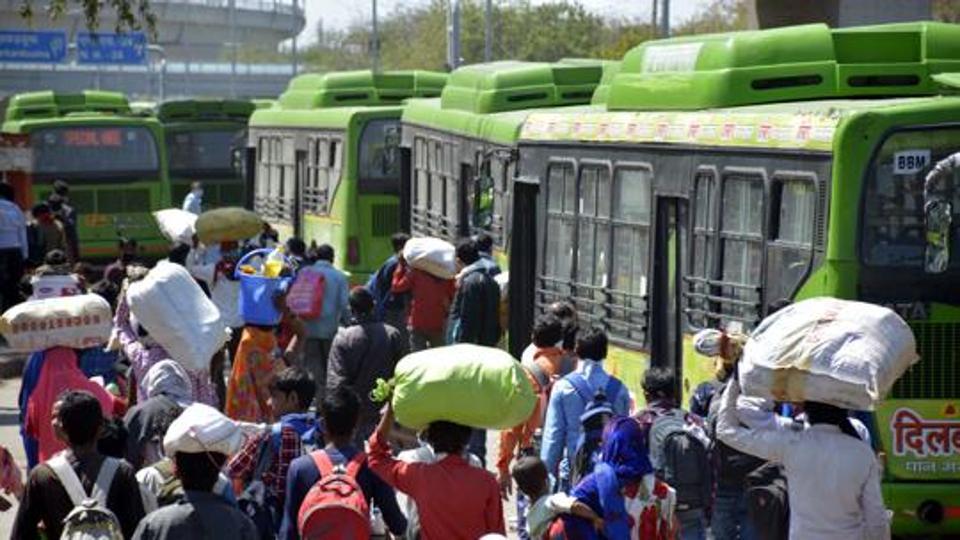
CAQM has asked Punjab, Himachal Pradesh, Madhya Pradesh, Uttarakhand and Jammu and Kashmir, the states from which inter-city buses come to Delhi-NCR, to facilitate transition to cleaner fuels by the end of 2024, fixing deadlines for each of the states and UTs. The apex pollution control body for NCR said that this will be applicable to buses operated by the state Public Sector Undertakings (PSUs) as well as private entities, which make trips to Delhi-NCR and back.
The decision was taken after deliberations with these state governments in a meeting held on April 5, CAQM said. “It emerged during the meeting with these five states and UTs that transition to only CNG or EV buses by these states will take much longer time. But it becomes necessary to prioritise replacing older BS-III or BS-IV inter-city diesel buses running from these states to Delhi-NCR with BS-VI diesel compliant buses and action was initiated in this direction towards appropriate replacement of such buses,” CAQM said in its order, dated June 14, a copy of which HT has seen.
The document said the deadline to switch to cleaner fuels for inter-city buses from Punjab, Himachal Pradesh and Madhya Pradesh is December 31, 2024, and for Jammu and Kashmir, it is September 30, 2024.
For Uttarakhand, CAQM said that out of the 541 buses required to run to and from Delhi-NCR, 160 were currently complaint, and the remaining 379 is required to switch to clean fuels. For 190 buses, the deadline to transition is December 31, 2024, with the remaining required to be done by March 31, 2025.
After Uttarakhand, the highest number of inter-city buses to Delhi-NCR comes from Himachal Pradesh (238), followed by Punjab (147). Himachal Pradesh already has 207 of its buses using clean fuels, and Punjab has 105 out of its 147 buses running on cleaner fuels, it said.
“Apart from the bus services operated by the state government, inter-city bus services being operated by the state PSUs and private entities also have to switch to electric or CNG or BS VI complaint. Bus services operating under the Association of Independent Tour Operators (AITO) licence regime are, however, presently not to be covered in the ambit of these guidelines,” the order added.
Earlier, CAQM set a deadline of January 1, 2024 for all NCR states to ensure their buses going to Delhi were running on cleaner fuel, stating that those not following these norms would not be allowed to enter the Capital.
Anumita Roychowdhury, executive director, research and advocacy, Centre for Science and Environment, said that the latest move is an important one for transition to cleaner fuels in NCR. “This can not only provide cleaner public transport, but also ensure significantly lower emissions from tailpipes of these heavy-duty buses. This will also help pollution hot spots in Delhi such as Anand Vihar,” she said.