
Sign in

States directed to take measures to control dust

In a meeting held by the sub-committee, it was informed by the India Meteorological Department (IMD) that the air quality is likely to remain ‘poor’ in the coming days, owing to strong winds which will cause dust-resuspension across NCR.

Published on: May 9, 2022, 04:01:05 IST
Share
Share via
  • facebook
  • twitter
  • linkedin
  • whatsapp
Copy link
  • copy link

With the air quality in Delhi-NCR mostly hovering between ‘poor’ and ‘very poor’ categories last month, the sub-committee appointed by the Commission for Air Quality Management (CAQM) has written to the states asking them to intensify dust-control measures listed under the Graded Response Action Plan (Grap).
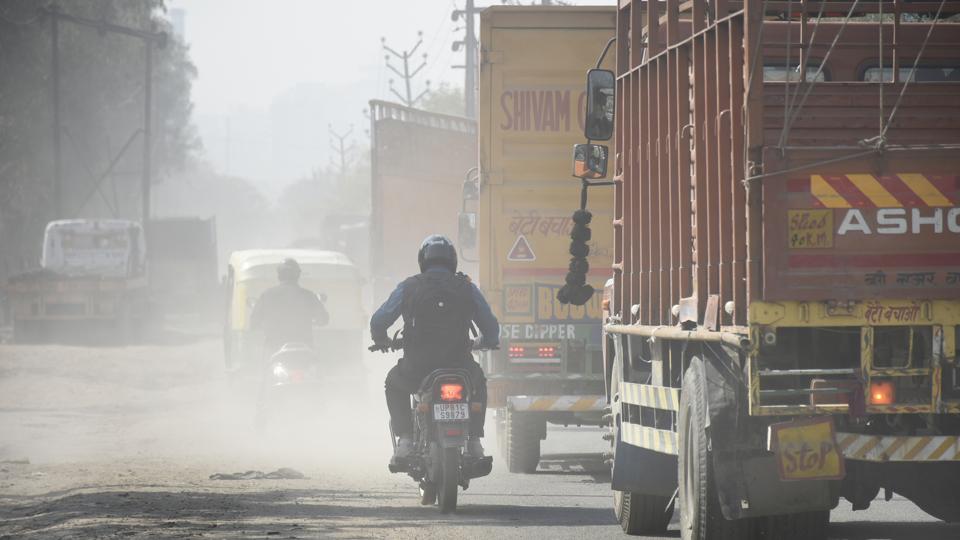
In a meeting held by the sub-committee, it was informed by the India Meteorological Department (IMD) that the air quality is likely to remain ‘poor’ in the coming days. (Sakib Ali/HT Photo)

In a meeting held by the sub-committee, it was informed by the India Meteorological Department (IMD) that the air quality is likely to remain ‘poor’ in the coming days, owing to strong winds which will cause dust-resuspension across NCR.

“...concerned implementation agencies are directed to intensify dust control measures such as mechanized sweeping, especially on roads with heavy traffic; enforcement of prescribed dust mitigation measures at large construction sites and management of construction and demolition waste (C&D) waste,” said the order dated May 4.

  • Jasjeev Gandhiok
    ABOUT THE AUTHOR
    Jasjeev Gandhiok

    Jasjeev Gandhiok is an Assistant Editor with Hindustan Times, where he covers environment, climate change, the clean energy transition and wildlife at the National Bureau. Gandhiok has over a decade of experience in journalism and is based in Delhi. He has reported extensively on Delhi and the National Capital Region (NCR). This includes the region's air pollution woes, a polluted Yamuna and on urban wildlife still thriving in the region. He joined HT in October 2021. Prior to that, he had five-year stint at The Times of India in Delhi, where he also covered Delhi, with a focus on environment and wildlife. Gandhiok has covered some recent events around the Capital too, ranging from the farmers' protests, the northeast Delhi riots and the CAA-NRC protests, reporting from the ground on all of these. He also travels across the country to report on how environment and climate change impact everyday life, while also writing on endangered species. His reports in 2019 on toxic leachate from Delhi's landfills led to the National Green Tribunal (NGT) taking suo motu cognisance and ultimately asking the state government to start bio-mining to flatten and remove all three landfills in the capital. He also closely tracks the implementation of government policies on climate, renewable energy and environmental protection. His focus remains on impactful, public-interest journalism which explains how environmental decisions affect people's everyday lives.Read More