
 E-Paper



Teachers oppose DU’s move to appoint foreign scholars as adjunct faculty
The decision to appoint global scholars as adjunct faculty was taken by the academic council on Tuesday and will be placed before the executive council, the highest decision-making body of the university, on August 31.


Several teachers of Delhi University have objected to the varsity decision to allow international scholars as adjunct faculty members in DU, at a time when the university has over 4,100 ad hoc teachers waiting to be regularised. They said the move will adversely impact the pay of such ad hoc teachers.
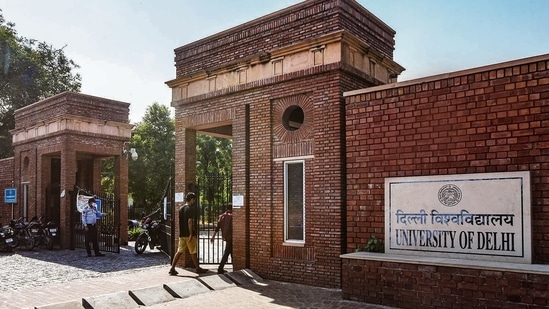
The decision to appoint global scholars as adjunct faculty was taken by the academic council on Tuesday and will be placed before the executive council, the highest decision-making body of the university, on August 31. This came after an August 3 meeting of senior university officials to discuss issues about the appointment of such teachers.
According to the minutes of that meeting, a copy of which is with Hindustan Times, the six-member committee decided that international scholars, including those of Indian origin from the top 500 universities (as per QS rankings), could be involved in multiple teaching-learning activities in DU. The QS rankings is an annual rating published by Quacquarelli Symonds (QS) and is one of the most widely followed rankings both by academics and students.
According to the minutes, the foreign scholars may be involved in teaching core and elective Masters courses; teaching of existing or newly designed courses to PhD students based on the individual’s area of expertise; co-supervision of PhD scholars; supervision of Masters dissertation; and other academic or research activities in consultation with the departments concerned.
“The teachers could also be involved in providing guidance to departments on securing external funding, student scholarships, internships, and “develop international collaborations, linkages with industry, patents and commercialisation of research,” the minutes said.
Academic council member Alok Pandey, who was one of four members who gave a note of dissent on the matter on Tuesday, said, “If the foreign faculty members start teaching core papers, the existing teachers will suffer. We have around 4,100 ad hoc teachers who have to take a minimum of 16 classes a week. If the number of classes is reduced, these teachers will be considered guest teachers, further reducing their pay. What is the need for appointing international faculty when we have no dearth of good teachers?”
Colleges may also consider appointing foreign teachers after securing approval from the governing body and dean of colleges, the DU said. Pandey said they had agreed to the appointment of such teachers on a needs basis in departments that require scholars from specialised fields.
“We had asked them (DU officials) to refrain from implementing it in colleges but they didn’t agree. So we gave a dissent note saying that the adjunct faculty will replace current ad hoc teachers,” he said.
Former DU officials, however, said adjunct faculty were used globally for assisting teachers. “The current provisions leave room for increasing the workload of these international teachers and move towards contractualisation. The committee’s decision of allowing colleges to appoint such faculty members encourages that,” said Pankaj Garg, former AC member.
Suman Kundu, chair, DU committee on the matter and director of south campus, said, “Adjunct faculty cannot replace our teachers. They cannot be appointed on a regular basis or be paid a salary. They are not regular teachers. They are faculties appointed in their respective organisations with their own assigned workload and duties. They are only for value addition and we are committed to our teachers.”
“Budgetary provisions may be created for honorarium and local travel expenses... for appointment of adjunct faculty at the level of university. Departments may also sponsor adjunct faculties from their internal sources with approval from the competent authority as per the implementation plans,” the minutes of the August 3 meeting stated.
According to the plan, the department has to consult the staff council before forwarding the nomination of adjunct faculty to the dean with required justifications. Following this, a seven-member committee with dean (academics) as chair would forward the proposal to the competent authority.


Stay updated with all top Cities including, Bengaluru, Delhi, Mumbai and more across India. Stay informed on the latest happenings in World News along with Delhi Election 2025 and Delhi Election Result 2025 Live, New Delhi Election Result Live, Kalkaji Election Result Live at Hindustan Times.


