
 E-Paper



Travel, tourism industry came to a grinding halt due to Covid: IRCTC chairman at HT Tourism Conclave
During the first wave of Covid-19 in 2020, IRCTC recommenced operations with only 15 passenger trains wherein only need-based travelling was permitted, chairman and MD Rajni Hasija said.


Travel and tourism industry was worst affected due to Covid-19 pandemic as it had come to a grinding halt, said Rajni Hasija, chairman and managing director of Indian Railway Catering and Tourism Corporation (IRCTC), at HT Tourism Conclave.
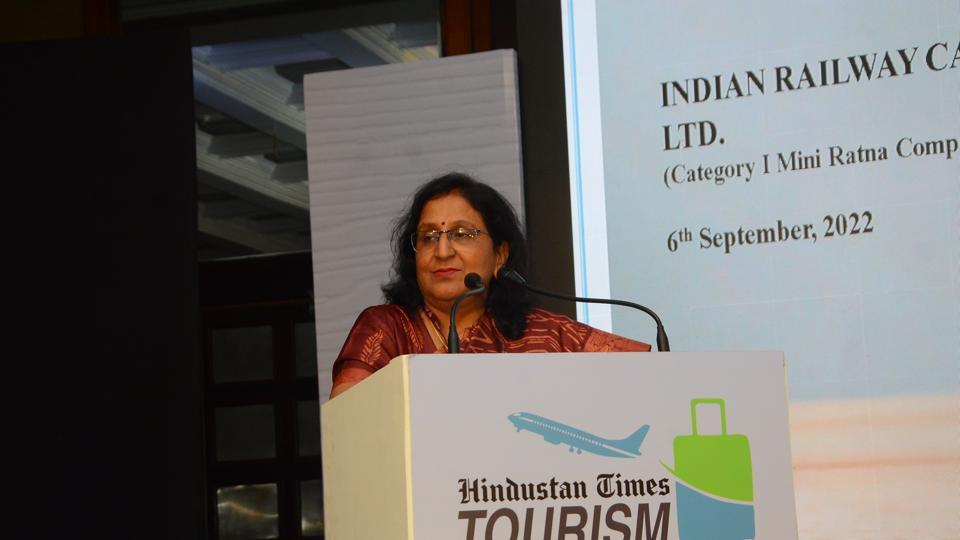
During the first wave of Covid-19 in 2020, IRCTC recommenced operations with only 15 passenger trains wherein only need-based travelling was permitted, Hasija said, adding there were massive cancellations as far as inbound tourism was concerned.
“Even during the pandemic years, IRCTC could bring in profit for our investors and we were back in mass tourism before other industry partners,” Hasija said on Tuesday. “I am pleased to inform that we are happily back with the highest-ever profit.”
However, the scenario is not the same for the country’s aviation sector, which is yet to recover from financial loses it had incurred during the pandemic, said Parampreet Singh Bakshi, vice-president, South Asia, Centre for Asia Pacific Aviation (CAPA), an advisory firm.
Indian aviation saw 106 million passengers last year with the ratio 8:2 of domestic and international, respectively, said Bakshi. “This year, however, looks better and we are expecting 130-140 million domestic and 55- 60 million international travellers to take flights,” he said.
Increasing air passengers, however, has not been translating into an impactful financial performance, Bakshi said, adding that while the air traffic numbers have improved, financial performance is still lagging.
“Last year, airlines suffered losses of $3 billion and this year CAPA predicts the losses to be around $ 1.4 to $1.6 billion,” he said. “Hence, there is still some time for airlines to turn around in terms of financial performance.”
In terms of air traffic, CAPA predicts that the airlines will see international traffic return to pre-Covid-19 levels by next year, said Bakshi. “In terms of airports, they are expected to make half a billion dollar profit this year, subject to revenue share.”
Commenting on the recent air incidents in Indian skies, Bakshi said: “Incidents in aviation are regular affairs… As long as airlines are not cutting corners, there is no issue in terms of minor incidents.”
He said air travel continues to be the safest mode of transport. “If financials of airlines improve, it will boost passengers’ confidence,” he added.


