
 E-Paper



Delhi: Welfare push marks BJP’s 1st year in power
An assessment of the promises indicates six commitments have been implemented in near-entirety, five are partially implemented, and five remain pending.

 Prefer HTon Google


A year after the Bharatiya Janata Party (BJP) assumed power in Delhi following its decisive victory in the 2025 assembly elections, a review of its 16 key election manifesto promises shows swift progress on welfare schemes but considerably slower movement on institutional reforms and anti-corruption investigations.
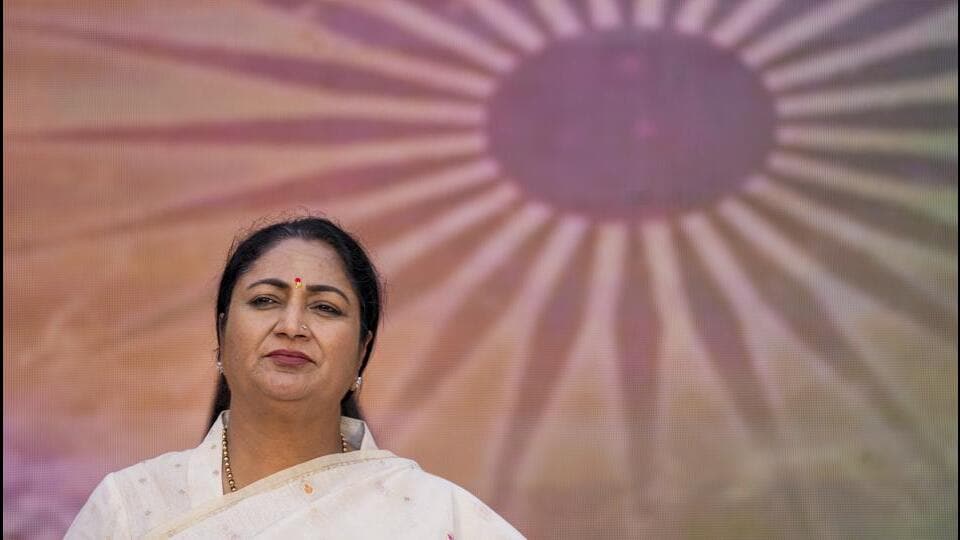

An assessment of the promises indicates six commitments have been implemented in near-entirety, five are partially implemented, and five remain pending or at the policy formulation stage. The pattern reflects a government that has prioritised visible, household-level economic support while structural governance changes proceed at a more cautious pace.
Welfare schemes see rapid implementation
The government moved quickest on direct welfare measures requiring budgetary allocation, particularly in health, education and transport sectors where implementation mechanisms already existed.
One of its first decisions was to adopt the Centre’s Ayushman Bharat scheme with a ₹5 lakh state-funded top-up, doubling insurance coverage to ₹10 lakh per beneficiary family. The move, cleared in the first cabinet meeting, marked a major expansion of publicly funded health coverage in the Capital. Officials said additional empanelment of private hospitals under Ayushman Bharat is underway, while new primary healthcare centres are being planned to expand coverage.
Healthcare experts said that the move marks a structural shift in Delhi’s public healthcare financing. “In a city where tertiary care costs are high, the scheme has expanded access to quality treatment in both public and empanelled private hospitals. However, to deepen its impact, more mid-sized and specialty hospitals in Delhi must join the network,” said Dharminder Nagar, co-chairperson FICCI Healthcare and MD, Paras Healthcare, said.
Under the Pradhan Mantri Matru Vandana Yojana, over 83,700 beneficiaries have been enrolled and ₹31.68 crore disbursed through direct benefit transfers (DBT) to pregnant and lactating women. Additional nutrition-linked benefits are being planned.
The promise of subsidised LPG cylinders at ₹500 for poor women has been cleared at the policy level, with DBT-based implementation tied to ration card verification. Disbursements are expected ahead of Holi in early March.
Atal Canteens offering meals at ₹5 were launched on December 25 – on the 101st birth anniversary of former PM Atal Bihari Vajpayee – and now operate at over 70 locations. While largely welcomed, some beneficiaries have sought larger portions, which the government has said it will review.
The administration has also continued schemes introduced by the previous AAP government, pledging not to discontinue any welfare programme. “Our government will not only continue existing schemes, but we will also make them more effective by eliminating corruption in these schemes,” the manifesto had stated.
The implementation can be reflected in the conversion of Mohalla Clinics into Ayushman Arogya Mandirs with their numbers being increased to 1,100. This also reflects in the recently introduced Lakhpati Bitiya scheme wherein the government has upgraded the Ladli scheme benefits being offered during the Congress government and has also started disbursing pending amount to over 300,000 beneficiaries that had not been done in the last 10 years.
Delhi health minister Pankaj Singh said the Ayushman Arogya Mandir initiative brings quality healthcare closer to communities. “The objective is to ensure that senior citizens and families do not have to travel long distances to hospitals for basic medical care, as essential services are now being made available within their neighbourhoods,” Singh said.
Political analyst at Policy Research and Centre for Contemporary India Study (PRACCIS), Sajjan Kumar, said welfare expansion has been the government’s clearest focus. “The BJP’s strategy has prioritised visible household-level economic support. These schemes are politically significant and administratively easier compared to structural reforms like institutional restructuring. However, the Delhi government has started taking steps towards that too while announcing aligning the districts with the municipal zones,” he said.
Steady progress in social security promises
Several labour and social protection measures are in progress but not fully rolled out. Draft rules have been prepared for welfare boards for auto drivers, taxi drivers and domestic workers, offering life and accident insurance coverage up to ₹10 lakh and ₹5 lakh respectively. A policy for gig worker social security is also under preparation.
However, what remains unimplemented is the much-publicised Mukhyamantri Mahila Samriddhi Yojana, promising ₹2,500 per month to women from poor families – a scheme that was basically the headline of the BJP manifesto. Last year, Delhi chief minister Rekha Gupta had announced that the cabinet had approved ₹5,100 crore for the scheme and budgetary provision was also made. The government has now said that the eligibility criteria is still being “fine-tuned” for broader coverage.
Similarly, while budgetary allocation has been made for the Dr BR Ambedkar Stipend Scheme registration and disbursement have yet to begin. Under this, SC students pursuing technical and vocational education in the city will get a monthly stipend of ₹1,000.
Similarly, the government has expanded coverage under the Prime Minister Street Vendor’s AtmaNirbhar Nidhi scheme to increase the number of street vendor beneficiaries, though officials said the expansion depends on fresh surveys and identification of eligible vendors.
Institutional reforms: What’s left
The area where the government’s deliveries have been relatively slow is the promised structural governance reforms. The document’s strong emphasis on anti-corruption enforcement has yet to translate into major investigative outcomes visible to the public.
The manifesto had promised special investigation teams (SITs) to examine alleged irregularities in excise policy, transport, water supply, Mohalla Clinics and classroom construction. While administrative reviews have begun, no major probe has concluded publicly.
The government has also not decided the future of the former chief minister’s residence, on which a probe is ongoing with regard to allegations of lavish expenditure during the previous administration. In an interview with HT last week, chief minister Gupta addressed the issue directly: “Kejriwal had built a Sheesh Mahal for himself while leaving the people of Delhi grappling with crumbling basic civic necessities… We have still not decided what can be done with the structure and are yet to take a call.”
Broader structural goals such as universal free education expansion and large-scale infrastructure additions, meanwhile, remain at the planning stage. The promise of providing free KG-to-PG education in government institutions remains at an early stage. Officials said consultations are underway to assess financial implications and infrastructure capacity. In the education sector, the government announced financial assistance of ₹15,000 to youth preparing for competitive examinations, along with reimbursement of travel expenses for exams. Registration portals have been created, though disbursement has not yet begun.
To be sure, a significant move was the introduction of the Delhi School Education (Transparency in Fixation and Regulation of Fees) Act, 2025, though this legislation was not part of the BJP’s original manifesto. The Act aims to bring transparency to fee fixation by private schools, addressing a long-standing parent grievance.
Education minister Ashish Sood said that in the first year, the government has focused on infrastructure upgrades with tech-enabled education a priority. “We strengthened primary education with over 700 smart classrooms planned, 175 ICT and language labs and other infrastructure upgrades in government and MCD schools where education is already free. We will soon increase focus on free higher education as well. We also faced severe challenges in dealing with the past 10 years of funds shortage that the 12 Delhi government colleges were facing,” Sood said.
The BJP had also promised pension increases, raising monthly assistance for senior citizens aged 60-70 from ₹2,000 to ₹2,500, and increasing support for those aged above 70, widows, destitute persons and persons with disabilities from ₹2,500 to ₹3,000. Finance department officials confirmed that revised disbursements are being planned but, again, no rollout has been announced yet.
The government also promised expanded support for farmers under the PM Kisan Samman Nidhi scheme, including increasing annual assistance from ₹6,000 to ₹9,000 through additional state contribution. Officials said financial feasibility is being assessed and coordination with central authorities is ongoing. However, the government has not made any announcement towards its implementation yet. Insurance coverage and social protection expansion for informal workers also remains under policy development, with no real progress yet.
Officials said fiscal prioritisation played a role in sequencing reforms. “Budget allocations have focused first on welfare and social protection. Larger structural changes are being phased in gradually,” a senior official said.
The CM has also said that several provisions have been made to clear debts of the previous government.
The road for Year 2
In all, the BJP government’s first year reflects an emphasis on welfare delivery and social security expansion, while deeper institutional reforms remain in progress.
Speaking to HT last week, CM Rekha Gupta had said that while the first year was that of learning the ropes of governance, identifying problem areas and drafting policies, the second year will see more implementation and on-ground transitions.
With several schemes operational and others awaiting rollout, the government’s manifesto agenda remains a work in progress. The coming year will test its ability to translate policy announcements into sustained institutional reform alongside continued welfare delivery.



Stay updated with all top Cities including, Bengaluru, Delhi, Mumbai and more across India. Stay informed on the latest happenings in World News along with Delhi Election 2025 and Delhi Election Result 2025 Live, New Delhi Election Result Live, Kalkaji Election Result Live at Hindustan Times.


