
 E-Paper



Delhi: Yamuna water slightly cleaner but still way above safe limit
Data shared in the report showed BOD readings was 38 mg/l in November 2023 at the ghat opposite ISBT Kashmere Gate


Though the biological oxygen demand (BOD) readings -- one of the key indicators of purity of river water -- of the Yamuna were still 13 to 19 times the permissible limits in the Delhi stretch of the river, Delhi chief secretary Naresh Kumar has told the National Green Tribunal (NGT) that there has been an improvement in the water quality of the river during January-November 2023, as compared to the corresponding period last year.
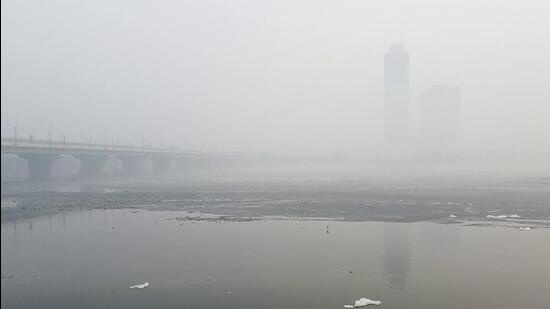
The chief secretary made the submission before the tribunal on December 12. He added that a number of Delhi government projects, including commissioning new sewage treatment plants were nearing completion and should further help improve the quality of the river’s water “in the coming months”.
Data shared in the report, a copy of which HT has seen, showed BOD readings – which indicate the amount of oxygen required by aquatic life and organisms in the river in order to survive – was 38 mg/l in November 2023 at the ghat opposite ISBT Kashmere Gate. In comparison, the BOD value was 50 mg/l in November 2022, the report said.
Ideally, BOD should not be higher than 3 mg/l.
Read Here: AAP claims to clear toxic Yamuna foam soon, BJP hits out
Similarly at Asgarpur – where the Yamuna exits Delhi --- the BOD reading was 56 mg/l this November. In comparison, it was 70 mg/l in November 2022, the report said.
“There is a 24% improvement in BOD at ISBT and 20% at Asgarpur. It has been observed that the water quality of the Yamuna in respect of BOD, and faecal coliform at ISBT (after meeting Najafgarh drain) and Asgarpur (downstream of Okhla barrage after confluence of Shahdara and Tughlaqabad drains), and even water quality of the Najafgarh drain have improved significantly in the months of January to November 2023 as compared to January to November 2022.” the report said.
The latest monthly data from November 2023 also of the seven ghats the water quality was meeting the 3mg/litre standard at only Palla.
The report states since January 2023, when the NGT formed a High Level Committee (HLC) on the Yamuna, the sewage being treated in Delhi had increased from 530 million gallons per day (MGD) to 570 MGD. Similarly, the treatment capacity of sewage treatment plants (STPs) had been increased by 35 MGD – from 632 MGD to 667 MGD. Further, a number of new STPs were nearing completion. This included the Okhla STP (94.7% work completed), Rithala Phase-I STP (94.1%) and a new STP at Sonia Vihar (80%).
NGT has been taking suo-motu cognizance of reports on Yamuna’s water quality from time to time, with the HLC formed in January this year to monitor progress. The chief secretary is the head of this committee.
Stay updated with all top Cities including, Bengaluru, Delhi, Mumbai and more across India. Stay informed on the latest happenings in World News along with Delhi Election 2025 and Delhi Election Result 2025 Live, New Delhi Election Result Live, Kalkaji Election Result Live at Hindustan Times.


